
A Bristol, Rhode Island, and Matanzas, Cuba, Slavery Connection


A Bristol, Rhode Island, and Matanzas, Cuba, Slavery Connection
Regular price
Checking stock...
Regular price
Checking stock...
Zusammenfassung
A Bristol, Rhode Island and Mantanzas, Cuba Slavery Connection: The Diary of George Howe explores the under-documented slave trade between Cuba and Rhode Island through the analysis of a diary written by George Howe, a Bristolian man performing managerial work on a Cuban sugar cane plantation in 1832–1834.
The feel-good place to buy books
- Free delivery in the UK
- Supporting authors with AuthorSHARE
- 100% recyclable packaging
- B Corp - kinder to people and planet
- Buy-back with World of Books - Sell Your Books
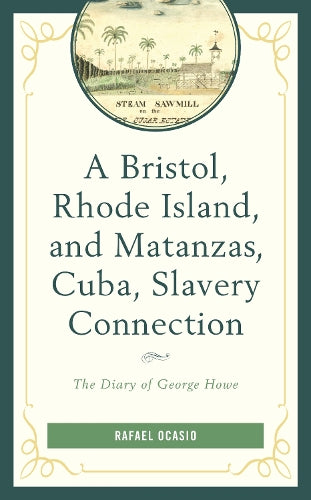
A Bristol, Rhode Island, and Matanzas, Cuba, Slavery Connection by Rafael Ocasio
In the early 19th century, Cuba emerged as the world’s largest producer of sugar and the United States its most important buyer. Barely documented today, there was a close commercial relationship between Cuba and the Rhode Island coastal town of Bristol. The citizens of Bristol were heavily involved in the slavery trade and owned sugarcane plantations in Cuba and also served as staff workers at these facilities. Available in print for the first time is a diary that sheds light on this connection. Mr. George Howe, Esquire (1791–1837), documented his tasks at a Bristolian-owned plantation called New Hope, which was owned by well-known Bristol merchant, slave trader, and US senator James DeWolf (1764–1837). Howe expressed mixed personal feelings about local slavery work practices. He felt lucky to be employed and was determined to do his job well, in spite of the harsh conditions operating at New Hope, but he also struggled with his personal feelings regarding slavery. Though an oppressive system, it was at the core of New Hope’s financial success and, therefore, Howe’s well-being as an employee. This book examines Howe’s diary entries in the thematic context of the local Costumbrista literary production. Costumbrismo both documented local customs and critically analyzed social ills. In his letters to relatives and friends Howe depicted a more personal reaction to the underpinnings of slavery practices, a reaction reflecting early abolitionist sentiments.
The book offers a deep dive into a little-known diaryIt adds to the burgeoning literature on the dark and deep connection of slavery that bound Bristol, Rhode Island and Cuba together. -- C. V. Carrington-Farmer, Roger Williams University
Diarist, naturalist, poet, painter, and prolific letter writer, George Howe was a man of many parts. He was also the manager of a Cuban slave plantation at the height of the island’s sugar boom. In this work of historical recovery and literary analysis, Rafael Ocasio brings Howe and his long forgotten, utterly unclassifiable oeuvre back to life. -- James T. Campbell, Stanford University
Rafael Ocasio provides for us a thorough examination of the popular nineteenth century artistic travelogue opening our understanding of the critical relationship between Rhode Island and Cuba during the slaving era. Ocasio’s book will be the go-to book on slaving for all interested in the aesthetics of the nineteenth century bringing alive an otherwise hidden history. -- Autumn Quezada-Grant, Roger Williams University
Ocasio brings to life not only the American encounter with colonial Cuba, and the business practices of the ingenios, but also the labor demanded of the enslaved themselves and, through a close reading of this literary text, how a New Englander navigated the glaring contradictions between the highly profitable exploitation of enslaved labor (and the illegal slave trade closely tied to it) and complicity with that system’s inherent inhumanity and brutality. -- James DeWolf Perry, editor (with Kristin Gallas) of Interpreting Slavery at Museums and Historic Sites
Diarist, naturalist, poet, painter, and prolific letter writer, George Howe was a man of many parts. He was also the manager of a Cuban slave plantation at the height of the island’s sugar boom. In this work of historical recovery and literary analysis, Rafael Ocasio brings Howe and his long forgotten, utterly unclassifiable oeuvre back to life. -- James T. Campbell, Stanford University
Rafael Ocasio provides for us a thorough examination of the popular nineteenth century artistic travelogue opening our understanding of the critical relationship between Rhode Island and Cuba during the slaving era. Ocasio’s book will be the go-to book on slaving for all interested in the aesthetics of the nineteenth century bringing alive an otherwise hidden history. -- Autumn Quezada-Grant, Roger Williams University
Ocasio brings to life not only the American encounter with colonial Cuba, and the business practices of the ingenios, but also the labor demanded of the enslaved themselves and, through a close reading of this literary text, how a New Englander navigated the glaring contradictions between the highly profitable exploitation of enslaved labor (and the illegal slave trade closely tied to it) and complicity with that system’s inherent inhumanity and brutality. -- James DeWolf Perry, editor (with Kristin Gallas) of Interpreting Slavery at Museums and Historic Sites
Rafael Ocasio is Charles A. Dana Professor of Spanish at Agnes Scott College.
| SKU | Nicht verfügbar |
| ISBN 13 | 9781498562652 |
| ISBN 10 | 1498562655 |
| Titel | A Bristol, Rhode Island, and Matanzas, Cuba, Slavery Connection |
| Autor | Rafael Ocasio |
| Serie | Black Diasporic Worlds: Origins And Evolutions From New World Slaving |
| Buchzustand | Nicht verfügbar |
| Bindungsart | Paperback |
| Verlag | Lexington Books |
| Erscheinungsjahr | 2021-07-15 |
| Seitenanzahl | 306 |
| Hinweis auf dem Einband | Die Abbildung des Buches dient nur Illustrationszwecken, die tatsächliche Bindung, das Cover und die Auflage können sich davon unterscheiden. |
| Hinweis | Nicht verfügbar |