
Cultivating Regionalism


Proud to be B-Corp
The feel-good place to buy books
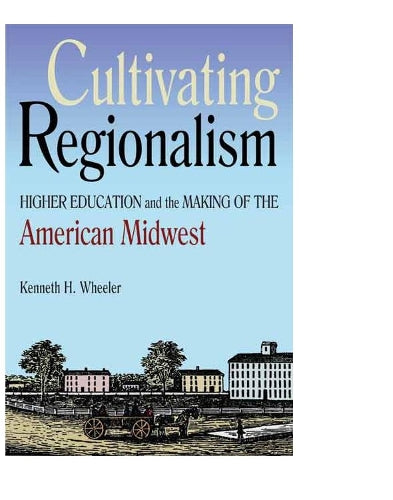
Cultivating Regionalism by Kenneth H Wheeler
In this ambitious book, Kenneth Wheeler revises our understanding of the nineteenth-century American Midwest by reconsidering an institution that was pivotal in its making—the small college. During the antebellum decades, Americans built a remarkable number of colleges in the Midwest that would help cultivate their regional identity. Through higher education, the values of people living north and west of the Ohio River formed the basis of a new Midwestern culture. Cultivating Regionalism shows how college founders built robust institutions of higher learning in this socially and ethnically diverse milieu. Contrary to conventional wisdom, these colleges were much different than their counterparts in the East and South—not derivative of them as many historians suggest. Manual labor programs, for instance, nurtured a Midwestern zeal for connecting mind and body. And the coeducation of men and women at these schools exploded gender norms throughout the region. Students emerging from these colleges would ultimately shape the ethos of the Progressive era and in large numbers take up scientific investigation as an expression of their egalitarian, production-oriented training. More than a history of these antebellum schools, this elegantly conceived work exposes the interplay in regionalism between thought and action—who antebellum Midwesterners imagined they were and how they built their colleges in distinct ways.More than an excellent social history of institutions of higher education in the nineteenth-century Midwest, this book is a thoughtful addition to a growing number of studies investigating the questions of regional identity north and west of the Ohio River
-- Andrew Cayton, author of The Midwest and the NationThe value of this book is that it makes new and interesting arguments about three issues in American history: American preeminence in the natural sciences; the origins of Progressivism; and how the culture of the Old Northwest differed from that of the Northeast and the South.
-- Thomas Hamm, author of Earlham CollegeWheeler's interrogation of sources and analysis are superb.
-- Terry A. Barnhart * Journal of the Illinois State Historical Society *[T]his is a most welcome study.... his arguments are pretty convincing.
-- Marvin Bergman * History of Education Quarterly *Wheeler deserves credit for performing the arduous task of carefully selecting portions of his dissertation, supplementing them with further research, and reorganizing the whole into a concise, clearly written, and well-developed book.
-- Richard S. Taylor * The Annals of Iowa *[H]istorians of higher education and of the American Midwest will appreciate Cultivating Regionalism for its fine anecdotes and solid archival basis.... a spur for discussion about the dynamism of antebellum higher education.
-- Scott M. Gelber * The Journal of American History *Wheeler offers a fascinating glimpse into the self-conscious construction of a regional identity.... Cultivating Regionalism makes an important contribution to the ongoing study of regionalism in American culture.
-- Melissa Ladd Teed * The Michigan Historical Review *Kenneth Wheeler is Professor of History at Reinhardt University.
| SKU | Nicht verfügbar |
| ISBN 13 | 9780875804446 |
| ISBN 10 | 0875804446 |
| Titel | Cultivating Regionalism |
| Autor | Kenneth H Wheeler |
| Buchzustand | Nicht verfügbar |
| Bindungsart | Hardback |
| Verlag | Cornell University Press |
| Erscheinungsjahr | 2011-11-01 |
| Seitenanzahl | 166 |
| Hinweis auf dem Einband | Die Abbildung des Buches dient nur Illustrationszwecken, die tatsächliche Bindung, das Cover und die Auflage können sich davon unterscheiden. |
| Hinweis | Nicht verfügbar |