
Darwin's Lost World


Zusammenfassung
The feel-good place to buy books
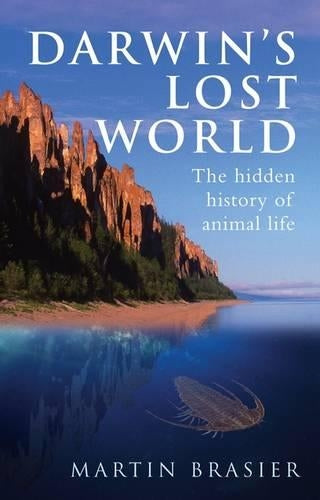
Darwin's Lost World by Martin Brasier
Darwin made a powerful argument for evolution in the Origin of Species, based on all the evidence available to him. But a few things puzzled him. One was how inheritance works - he did not know about genes. This book concerns another of Darwin's Dilemmas, and the efforts of modern palaeontologists to solve it. What puzzled Darwin is that the most very ancient rocks, before the Cambrian, seemed to be barren, when he would expect them to be teeming with life. Darwin speculated that this was probably because the fossils had not been found yet. Decades of work by modern palaeontologists have indeed brought us amazing fossils from far beyond the Cambrian, from the depths of the Precambrian, so life was certainly around. Yet the fossils are enigmatic, and something does seem to happen around the Cambrian to speed up evolution drastically and produce many of the early forms of animals we know today. In this book, Martin Brasier, a leading palaeontologist working on early life, takes us into the deep, dark ages of the Precambrian to explore Darwin's Lost World.Decoding the evidence in these ancient rocks, piecing together the puzzle of what happened over 540 million years ago to drive what is known as the Cambrian Explosion, is very difficult. The world was vastly different then from the one we know now, and we are in terrain with few familiar landmarks. Brasier is a master storyteller, and combines the account of what we now know of the strange creatures of these ancient times with engaging and amusing anecdotes from his expeditions to Siberia, Outer Mongolia, Barbuda, and other places, giving a vivid impression of the people, places, and challenges involved in such work. He ends by presenting his own take on the Cambrian Explosion, based on the picture emerging from this very active field of research. A vital clue involves worms - burrowing worms are one of the key signs of the start of the Cambrian. This is fitting: Darwin was inordinately fond of worms.
The story is part travelogue, part memoir, told in an individual style with singular anecdotesThis is a scientific adventure that will entertain and inform general readers and has the potential to inspire the next generation of young researchers. The Quarterly Review of Biology ...the most lively book about matters Cambrian and earlier. Martin Braiser has an engaging personality which comes across well in print. Richard A. Fortey, Times Literary Supplement Engaging account. New Scientist If there is one book in this crop that Darwin himself would surely have appreciated, it is 'Darwin's Lost World'. Clive Cookson, Financial Times
Martin Brasier, Professor of Palaeobiology, University of Oxford Martin Brasier is an English paleontologist made known from his study of microfossils, the Origin of Life, and Precambrian fossils such as the Ediacara biota. He is Professor of Palaeobiology at the University of Oxford. He has worked on the Cambrian Explosion and was leader of the UN 's IGCP
project on defining the Cambrian geological period. His own book on the subject, Darwin's Lost World: The hidden history of animal life was published in 2009 as part of the Charles Darwin centenary.
| SKU | Nicht verfügbar |
| ISBN 13 | 9780199548972 |
| ISBN 10 | 0199548978 |
| Titel | Darwin's Lost World |
| Autor | Martin Brasier |
| Buchzustand | Nicht verfügbar |
| Bindungsart | Hardback |
| Verlag | Oxford University Press |
| Erscheinungsjahr | 2009-02-12 |
| Seitenanzahl | 304 |
| Hinweis auf dem Einband | Die Abbildung des Buches dient nur Illustrationszwecken, die tatsächliche Bindung, das Cover und die Auflage können sich davon unterscheiden. |
| Hinweis | Nicht verfügbar |