
Death Anxiety and Religious Belief


Proud to be B-Corp
The feel-good place to buy books
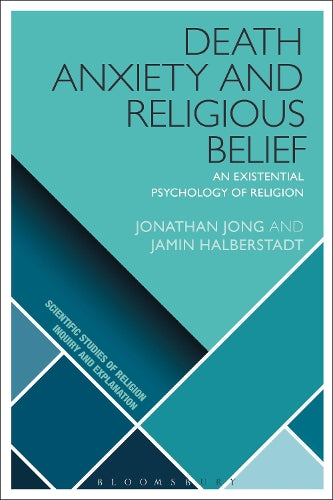
Death Anxiety and Religious Belief by Jonathan Jong
There are no atheists in foxholes; or so we hear. The thought that the fear of death motivates religious belief has been around since the earliest speculations about the origins of religion. There are hints of this idea in the ancient world, but the theory achieves prominence in the works of Enlightenment critics and Victorian theorists of religion, and has been further developed by contemporary cognitive scientists. Why do people believe in gods? Because they fear death. Yet despite the abiding appeal of this simple hypothesis, there has not been a systematic attempt to evaluate its central claims and the assumptions underlying them. Do human beings fear death? If so, who fears death more, religious or nonreligious people? Do reminders of our mortality really motivate religious belief? Do religious beliefs actually provide comfort against the inevitability of death? In Death Anxiety and Religious Belief, Jonathan Jong and Jamin Halberstadt begin to answer these questions, drawing on the extensive literature on the psychology of death anxiety and religious belief, from childhood to the point of death, as well as their own experimental research on conscious and unconscious fear and faith. In the course of their investigations, they consider the history of ideas about religion’s origins, challenges of psychological measurement, and the very nature of emotion and belief.
As a call to arms to newer researchers in [death, anxiety, and religious belief], Jong and Halberstadt have done a great service to the fieldTheir pithy and highly readable text may well inspire the next generation of researchers. * PsycCRITIQUES *
[An] ambitious and scholarly study. * Oxford Today *
Scholars of religion and those interested in the psychology of religion will welcome this thorough, scientifically grounded contribution to the literature on psychology of religion and religion theory. Summing Up: Highly recommended. Graduate students, researchers, faculty. * CHOICE *
An extraordinarily thorough interdisciplinary integration and synthesis of theory and research on death anxiety and religious belief, including the authors’ cutting-edge contributions to the field, thoughtfully and gracefully written. Bravo. * Sheldon Solomon, Professor of Psychology, Skidmore College, USA *
Thorough and accessible, this book offers a comprehensive overview of the psychological literature on religion and death anxiety. The authors clearly describe leading theories in the context of historical debates, systematically review available evidence, and boldly present novel findings that convincingly overturn received wisdoms. This beautifully written and organised book will appeal to a general human science audience, and should become a standard part of training in the scientific study of religion. * Joseph Bulbulia, Associate Professor of Religious Studies, Victoria University, New Zealand *
[An] ambitious and scholarly study. * Oxford Today *
Scholars of religion and those interested in the psychology of religion will welcome this thorough, scientifically grounded contribution to the literature on psychology of religion and religion theory. Summing Up: Highly recommended. Graduate students, researchers, faculty. * CHOICE *
An extraordinarily thorough interdisciplinary integration and synthesis of theory and research on death anxiety and religious belief, including the authors’ cutting-edge contributions to the field, thoughtfully and gracefully written. Bravo. * Sheldon Solomon, Professor of Psychology, Skidmore College, USA *
Thorough and accessible, this book offers a comprehensive overview of the psychological literature on religion and death anxiety. The authors clearly describe leading theories in the context of historical debates, systematically review available evidence, and boldly present novel findings that convincingly overturn received wisdoms. This beautifully written and organised book will appeal to a general human science audience, and should become a standard part of training in the scientific study of religion. * Joseph Bulbulia, Associate Professor of Religious Studies, Victoria University, New Zealand *
Jonathan Jong is Deputy Director of the Belief, Brain and Behaviour research group at the Centre for Research in Psychology, Behaviour and Achievement, Coventry University, UK; and Research Coordinator at the Institute of Cognitive and Evolutionary Anthropology, University of Oxford, UK. Jamin Halberstadt is a Professor of Social Psychology at the University of Otago, New Zealand.
| SKU | Nicht verfügbar |
| ISBN 13 | 9781350061606 |
| ISBN 10 | 1350061603 |
| Titel | Death Anxiety and Religious Belief |
| Autor | Jonathan Jong |
| Buchzustand | Nicht verfügbar |
| Bindungsart | Paperback |
| Verlag | Bloomsbury Publishing PLC |
| Erscheinungsjahr | 2018-02-22 |
| Seitenanzahl | 192 |
| Hinweis auf dem Einband | Die Abbildung des Buches dient nur Illustrationszwecken, die tatsächliche Bindung, das Cover und die Auflage können sich davon unterscheiden. |
| Hinweis | Nicht verfügbar |