
Early Modern Duhallow, c.1534-1641


Proud to be B-Corp
The feel-good place to buy books
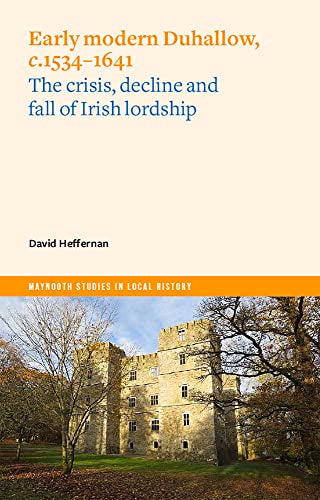
Early Modern Duhallow, c.1534-1641 by David Heffernan
In the sixteenth century the Duhallow region of north-west Co. Cork was one of the most indisputably Irish parts of Ireland. Characterized geographically by the mountainous boggy lands of Sliabh Luachra, the region was dominated by the lordships of the MacDonogh-MacCarthys, the MacAuliffes, the O'Callaghans, and the O'Keeffes. By the mid-seventeenth century, however, these lordships had largely been dismantled and the region was increasingly dominated by New English settler families such as the Boyles, Percivals, and Aldworths residing around new towns at Newmarket and Kanturk. This study charts the transformation of early modern Duhallow by examining the crisis of Irish lordship in the region under the Tudors and the decline and fall of the lordships during the early Stuart period. In doing so, it examines a microcosm of how Irish lordship was often destroyed not by direct conquest and colonisation, but by a gradual process of economic, social, and political erosion.| SKU | Nicht verfügbar |
| ISBN 13 | 9781801510295 |
| ISBN 10 | 1801510296 |
| Titel | Early Modern Duhallow, c.1534-1641 |
| Autor | David Heffernan |
| Serie | Maynooth Studies In Local History |
| Buchzustand | Nicht verfügbar |
| Bindungsart | Paperback |
| Verlag | Four Courts Press Ltd |
| Erscheinungsjahr | 2022-10-21 |
| Seitenanzahl | 72 |
| Hinweis auf dem Einband | Die Abbildung des Buches dient nur Illustrationszwecken, die tatsächliche Bindung, das Cover und die Auflage können sich davon unterscheiden. |
| Hinweis | Nicht verfügbar |