
Four-Wheel Drive and Land-Rover


Zusammenfassung
The feel-good place to buy books
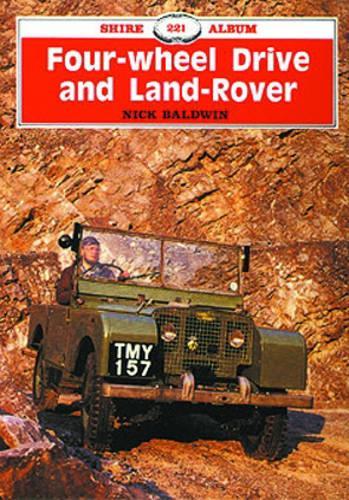
Four-Wheel Drive and Land-Rover by Nick Baldwin
Four-wheel drive was first tried on steam-powered agricultural machinerey; then it was adopted as a cure for sideslip in racing cars. Its wider application was shown from about 1910 in North America in vehicles able to traverse unsurfaced roads previously impassable in winter. Developments in the 1930s culminated in the American Jeep. Thousands of four-wheel drive vehicles were used in the Second World War and afterwards many found their way into agriculture, forestry and specialised transport. After the Land-Rover workhorse appeared in 1948 many smaller types followed. In North America there was a demand for versatile off-the road models while in Europe more comfortable models like the Range-Rover became popular.
Nick Baldwin worked in the Land-Rover factory in the mid 1960s and subsequently became a freelance transport journalist. He was Editor of 'Old Motor' in the 1970s and is consultant Editor to 'The Automobile' as well as contributing regularly to other journals including the ongoing 'A-Z Tractors, Lorries and PSVs'. He is Chairman of the National Motor Museum Advisory Council.
| SKU | Nicht verfügbar |
| ISBN 13 | 9780747805090 |
| ISBN 10 | 0747805091 |
| Titel | Four-Wheel Drive and Land-Rover |
| Autor | Nick Baldwin |
| Serie | Album S |
| Buchzustand | Nicht verfügbar |
| Bindungsart | Paperback |
| Verlag | Bloomsbury Publishing PLC |
| Erscheinungsjahr | 2001-02-28 |
| Seitenanzahl | 32 |
| Hinweis auf dem Einband | Die Abbildung des Buches dient nur Illustrationszwecken, die tatsächliche Bindung, das Cover und die Auflage können sich davon unterscheiden. |
| Hinweis | Nicht verfügbar |