
Growing up Untouchable in India


Growing up Untouchable in India
Regular price
Checking stock...
Regular price
Checking stock...
Zusammenfassung
'In this English translation, Moon's story is usefully framed by apparatus necessary to bring its message to even those taking their first look at South Asian culture...The result is an easy to digest short-course on what it means to be a Dalit, in the words of one notable Dalit.'-Journal of Asian Studies
The feel-good place to buy books
- Free delivery in the UK
- Supporting authors with AuthorSHARE
- 100% recyclable packaging
- B Corp - kinder to people and planet
- Buy-back with World of Books - Sell Your Books
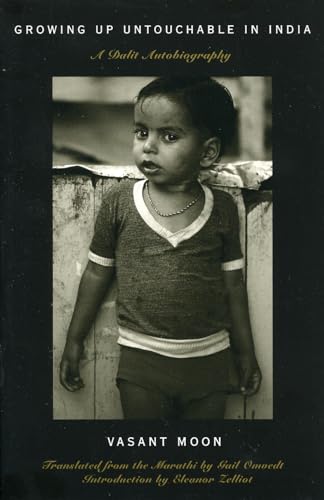
Growing up Untouchable in India by Vasant Moon
There is much in Vasant Moon's extraordinary story of his vasti, his childhood neighbourhood in India, that would probably be true of any urban ghetto anywhere in the world. But there is much that is peculiarly and vividly Indian. In this first autobiography of a so-called Untouchable, we learn about the inescapable hierarchy imposed by caste, based on ancient principles of heriditary pollution. We see the unmatched importance of the heroic Dr. B. R. Ambedkar for India's awakened and newly ambitious Dalits. We feel, viscerally, Nagpur's heat and the joy brought by the monsoon. Vasant Moon's Vasti, the first Dalit autobiography to be published in English, is a moving and eloquent testament to a uniquely Indian life as well as to the universal human spirit.
There are few such autobiographies, especially in English, which makes Moon's memories of sleeping on village roads side by side with neighbors, of his mother waking at 4:30 am. to work in the mill and of the kindness of certain teachers particularly valuable.... * Los Angeles Times *
Omvedt's translation is true to the original Marathi. -- Ravi Shenoy * Library Journal *
This book is a welcome first step towards increasing our understanding of a much-neglected aspect of Indian life. * Times Literary Supplement *
Offer(s) an accessible glimpse of the life and times of one Dalit and the people he grew up with. * Journal of Asian Studies *
His [Moon's] autobiography, written in his native Marathi and translated into English, vividly describes life in an urban Indian slum and gives a glimpse of the internal politics that accompanied the independence movement. * Pacific Reader *
Vasant Moon's powerful memoir of youth in the slums of central India is by turns disturbing, entertaining, engrossing, and deeply inspiring. Moving beneath Moon's sharply etched tale of material deprivation, caste conflict, and neighborhood politics is the inexorable rise of Dalit (Untouchable) militancy and spirituality—illuminated by the towering figure of Dr. B. R. Ambedkar, champion of the poor and leader of the Buddhist revival in India. This book puts living flesh on the bones of recent Indian social historiography. -- Christopher Queen, Harvard University
There are few such autobiographies, especially in English, which makes Moon's memories of sleeping on village roads side by side with neighbors, of his mother waking at 4:30 a.m. to work in the mill and of the kindness of certain teachers particularly valuable. * Los Angeles Times *
A powerful personal and collective memory of caste oppression and struggle in India from the 1930s to the 1950s. . . . Both as a historical and as a literary document, there is much to consider in this thought provoking and intensely moving memoir. -- Shalini Ramachandran * Race & Class *
Omvedt's translation is true to the original Marathi. -- Ravi Shenoy * Library Journal *
This book is a welcome first step towards increasing our understanding of a much-neglected aspect of Indian life. * Times Literary Supplement *
Offer(s) an accessible glimpse of the life and times of one Dalit and the people he grew up with. * Journal of Asian Studies *
His [Moon's] autobiography, written in his native Marathi and translated into English, vividly describes life in an urban Indian slum and gives a glimpse of the internal politics that accompanied the independence movement. * Pacific Reader *
Vasant Moon's powerful memoir of youth in the slums of central India is by turns disturbing, entertaining, engrossing, and deeply inspiring. Moving beneath Moon's sharply etched tale of material deprivation, caste conflict, and neighborhood politics is the inexorable rise of Dalit (Untouchable) militancy and spirituality—illuminated by the towering figure of Dr. B. R. Ambedkar, champion of the poor and leader of the Buddhist revival in India. This book puts living flesh on the bones of recent Indian social historiography. -- Christopher Queen, Harvard University
There are few such autobiographies, especially in English, which makes Moon's memories of sleeping on village roads side by side with neighbors, of his mother waking at 4:30 a.m. to work in the mill and of the kindness of certain teachers particularly valuable. * Los Angeles Times *
A powerful personal and collective memory of caste oppression and struggle in India from the 1930s to the 1950s. . . . Both as a historical and as a literary document, there is much to consider in this thought provoking and intensely moving memoir. -- Shalini Ramachandran * Race & Class *
Vasant Moon is a retired civil servant and Dalit activist. He is the editor of 17 volumes of Dr. AmbedkarOs writings and speeches in English. Gail Omvedt is a freelance writer and frequent visiting professor of sociology. Eleanor Zelliot is Laird Bell Professor of History emerita at Carleton College.
| SKU | Nicht verfügbar |
| ISBN 13 | 9780742508811 |
| ISBN 10 | 0742508811 |
| Titel | Growing up Untouchable in India |
| Autor | Vasant Moon |
| Serie | Asian Voices |
| Buchzustand | Nicht verfügbar |
| Bindungsart | Paperback |
| Verlag | Rowman And Littlefield Publishers |
| Erscheinungsjahr | 2000-12-20 |
| Seitenanzahl | 224 |
| Hinweis auf dem Einband | Die Abbildung des Buches dient nur Illustrationszwecken, die tatsächliche Bindung, das Cover und die Auflage können sich davon unterscheiden. |
| Hinweis | Nicht verfügbar |