
Interpreting Epidemiologic Evidence


Interpreting Epidemiologic Evidence
Regular price
Checking stock...
Regular price
Checking stock...
Zusammenfassung
This book offers a strategy for assessing epidemiologic research findings. Specific tools for assessing the presence and impact of selection bias in both cohort and case-control studies, bias from non-response, confounding, exposure measurement error, disease measurement error, and random error are identified and evaluated.
The feel-good place to buy books
- Free delivery in the UK
- Supporting authors with AuthorSHARE
- 100% recyclable packaging
- B Corp - kinder to people and planet
- Buy-back with World of Books - Sell Your Books
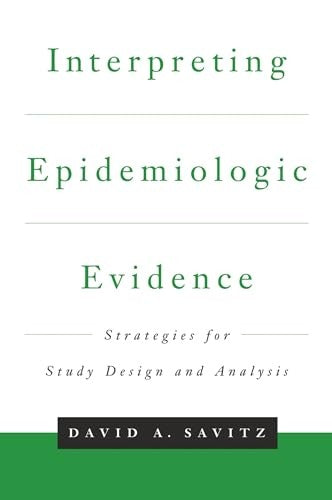
Interpreting Epidemiologic Evidence by David A Savitz
Evaluating the strength or persuasiveness of epidemiologic evidence is inherently challenging, both for those new to the field and for experienced researchers. There is a myriad of potential biases to consider, but little guidance about how to assess the likely impact on study results. This book offers a strategy for assessing epidemiologic research findings, explicitly describing the goals and products of epidemiologic research in order to better evaluate its successes and limitations. The focus throughout is on practical tools for making optimal use of available data to assess whether hypothesised biases are operative and to anticipate concerns at the point of study design in order to ensure that needed information is generated. Specific tools for assessing the presence and impact of selection bias in both cohort and case-control studies, bias from non-response, confounding, exposure measurement error, disease measurement error, and random error are identified and evaluated. The potential value of each approach as well as its limitations are discussed, using examples from the published literature. Such information should help those who generate and interpret epidemiologic research to apply methodological principles more effectively to substantive issues, leading to a more accurate appraisal of the current evidence and greater clarity about research needs.
This attractively presented book is extremely useful for professionals and graduate students doing or evaluating epidemiologic researchI have not seen another book like this one that so successfully integrates content and experience. The author has assembled a book that is necessary and essential reading for all those involved in interpreting epidemiologic evidence. Doody's Journal
David A. Savitz, PhD, is Professor of Epidemiology and Obstetrics and Gynecology at Brown University. He has held leadership positions at the University of North Carolina (Chair of the Department of Epidemiology) and at Brown University (Vice President for Research), as well as in a number of
professional organizations. His research is focused primarily on reproductive and environmental epidemiology. He was elected to the National Academy of Medicine in 2007. Gregory A. Wellenius, ScD, is Associate Professor of Epidemiology at Brown University. His research focuses on the effects of our environment on cardiovascular health, with an emphasis on the adverse health effects of air pollution and the built environment. He has taught advanced graduate courses
in epidemiologic methods, provided invited expert testimony before the US House of Representatives and US Senate, and mentored a number of undergraduate, medical, masters, and doctoral students.
| SKU | Nicht verfügbar |
| ISBN 13 | 9780195108408 |
| ISBN 10 | 019510840X |
| Titel | Interpreting Epidemiologic Evidence |
| Autor | David Savitz |
| Buchzustand | Nicht verfügbar |
| Bindungsart | Hardback |
| Verlag | Oxford University Press Inc |
| Erscheinungsjahr | 2003-06-05 |
| Seitenanzahl | 336 |
| Hinweis auf dem Einband | Die Abbildung des Buches dient nur Illustrationszwecken, die tatsächliche Bindung, das Cover und die Auflage können sich davon unterscheiden. |
| Hinweis | Nicht verfügbar |