
Nebraska Symposium on Motivation, 1990, Volume 38


Proud to be B-Corp
The feel-good place to buy books
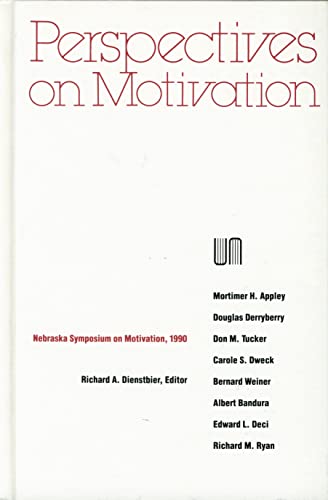
Nebraska Symposium on Motivation, 1990, Volume 38 by Nebraska Symposium
Appearing on the hundredth anniversary of the teaching of psychology at the University of Nebraska, this volume represents a return to an earlier preoccupation with motivation and reflects a resurgence of interest in it. Eight professionals in psychology discuss the many sides of motivation. Mortimer Appley, president emeritus of Clark University, sees equilibrium, or homeostasis, as the fundamental motivational process. Douglas Derryberry and Don M. Tucker of the University of Oregon present a broad and basic model of motivation, viewing it as a product of the evolution and neural architecture of the human brain. Carole S. Dweck of Columbia University approaches personality development through motivational concepts, in particular goals related to self-image. Bernard Weiner of the University of California, Los Angeles, discusses the importance of one’s perception of control over the causes of a situation or problem and over its management or solution. Albert Bandura of Stanford University is concerned with short- and long-term goals as they are affected by emotional states and a sense of self-efficacy. Similarly, Edward L. Deci and Richard M. Ryan of the University of Rochester consider the bearing of self-determination on motivation and achievement.
Editor Richard A. Dienstbier is a professor of psychology at the University of Nebraska-Lincoln. His many publications include articles in Psychological Review and other journals.
| SKU | Nicht verfügbar |
| ISBN 13 | 9780803216938 |
| ISBN 10 | 0803216939 |
| Titel | Nebraska Symposium on Motivation, 1990, Volume 38 |
| Autor | Nebraska Symposium |
| Serie | Nebraska Symposium On Motivation |
| Buchzustand | Nicht verfügbar |
| Verlag | University of Nebraska Press |
| Erscheinungsjahr | 1991-08-01 |
| Seitenanzahl | 369 |
| Hinweis auf dem Einband | Die Abbildung des Buches dient nur Illustrationszwecken, die tatsächliche Bindung, das Cover und die Auflage können sich davon unterscheiden. |
| Hinweis | Nicht verfügbar |