
Of Human Bondage


Proud to be B-Corp
The feel-good place to buy books
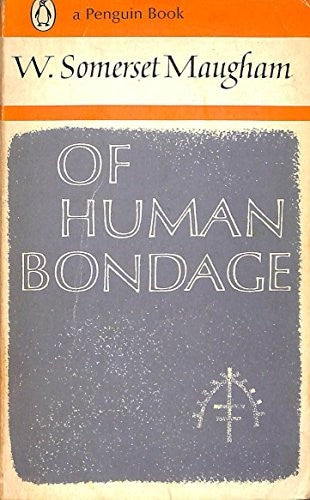
Of Human Bondage by W Somerset Maugham
William Somerset Maugham (1874-1965) was an English playwright, novelist, and short story writer. He was one of the most popular authors of his era, and reputedly the highest paid of his profession during the 1930s. By 1914 he was famous, with 10 plays produced and 10 published novels. His masterpiece is generally agreed to be Of Human Bondage (1915), a semi-autobiographical novel that deals with the life of the main character Philip Carey, who like Maugham, was orphaned, and brought up by his pious uncle. His last major novel, The Razor's Edge, published in 1944, was a departure for him in many ways. While much of the novel takes place in Europe, its main characters are American, not British. His other works include: Liza of Lambeth (1897), Mrs Craddock (1902), A Man of Honour (1903), The Land of the Blessed Virgin (1905), The Bishop's Apron (1906), Lady Frederick (1907), The Magician (1908), Home and Beauty (1909), The Moon and Sixpence (1919), The Circle (1921), The Trembling of a Leaf (1921), and On a Chinese Screen (1922).| SKU | Nicht verfügbar |
| ISBN 13 | 9780140018615 |
| ISBN 10 | 0140018611 |
| Titel | Of Human Bondage |
| Autor | W Somerset Maugham |
| Buchzustand | Nicht verfügbar |
| Bindungsart | Paperback |
| Verlag | Penguin Group |
| Erscheinungsjahr | 1969-06-01 |
| Seitenanzahl | 608 |
| Hinweis auf dem Einband | Die Abbildung des Buches dient nur Illustrationszwecken, die tatsächliche Bindung, das Cover und die Auflage können sich davon unterscheiden. |
| Hinweis | Nicht verfügbar |