
The Oral History Manual


Zusammenfassung
The feel-good place to buy books
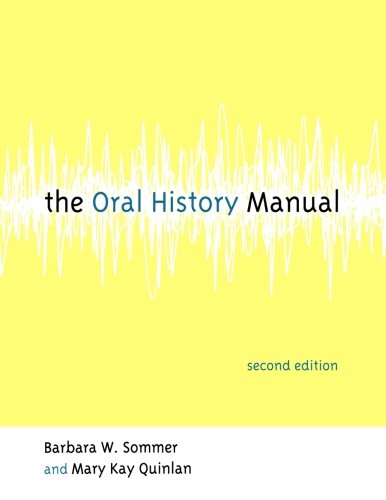
The Oral History Manual by Barbara W Sommer
The Oral History Manual is designed to help anyone interested in doing oral history research to think like an oral historian. Recognizing that oral history is a research methodology, the authors first define oral history and provide an overview of its various applications. They then examine in detail the processes of planning and doing oral history, which include articulating the purpose of interviews, determining legal and ethical parameters, identifying narrators and interviewers, choosing equipment, developing budgets and record-keeping systems, preparing for and recording interviews, and caring for interview materials. The Oral History Manual provides a road map for all oral history practitioners, from students to public historians.
The Oral History Manual is a treasure-trove, both for people who want to know how to organize and run an oral history program from scratch, and for those who want to improve the professionalism of an ongoing programWhether you feel overwhelmed by how to get started, want a better understanding of everything from equipment choices to techniques for conducting better interviews, require better organization so that your interviews don't fall into a black hole of processing limbo, or wonder about the philosophical underpinnings of oral history practice, this is your book. Even though I've worked in the field for many years, I found a wealth of examples of procedures and forms in this new edition that will help me improve my own oral history program. -- Susan Becker, Maria Rogers Oral History Program Manager, Boulder Public Library
The Oral History Manual has been a classroom standard since it was first published in 2002, praised by teachers for its logical organization of materials and completeness of topics, and by students for its easily understood descriptions, explanations, and instructions. This second edition retains the first edition's ease of use while adding important new information relevant to contemporary students: expanded sections on cross-cultural interviewing, processing interviews, budgeting, and legal and ethical considerations, along with an updated technology section. Beyond being useful for students, this is a great guide for researchers wanting to figure out how to conduct and process interviewing projects, whether they work professionally for a local history society or independently on a family oral history project. -- John Wolford, book review editor,The Oral History Review; University of Missouri - St. Louis
A clear and concise discussion of the process of oral history. It has become the standard manual for most community and academic oral history projects. . . . [It] clearly explains the fundamentals of oral history techniques, such as how the interaction of interviewer and narrator influences most aspects of the interview, from how a question is phrased to how the response is understood. * The Oral History Review, August 26, 2010 *
The Oral History Manual has been a classroom standard since it was first published in 2002, praised by teachers for its logical organization of materials and completeness of topics, and by students for its easily understood descriptions, explanations, and instructions. This second edition retains the first edition's ease of use while adding important new information relevant to contemporary students: expanded sections on cross-cultural interviewing, processing interviews, budgeting, and legal and ethical considerations, along with an updated technology section. Beyond being useful for students, this is a great guide for researchers wanting to figure out how to conduct and process interviewing projects, whether they work professionally for a local history society or independently on a family oral history project. -- John Wolford, book review editor,The Oral History Review; University of Missouri - St. Louis
A clear and concise discussion of the process of oral history. It has become the standard manual for most community and academic oral history projects. . . . [It] clearly explains the fundamentals of oral history techniques, such as how the interaction of interviewer and narrator influences most aspects of the interview, from how a question is phrased to how the response is understood. * The Oral History Review, August 26, 2010 *
Barbara W. Sommer has worked in oral history and public history for nearly 30 years. She is the author of Hard Work and a Good Deal: The Civilian Conservation Corps in Minnesota, and is a co-author of The American Indian Oral History Manual: Making Many Voices Heard. She has taught oral history extensively in college classrooms in Nebraska and Minnesota and in community workshops around the United States and in Canada and is a founder of the Oral History Association of Minnesota. Mary Kay Quinlan is associate professor of journalism at the University of Nebraska at Lincoln and editor of the Oral History Association Newsletter. She is a co-author of The American Indian Oral History Manual and of The People Who Made It Work: A Centennial Oral History of the Cushman Motor Works. She has taught oral history at the college level and in community workshops and, with Sommer, has presented at oral history conferences in the United States and Canada. They are co-founders of the Nebraska Foundation for the Preservation of Oral History.
| SKU | Nicht verfügbar |
| ISBN 13 | 9780759111585 |
| ISBN 10 | 0759111588 |
| Titel | The Oral History Manual |
| Autor | Barbara W Sommer |
| Serie | American Association For State And Local History |
| Buchzustand | Nicht verfügbar |
| Bindungsart | Paperback |
| Verlag | Rowman & Littlefield |
| Erscheinungsjahr | 2009-08-16 |
| Seitenanzahl | 130 |
| Hinweis auf dem Einband | Die Abbildung des Buches dient nur Illustrationszwecken, die tatsächliche Bindung, das Cover und die Auflage können sich davon unterscheiden. |
| Hinweis | Nicht verfügbar |