
Turn On, Tune In, Drop Out


Turn On, Tune In, Drop Out
Regular price
Checking stock...
Regular price
Checking stock...
Zusammenfassung
These 11 essays are the writings that galvanized the 60s youth revolution, written when Leary was at the peak of his popularity, influence and visionary intensity.
The feel-good place to buy books
- Free delivery in the UK
- Supporting authors with AuthorSHARE
- 100% recyclable packaging
- B Corp - kinder to people and planet
- Buy-back with World of Books - Sell Your Books
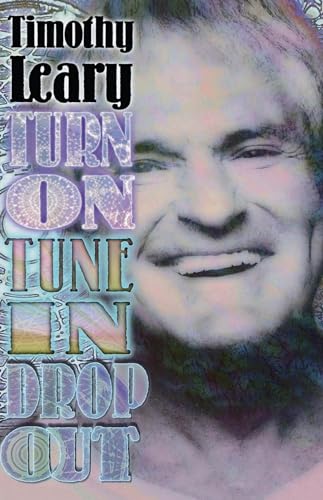
Turn On, Tune In, Drop Out by Timothy Leary
These 11 essays are the writings that galvanized the 60s youth revolution, written when Leary was at the peak of his popularity, influence and visionary intensity. The book opens with "Start Your Own Religion", revealing the true meaning of his immortal slogan "turn on, tune in, drop out", while "Neurological Politics" - the last essay - is a more scientific elaboration of the same theme.
Timothy Leary (1920-1996) was a psychologist, author, lecturer, and cult figure. He was best known for having popularized the use of mind-altering drugs in the 1960s. Timothy Leary was born October 22, 1920, in Springfield, Massachusetts. He was educated at Holy Cross College, the U.S. Military Academy, the University of Alabama (A.B., 1943), Washington State University (M.S., 1946), and the University of California at Berkeley (Ph.D., 1950). During World War II, Leary served in the U.S. Army, achieving the rank of sergeant in the Medical Corps. Subsequently he was an assistant professor at the University of California; director of psychiatric research at the Kaiser Foundation, Oakland, California; and a lecturer in psychology at Harvard University. Leary and colleague Alpert (Ram Dass) were expelled form Harvard for their LSD research with students. Leary and Alpert then founded the International Foundation for Internal Freedom (IFIF) to promote LSD and similar drugs. In 1965 Leary visited India and converted to Hinduism, announcing that his work was basically religious. The following year, IFIF headquarters at Millbrook, New York, was raided by local police under the direction of G. Gordon Liddy, later to become notorious himself as the iron man of the Watergate scandal. Leary had been arrested for possessing a small quantity of marijuana in 1965 and again in 1968. He was given ten-year sentences on each count, to be served consecutively rather than concurrently. This harsh sentence was almost certainly a result of his notoriety, as it bore little relation to the offenses, which even then were not regarded as serious. After serving only six months, Leary, with the aid of the Weather Underground, a left-wing terrorist organization, escaped from prison. Thereafter, he resided in Algeria, Switzerland, and finally Afghanistan. In 1973 he was seized and returned to California, where he was given an additional sentence for his prison escape. Leary was not released from confinement until 1976. Leary's last book, Chaos and Cyber Culture was a hypertext instruction book of sorts, proclaiming that the pc is the lsd of the '90s. Leary even wired his own final days on his website (Leary.com) in word and image. Leary surrounded himself with friends, famous and otherwise, as well. As Gen X chronicler and longtime friend of Leary, Douglas Rushkoff wrote in Esquire, On learning of his inoperable prostate cancer, Tim realized he was smack in the middle of another great taboo: dying. True to character, he wasn't about to surrender to the fear and shame we associate with death in modern times. No, this was going to be a party. Originally, Leary had planned to have his brain cryogenically frozen, but decided instead to have his ashes shot into space. Leary died in Beverly Hills, CA, on May 31, 1996. His last words: why not?
| SKU | Nicht verfügbar |
| ISBN 13 | 9781579510091 |
| ISBN 10 | 1579510094 |
| Titel | Turn On, Tune In, Drop Out |
| Autor | Timothy Leary |
| Serie | Leary Timothy |
| Buchzustand | Nicht verfügbar |
| Bindungsart | Paperback |
| Verlag | Ronin Publishing |
| Erscheinungsjahr | 1999-03-18 |
| Seitenanzahl | 160 |
| Hinweis auf dem Einband | Die Abbildung des Buches dient nur Illustrationszwecken, die tatsächliche Bindung, das Cover und die Auflage können sich davon unterscheiden. |
| Hinweis | Nicht verfügbar |