
Understanding Asexuality


Zusammenfassung
The feel-good place to buy books
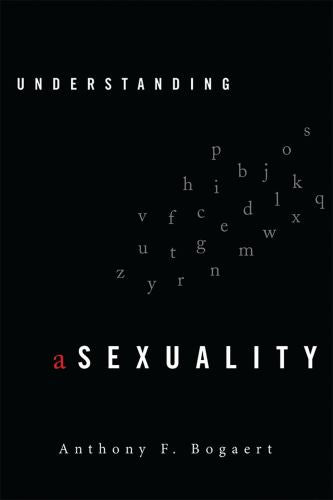
Understanding Asexuality by Anthony F Bogaert
In a world where people often feel compelled to advertise their sexual inclinations and preferences, many people identify as asexual, lacking sexual attraction to either men or women. This book introduces the idea of asexuality as a fourth category of sexual orientation and reveals the historical, biological, and social aspects of asexuality.
Essential reading for anyone who wants to explore how asexuality is transforming our understanding of sex-- David Jay, founder of Asexual Visibility and Education Network (AVEN)
Despite an adaptationist flavor, Understanding Asexuality is a thoughtful, nuanced, and even paradigm-changing book. -- Maurine Neiman, Ph.D., assistant professor, Department of Biology, University of Iowa
[This] work is extremely well received. * Epoch Times *
Asexuality is a sexual orientation that is often overlooked; it has garnered little attention from the scientific community compared to other sexual orientations. Queer theorists especially would benefit from familiarizing themselves with asexuality because it challenges heteronormative norms and, like people of other minority sexual orientations, asexual people are faced with oppression and systematic erasure. It is of no small importance that Understanding Asexuality is the first academic book published on the topic. In this book, Anthony F. Bogaert, a professor of human sexuality, delivers an important theoretical introduction to asexuality for scholars and the general public, as well as asexuals themselves. There is an informal and conversational tone to the book that makes it accessible to all these audiences, while still being professional in its discussion of the extant, if sparse, research. . . .Understanding Asexuality is a solid theoretical introduction to asexuality that provides ample material on which to build future research. * QED: A Journal in GLBTQ Worldmaking *
Despite an adaptationist flavor, Understanding Asexuality is a thoughtful, nuanced, and even paradigm-changing book. -- Maurine Neiman, Ph.D., assistant professor, Department of Biology, University of Iowa
[This] work is extremely well received. * Epoch Times *
Asexuality is a sexual orientation that is often overlooked; it has garnered little attention from the scientific community compared to other sexual orientations. Queer theorists especially would benefit from familiarizing themselves with asexuality because it challenges heteronormative norms and, like people of other minority sexual orientations, asexual people are faced with oppression and systematic erasure. It is of no small importance that Understanding Asexuality is the first academic book published on the topic. In this book, Anthony F. Bogaert, a professor of human sexuality, delivers an important theoretical introduction to asexuality for scholars and the general public, as well as asexuals themselves. There is an informal and conversational tone to the book that makes it accessible to all these audiences, while still being professional in its discussion of the extant, if sparse, research. . . .Understanding Asexuality is a solid theoretical introduction to asexuality that provides ample material on which to build future research. * QED: A Journal in GLBTQ Worldmaking *
Anthony Bogaert is professor of community health sciences and psychology at Brock University. He has published numerous peer-reviewed journal articles, along with book chapters, on such topics as asexuality, sexual desire, sexual orientation, birth order and sexual identity, and other related topics.
| SKU | Nicht verfügbar |
| ISBN 13 | 9781442201002 |
| ISBN 10 | 1442201002 |
| Titel | Understanding Asexuality |
| Autor | Anthony F Bogaert |
| Buchzustand | Nicht verfügbar |
| Bindungsart | Paperback |
| Verlag | Rowman & Littlefield |
| Erscheinungsjahr | 2015-03-06 |
| Seitenanzahl | 192 |
| Hinweis auf dem Einband | Die Abbildung des Buches dient nur Illustrationszwecken, die tatsächliche Bindung, das Cover und die Auflage können sich davon unterscheiden. |
| Hinweis | Nicht verfügbar |