
V1 Flying Bomb Aces


V1 Flying Bomb Aces
Zusammenfassung
Shortly after the Allied landings in France the Germans unleashed the first of their so-called 'revenge weapons', the V1 flying bomb. The main element, however, were standing patrols by the fastest piston-engined fighters available to the RAF - the new Tempest V and Griffon-powered Spitfire XIV. This book deals with this aircraft.
The feel-good place to buy books
- Free delivery in the UK
- Supporting authors with AuthorSHARE
- 100% recyclable packaging
- B Corp - kinder to people and planet
- Buy-back with World of Books - Sell Your Books
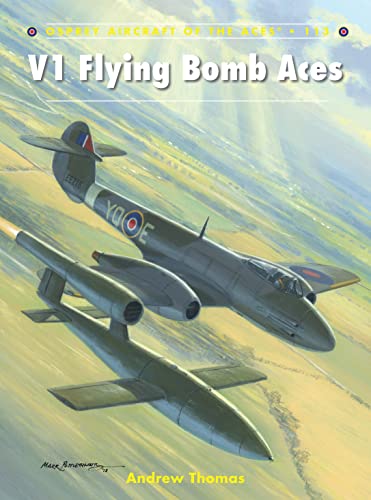
V1 Flying Bomb Aces by Andrew Thomas
Shortly after the Allied landings in France the Germans unleashed the first of their so-called 'revenge weapons' against London, the V1 flying bomb. Launched from specially constructed sites in northern France, the fast, small, pulse-jet powered and pilotless aircraft were aimed at London with the intent of destroying civilian morale in order to force the British government to negotiate a peace. This dangerous new threat drew an immediate response, and the Air Defence of Great Britain (as Fighter Command had been temporarily renamed) established layers of defence that included a gun line and balloon barrage. The main element, however, were standing patrols by the first fighter wings of the highest performance fighters available - the new Tempest V and Griffon-powered Spitfire XIV. Other types were allocated too, most notably the Polish Mustang wing, while night defence was left in the capable hands of several dedicated Mosquito squadrons. Although pilotless, the V1 was no easy foe thanks to its speed, powerful warhead and sheer unpredictability. It required a high degree of flying skill and cool courage to bring one down, for if the pilot fired at too close a range the missile's warhead could explode, with catastrophic results for the chasing fighter. Many hundreds of V1s were fired throughout the summer of 1944, giving pilots plenty of opportunity to achieve five or more successes to become a V1 ace. Many already established aces also made claims against this new weapon. In total, 154 pilots became V1 aces, 25 of whom were also aces against manned aircraft. In addition, a further 35 RAF and nine USAF aces also made some claims against V1s.Andrew Thomas is one of Britain’s leading RAF researchers, having published numerous articles and books on the subject, as well as readily assisting other authors. He joined the RAF to fly straight from school, and has maintained an enthusiastic interest in the history and development of his Service throughout his career. He has previously published a number of volumes in the renowned Osprey Aircraft of the Aces series.
Chris Davey has illustrated more than 30 titles for Osprey’s Aircraft of the Aces, Combat Aircraft and Elite Units series since 1994. Based in Mansfield, Nottinghamshire, and one of the last traditional airbrush artists in the business, he has become the artist of choice for both USAAF fighters and RAF subject matter.
| SKU | Nicht verfügbar |
| ISBN 13 | 9781780962924 |
| ISBN 10 | 1780962924 |
| Titel | V1 Flying Bomb Aces |
| Autor | Andrew Thomas |
| Serie | Aircraft Of The Aces |
| Buchzustand | Nicht verfügbar |
| Bindungsart | Paperback |
| Verlag | Bloomsbury Publishing PLC |
| Erscheinungsjahr | 2013-09-20 |
| Seitenanzahl | 96 |
| Hinweis auf dem Einband | Die Abbildung des Buches dient nur Illustrationszwecken, die tatsächliche Bindung, das Cover und die Auflage können sich davon unterscheiden. |
| Hinweis | Nicht verfügbar |