
Aristotle's 'Nicomachean Ethics'


Zusammenfassung
The feel-good place to buy books
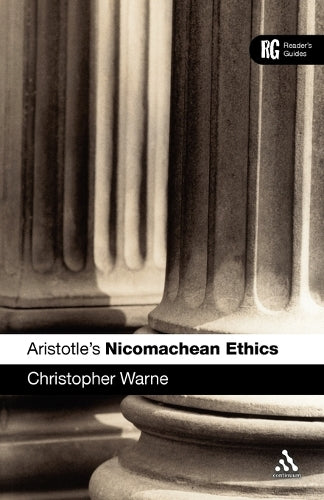
Aristotle's 'Nicomachean Ethics' by Christopher Warne
Aristotle's Nicomachean Ethics, based on lectures that he gave in Athens in the fourth century BCE, is one of the most significant works of moral philosophy ever written. Aristotle, though of course influenced by the works of Plato, diverges sharply from his predecessor by making the practice, rather than the possession, of virtue the key to human happiness. By converting ethics from a theoretical to a practical science, and by introducing psychology into his study of behaviour, Aristotle both widened the field of moral philosophy and simultaneously made it more accessible to anyone who seeks an understanding of human nature. The theory of 'Virtue Ethics' Aristotle put forward still continues to be a major position of ethical thought to this day, his influence being strongly present in the work of Elizabeth Anscombe, Phillipa Foot and Alisdair McIntyre.
Christopher Warne teaches in the Department of Philosophy, Sir George Monoux College, UK.
| SKU | Nicht verfügbar |
| ISBN 13 | 9780826485557 |
| ISBN 10 | 0826485553 |
| Titel | Aristotle's 'Nicomachean Ethics' |
| Autor | Christopher Warne |
| Serie | Reader's Guides |
| Buchzustand | Nicht verfügbar |
| Bindungsart | Paperback |
| Verlag | Bloomsbury Publishing PLC |
| Erscheinungsjahr | 2006-10-10 |
| Seitenanzahl | 166 |
| Hinweis auf dem Einband | Die Abbildung des Buches dient nur Illustrationszwecken, die tatsächliche Bindung, das Cover und die Auflage können sich davon unterscheiden. |
| Hinweis | Nicht verfügbar |