
The Broken Compass


Zusammenfassung
The feel-good place to buy books
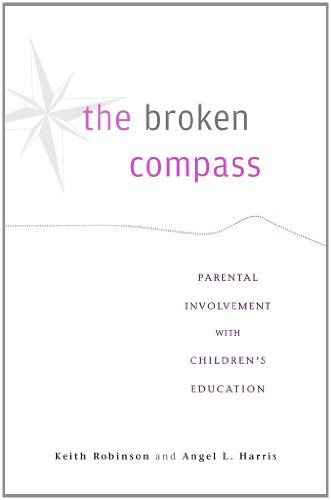
The Broken Compass by Robinson
It seems like common sense that children do better when parents are actively involved in their schooling. But how well does the evidence stack up? The Broken Compass puts this question to the test in the most thorough scientific investigation to date of how parents across socioeconomic and ethnic groups contribute to the academic performance of K-12 children. The study's surprising discovery is that no clear connection exists between parental involvement and improved student performance. Keith Robinson and Angel Harris assessed over sixty measures of parental participation, at home and in school. Some of the associations they found between socioeconomic status and educational involvement were consistent with past studies. Yet other results ran contrary to previous research and popular perceptions. It is not the case that Hispanic and African American parents are less concerned with education than other ethnic groups--or that "tiger parenting" among Asian Americans gets the desired results. In fact, many low-income parents across a wide spectrum want to be involved in their children's school lives, but they often receive little support from the school system. And for immigrant families, language barriers only worsen the problem. While Robinson and Harris do not wish to discourage parents' interest, they believe that the time has come to seriously reconsider whether greater parental involvement can make much of a dent in the basic problems facing their children's education today. This provocative study challenges some of our most cherished beliefs about the role of family in educational success.
This book is provocative, empirically powerful, and challenges one of the most deeply believed (but generally unsupported) tenets about schooling and student outcomes--the critical importance of 'parental involvement'
-- William A. Darity, Jr., Duke University
In the largest-ever study of how parental involvement affects academic achievement, Keith Robinson, a sociology professor at the University of Texas at Austin, and Angel L. Harris, a sociology professor at Duke, mostly found that it doesn’t. The researchers combed through nearly three decades’ worth of longitudinal surveys of American parents and tracked 63 different measures of parental participation in kids’ academic lives, from helping them with homework, to talking with them about college plans, to volunteering at their schools. In an attempt to show whether the kids of more-involved parents improved over time, the researchers indexed these measures to children’s academic performance, including test scores in reading and math. What they found surprised them. Most measurable forms of parental involvement seem to yield few academic dividends for kids, or even to backfire--regardless of a parent’s race, class, or level of education…They did find a handful of habits that make a difference, such as reading aloud to young kids (fewer than half of whom are read to daily) and talking with teenagers about college plans. But these interventions don’t take place at school or in the presence of teachers, where policy makers exert the most influence--they take place at home. -- Dana Goldstein * The Atlantic *
-- William A. Darity, Jr., Duke University
In the largest-ever study of how parental involvement affects academic achievement, Keith Robinson, a sociology professor at the University of Texas at Austin, and Angel L. Harris, a sociology professor at Duke, mostly found that it doesn’t. The researchers combed through nearly three decades’ worth of longitudinal surveys of American parents and tracked 63 different measures of parental participation in kids’ academic lives, from helping them with homework, to talking with them about college plans, to volunteering at their schools. In an attempt to show whether the kids of more-involved parents improved over time, the researchers indexed these measures to children’s academic performance, including test scores in reading and math. What they found surprised them. Most measurable forms of parental involvement seem to yield few academic dividends for kids, or even to backfire--regardless of a parent’s race, class, or level of education…They did find a handful of habits that make a difference, such as reading aloud to young kids (fewer than half of whom are read to daily) and talking with teenagers about college plans. But these interventions don’t take place at school or in the presence of teachers, where policy makers exert the most influence--they take place at home. -- Dana Goldstein * The Atlantic *
Keith Robinson is Assistant Professor of Sociology at the University of Texas at Austin. Angel L. Harris is Professor of Sociology and African and African American Studies at Duke University.
| SKU | Nicht verfügbar |
| ISBN 13 | 9780674725102 |
| ISBN 10 | 0674725107 |
| Titel | The Broken Compass |
| Autor | Robinson |
| Buchzustand | Nicht verfügbar |
| Bindungsart | Hardback |
| Verlag | Harvard University Press |
| Erscheinungsjahr | 2021-01-07 |
| Seitenanzahl | 322 |
| Hinweis auf dem Einband | Die Abbildung des Buches dient nur Illustrationszwecken, die tatsächliche Bindung, das Cover und die Auflage können sich davon unterscheiden. |
| Hinweis | Nicht verfügbar |