
Common Sense, Science and Scepticism


Zusammenfassung
The feel-good place to buy books
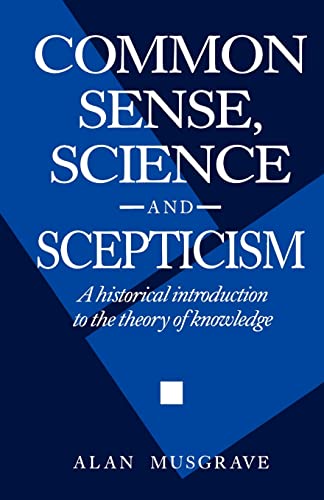
Common Sense, Science and Scepticism by Alan Musgrave
Can we know anything for certain? Dogmatists think we can, sceptics think we cannot, and epistemology is the great debate between them. Some dogmatists seek certainty in the deliverances of the senses. Sceptics object that the senses are not an adequate basis for certain knowledge. Other dogmatists seek certainty in the deliverances of pure reason. Sceptics object that rational self-evidence is no guarantee of truth. This book is an introductory and historically-based survey of the debate, siding for the most part with scepticism to show that the desire to vanquish it has often led to doctrines of idealism or anti-realism. Scepticism, science and common sense produce another view, fallibilism or critical rationalism: although we can have little or no certain knowledge, as the sceptics maintain, we can and do have plenty of conjectural knowledge. Fallibilism incorporates an uncompromising realism about perception, science, and the nature of truth.
"The treatment of basic issues in epistemology is quite nicely done, and although the book is intended as an introduction, it is not confined to the coverage of elementary topicsMusgrave does devote a good deal of space to the discussion of such standard epistemological material as skepticism, but he also includes interesting, elegant, and informative summaries of problems and theories in logic, semantics, and the philosophy of mathematics. The book can be read profitably by anyone with an interest in epistemology and its history." Douglas M. Jesseph, Isis
| SKU | Nicht verfügbar |
| ISBN 13 | 9780521436250 |
| ISBN 10 | 0521436257 |
| Titel | Common Sense, Science and Scepticism |
| Autor | Alan Musgrave |
| Buchzustand | Nicht verfügbar |
| Bindungsart | Paperback |
| Verlag | Cambridge University Press |
| Erscheinungsjahr | 1993-02-11 |
| Seitenanzahl | 328 |
| Hinweis auf dem Einband | Die Abbildung des Buches dient nur Illustrationszwecken, die tatsächliche Bindung, das Cover und die Auflage können sich davon unterscheiden. |
| Hinweis | Nicht verfügbar |