


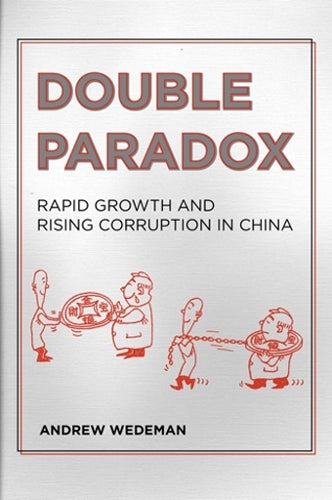
Double Paradox by Andrew H Wedeman
According to conventional wisdom, rising corruption reduces economic growth. And yet, between 1978 and 2010, even as officials were looting state coffers, extorting bribes, raking in kickbacks, and scraping off rents at unprecedented rates, the Chinese economy grew at an average annual rate of 9 percent. In Double Paradox, Andrew Wedeman seeks to explain why the Chinese economy performed so well despite widespread corruption at almost kleptocratic levels. Wedeman finds that the Chinese economy was able to survive predatory corruption because corruption did not explode until after economic reforms had unleashed dynamic growth. To a considerable extent corruption was also a by-product of the transfer of undervalued assets from the state to the emerging private and corporate sectors and a scramble to capture the windfall profits created by their transfer. Perhaps most critically, an anti-corruption campaign, however flawed, has proved sufficient to prevent corruption from spiraling out of control. Drawing on more than three decades of data from China—as well as examples of the interplay between corruption and growth in South Korea, Taiwan, Equatorial Guinea, and other nations in Africa and the Caribbean—Wedeman cautions that rapid growth requires not only ongoing and improved anticorruption efforts but also consolidated and strengthened property rights.
"This fascinating and fabulous volume by Wedeman seeks to address the question of how rapid economic development and widespread corruption can coexist in ChinaWedeman introduces readers to the double paradox of corruption and growth in post-Mao China, examines developmental corruption in South Korea and Taiwan, demonstrates how endemic corruption led to economic crises in several other countries, discusses the sequencing of corruption and growth, probes the dynamic consequences of the commodification of China's economy, looks into the impact of the authorities' ongoing war on corruption, and compares today's China with the U.S. in the 19th and early 20th centuries and asks whether China's case may serve as a precedent for the coexistence of high levels of corruption and rapid economic growth."-Choice (October 2012) "The central question of Double Paradox-how rapid economic development and widespread corruption coexist in China-is of major importance. Andrew Wedeman explains that the sequence of events is complex and worth careful scrutiny; there is considerable dynamism and simultaneity in any corruption/development relationship. By the end of Wedeman's book, we have learned a great deal about China, about the possible links between corruption and economic development, and about how to frame the questions we wish to investigate in China and in other societies in which corruption is extensive."-Michael Johnston, Charles A. Dana Professor of Political Science, Colgate University, author of Syndromes of Corruption
Andrew Wedeman is Professor of Political Science at the University of Nebraska–Lincoln. He is the author of From Mao to Market: Rent Seeking, Local Protectionism, and Marketization in China and The East Wind Subsides: Chinese Foreign Policy and the Origins of the Cultural Revolution.
| SKU | Nicht verfügbar |
| ISBN 13 | 9780801477768 |
| ISBN 10 | 080147776X |
| Titel | Double Paradox |
| Autor | Andrew H Wedeman |
| Buchzustand | Nicht verfügbar |
| Bindungsart | Paperback |
| Verlag | Cornell University Press |
| Erscheinungsjahr | 2012-03-15 |
| Seitenanzahl | 272 |
| Preise | Winner of A 2012 Foreign Affairs Magazine Best Book of the Y. |
| Hinweis auf dem Einband | Die Abbildung des Buches dient nur Illustrationszwecken, die tatsächliche Bindung, das Cover und die Auflage können sich davon unterscheiden. |
| Hinweis | Nicht verfügbar |