
The Man Who Loved Children


Zusammenfassung
The feel-good place to buy books
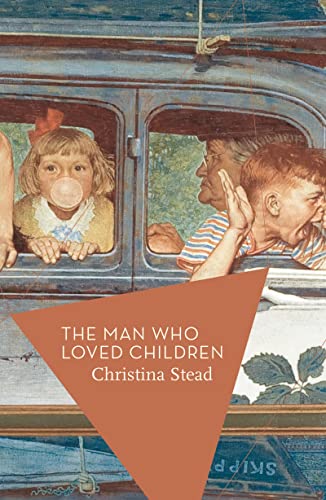
The Man Who Loved Children by Christina Stead
All the June Saturday afternoon Sam Pollit's children were on the lookout for him as they skated round the dirt sidewalks and seamed old asphalt of R Street and Reservoir Road... Sam and Henny Pollit have too many children, too little money and too much loathing for each other. As Sam uses the children's adoration to feed his own voracious ego, Henny becomes a geyser of rage against her improvident husband. And, caught in the midst of it all, is Louisa, Sam's watchful eleven-year-old daughter.
This crazy, gorgeous family novel is one of the great literary achievements of the twentieth centuryI carry it in my head the way I carry childhood memories; the scenes are of such precise horror and comedy that I feel I didn't read the book so much as live it -- Jonathan Franzen
The most fabulous book that hardly anyone I know has read * Guardian *
Offers a singular and uncompromising vision of a family in freewill and is a world of serious moral intent * BookWitty *
The most fabulous book that hardly anyone I know has read * Guardian *
Offers a singular and uncompromising vision of a family in freewill and is a world of serious moral intent * BookWitty *
Christina Stead (1902-1983) was born in Sydney but lived for most of her life outside Australia. THE MAN WHO LOVED CHILDREN has been hailed as a masterpiece by Randall Jarrell, Jonathan Franzen, Jane Smiley and many other writers.
| SKU | Nicht verfügbar |
| ISBN 13 | 9781784971489 |
| ISBN 10 | 1784971480 |
| Titel | The Man Who Loved Children |
| Autor | Christina Stead |
| Buchzustand | Nicht verfügbar |
| Bindungsart | Paperback |
| Verlag | Bloomsbury Publishing PLC |
| Erscheinungsjahr | 2016-04-07 |
| Seitenanzahl | 528 |
| Hinweis auf dem Einband | Die Abbildung des Buches dient nur Illustrationszwecken, die tatsächliche Bindung, das Cover und die Auflage können sich davon unterscheiden. |
| Hinweis | Nicht verfügbar |