
Mastering the Art of Asset Allocation


Zusammenfassung
The feel-good place to buy books
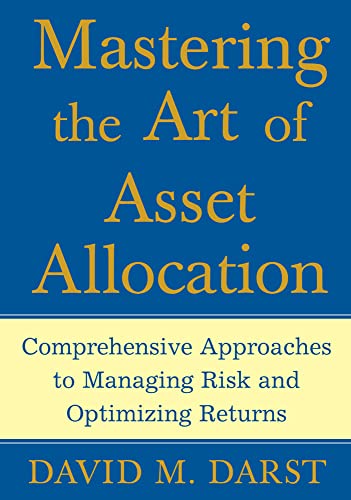
Mastering the Art of Asset Allocation by David Darst
Gain new insights into why asset allocation works and learn advanced investing strategies You know that asset allocation requires much more than cookie-cutter analysis. You want precise, detailed techniques for analyzing and applying asset allocation principles. The high-level, applications-oriented Mastering the Art of Asset Allocation examines the inner working of numerous asset allocation strategies and covers everything from ways to determine the portfolio value of various asset classes to insights into changing patterns of investment returns and standard deviations in different time periods and market environments.
David M. Darst, CFA, is a managing director of Morgan Stanley. He serves as Chairman of the Asset Allocation Committee and Chief Investment Strategist of the Global Wealth Management Group. Darst was the founding president of the Morgan Stanley Investment Group.
| SKU | Nicht verfügbar |
| ISBN 13 | 9780071463348 |
| ISBN 10 | 0071463348 |
| Titel | Mastering the Art of Asset Allocation |
| Autor | David Darst |
| Buchzustand | Nicht verfügbar |
| Bindungsart | Hardback |
| Verlag | McGraw-Hill Education - Europe |
| Erscheinungsjahr | 2007-11-16 |
| Seitenanzahl | 356 |
| Hinweis auf dem Einband | Die Abbildung des Buches dient nur Illustrationszwecken, die tatsächliche Bindung, das Cover und die Auflage können sich davon unterscheiden. |
| Hinweis | Nicht verfügbar |