
Micro/Nanofluidics and Lab-on-Chip Based Emerging Technologies for Biomedical and Translational Research Applications - Part A


Proud to be B-Corp
The feel-good place to buy books
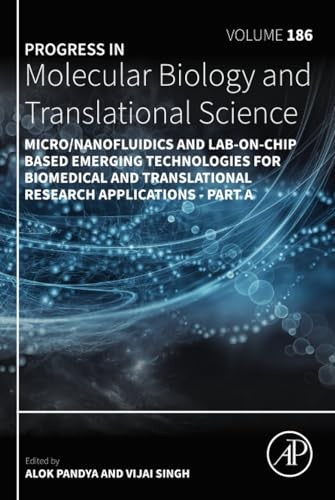
Micro/Nanofluidics and Lab-on-Chip Based Emerging Technologies for Biomedical and Translational Research Applications - Part A by Alok Pandya
Micro/Nanofluidics and Lab-on-Chip Based Emerging Technologies for Biomedical and Translational Research Applications, Volume 185, Part A represents the collation of chapters written by eminent scientists worldwide. Chapters in this updated release include An introduction to microfluidics and their applications, Design and fabrication of Micro/Nanofluidics devices and systems, Detection and separation of proteins using Micro/Nanofluidics devices, Micro/Nanofluidics devices for DNA/RNA detection and separation, Paper based microfluidics a forecast towards the most affordable and rapid point-of-care devices, Paper based micro/Nanofluidics devices for biomedical applications, Advances of Microfluidics Devices and their Applications in Personalized Medicine, and much more. Additional chapters cover Microfluidics for single cell analysis, Fluorescence Based Miniaturized Microfluidic and Nanofluidic Systems for Biomedical Applications, Active Matter Dynamics in Confined Microfluidic Environments, Challenges and opportunities in micro/nanofluidics and lab-on-a-chip, and Paper-microfluidic signal-enhanced immunoassays.
Dr. Alok Pandya is an innovator, interdisciplinary researcher, and academic leader specializing in the development of personalized biosensors for point-of-care/need diagnostics and rapid disease detection. His work focuses on developing advanced biosensing technologies for real-time health monitoring. Currently serving as an Associate Professor at the School of Applied Science and Technology, Gujarat Technological University, he brings over 11 years of research experience dedicated to biosensor-driven rapid diagnostics. Before joining GTU, Dr. Pandya spent 8 years as an Assistant Professor at the Institute of Advanced Research (IAR) and 3 years as a Research Associate at Ahmedabad University. He has also been a Visiting Professor at the University of California, San Diego, conducting research on wearable biosensors, and an Entrepreneurial Lead under the US National Science Foundation’s I-Corps™ program, gaining expertise in medical innovation and technology commercialization. A researcher and technologist, Dr. Pandya has published 60+ research articles, authored 5 books & 12+ book chapters, and holds 5 granted patents. His work has secured national and international funding to advance biomedical and forensic diagnostic technologies. He has been honored with prestigious awards, including the SERB-International Research Experience Award, the SERB Young Scientist Award, and the IAR Research Excellence Award. Dr. Pandya has developed cutting-edge biosensing platforms for rapid AMR detection, cardiovascular disease diagnostics, plant pathogen identification, and forensic body fluid analysis. With global research collaborations spanning France, the USA, and India, Dr. Pandya continues to drive innovation in biosensor technology, translating scientific discoveries into real-world applications for precision diagnostics and personalized healthcare. Prof. Vijai Singh is currently serving as Head of the Department of Biosciences, School of Science and Dean (Research & Innovation) at Indrashil University, Rajpur, Mehsana, India. Prior to this, he held the position of Associate Professor in the same department at Indrashil University. He has also served as Assistant Professor in the Department of Biological Sciences and Biotechnology at the Institute of Advanced Research, Gandhinagar, and in the Department of Biotechnology at the Invertis University, Bareilly, India. Earlier of his career, Prof. Singh worked as a Postdoctoral Fellow in the Synthetic Biology Group at the Institute of Systems and Synthetic Biology, Paris, France and at the School of Energy & Chemical Engineering at the Ulsan National Institute of Science and Technology, Ulsan, South Korea. He earned his Ph.D. in Biotechnology in 2009 from the ICAR-National Bureau of Fish Genetic Resources, Uttar Pradesh Technical University, Lucknow, India. His doctoral research focused on the development of molecular and immunoassays for the diagnosis of Aeromonas hydrophila. Prof. Singh’s research interests lies in the design and construction of novel biosynthetic pathways for production of medically and industrially important biomolecules. His laboratory is also actively engaged in developing CRISPR-Cas systems for gene knock out, knock in, gene regulation and diagnostic. With over 15 years of research and teaching experience, his areas of expertise include synthetic biology, metabolic engineering, bioinformatics, microbiology, and industrial microbiology. He has an extensive academic record, with over 110 articles, 89 book chapters, 26 books and 3 patents to his credits. Prof. Singh has received number of prestigious awards, including the Bioclues Innovation, Research and Development Award (2023) from the BIOCLUES Society, the Vice Chancellor's Best Research Award (2023) from Indrashil University, and the Agathiyar Chemical Biology Award (2023) from the Society of Chemical and Synthetic Biology. At Indrashil University, he currently serves as chairman of the Board of Study, and is a member of the Academic Council of Indrashil University. He also holds the position of the Member Secretary of the Institutional Biosafety Committee (IBSC) at the university. Dr. Singh is actively involved in national and international scientific advisory roles.
| SKU | Nicht verfügbar |
| ISBN 13 | 9780323988995 |
| ISBN 10 | 0323988997 |
| Titel | Micro/Nanofluidics and Lab-on-Chip Based Emerging Technologies for Biomedical and Translational Research Applications - Part A |
| Autor | Alok Pandya |
| Serie | Progress In Molecular Biology And Translational Science |
| Buchzustand | Nicht verfügbar |
| Bindungsart | Hardback |
| Verlag | Academic Press |
| Erscheinungsjahr | 2022-01-20 |
| Seitenanzahl | 326 |
| Hinweis auf dem Einband | Die Abbildung des Buches dient nur Illustrationszwecken, die tatsächliche Bindung, das Cover und die Auflage können sich davon unterscheiden. |
| Hinweis | Nicht verfügbar |