
Programming in Objective-C 2.0


Zusammenfassung
The feel-good place to buy books
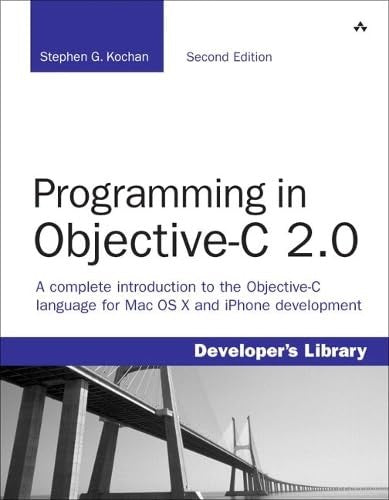
Programming in Objective-C 2.0 by Stephen G Kochan
THE #1 BESTSELLING BOOK ON OBJECTIVE-C 2.0 Programming in Objective-C 2.0 provides the new programmer a complete, step-by-step introduction to Objective-C, the primary language used to develop applications for the iPhone, iPad, and Mac OS X platforms. The book does not assume previous experience with either C or object-oriented programming languages, and it includes many detailed, practical examples of how to put Objective-C to use in your everyday iPhone/iPad or Mac OS X programming tasks. A powerful yet simple object-oriented programming language that’s based on the C programming language, Objective-C is widely available not only on OS X and the iPhone/iPad platform but across many operating systems that support the gcc compiler, including Linux, Unix, and Windows systems. The second edition of this book thoroughly covers the latest version of the language, Objective-C 2.0. And it shows not only how to take advantage of the Foundation framework’s rich built-in library of classes but also how to use the iPhone SDK to develop programs designed for the iPhone/iPad platform. Table of Contents 1 Introduction Part I: The Objective-C 2.0 Language 2 Programming in Objective-C 3 Classes, Objects, and Methods 4 Data Types and Expressions 5 Program Looping 6 Making Decisions 7 More on Classes 8 Inheritance 9 Polymorphism, Dynamic Typing, and Dynamic Binding 10 More on Variables and Data Types 11 Categories and Protocols 12 The Preprocessor 13 Underlying C Language Features Part II: The Foundation Framework 14 Introduction to the Foundation Framework 15 Numbers, Strings, and Collections 16 Working with Files 17 Memory Management 18 Copying Objects 19 Archiving Part III: Cocoa and the iPhone SDK 20 Introduction to Cocoa 21 Writing iPhone Applications Part IV: Appendixes A Glossary B Objective-C 2.0 Language Summary C Address Book Source Code D Resources
This book spends half the time talking about the Objective-C language itself and half the time talking about Apple's Foundation and Cocoa frameworksThe chapters are well organized and concepts are well explained, so you end up with a solid foundation in the language. It's an easy read even with very little programming experience. The book doesn't cover Cocoa or the other higher level frameworks, but you'll be completely ready to pick it up by the time you're done with this book.
Stephen Kochan is the author and coauthor of several bestselling titles on the C language, including Programming in C (Sams, 2004), Programming in ANSI C (Sams, 1994), and Topics in C Programming (Wiley, 1991), as well as several Unix titles, including Exploring the Unix System (Sams, 1992) and Unix Shell Programming (Sams 2003). He has been programming on Macintosh computers since the introduction of the first Mac in 1984, and he wrote Programming C for the Mac as part of the Apple Press Library. He maintains a web site and support forum for Programming in Objective-C 2.0 at classroomm.com/objective-c
| SKU | Nicht verfügbar |
| ISBN 13 | 9780321566157 |
| ISBN 10 | 0321566157 |
| Titel | Programming in Objective-C 2.0 |
| Autor | Stephen G Kochan |
| Buchzustand | Nicht verfügbar |
| Bindungsart | Paperback |
| Verlag | Pearson Education (US) |
| Erscheinungsjahr | 2009-01-06 |
| Seitenanzahl | 624 |
| Hinweis auf dem Einband | Die Abbildung des Buches dient nur Illustrationszwecken, die tatsächliche Bindung, das Cover und die Auflage können sich davon unterscheiden. |
| Hinweis | Nicht verfügbar |