
The Roman Lower Danube Frontier


Zusammenfassung
The feel-good place to buy books
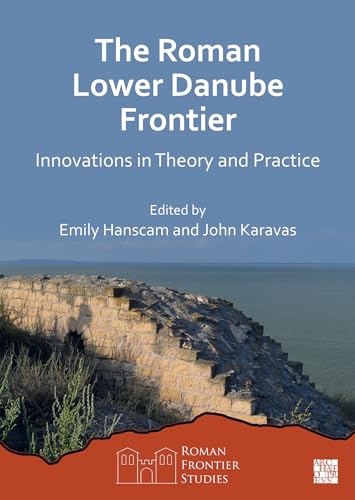
The Roman Lower Danube Frontier by Emily Hanscam
Over the past few decades, there has been a significant amount of research on the Roman Lower Danube frontier by international teams focusing on individual forts or broader landscape survey work; collectively, this volume represents the best of this collaboration with the aim of elevating the Lower Danube within broader Roman frontier scholarship. The Lower Danube, running between Singidunum (modern Belgrade) and Halmyris in the Danube Delta, was one of the most densely fortified regions of the Roman Empire. The region has long been a border zone, today forming part of the border between Serbia and Romania, and the majority of the border between Romania and Bulgaria. Despite its importance for understanding both Roman frontier policy and the relationship between ancient and modern borderscapes, the region has not yet made its full contribution to international Roman scholarship. Bridging the theoretical divide that exists between different regional research traditions, chapters in this volume focus on sites like Ratiaria, in modern north-western Bulgaria, while other contributors examine the complex landscape from a wider perspective oriented around roads, temporary camps, or early Christian sites. The Roman Lower Danube Frontier emphasises the importance of engaging with Roman frontier landscapes, particularly in regions such as East-Central Europe, where they remain part of a contemporary borderscape.Emily Hanscam is a Researcher in Archaeology at Linnaeus University, Sweden, associated with the UNESCO Chair for Heritage Futures, the LNU Centre for Concurrences and LNU Digital Transformations. She earned a PhD in Archaeology from Durham University (2019), researching Roman frontiers, archaeology and nationalism in East-Central Europe. She was previously a Lecturer in Archaeology for the University of Amsterdam and Project Manager for Archaeology at Halmyris, an international volunteer excavation project in Romania. She is co-editor of Digging Politics: The ancient past and contested present in East-Central Europe (De Gruyter, 2023).
John Karavas is a graduate of the Universities of Oxford and Durham (PhD in Ancient History, 2001). His main areas of interest lie in the fields of Hellenistic and Roman History, Greek and Roman provincial archaeology (with a special interest in Roman frontiers) as well as ancient warfare. Over the years he has participated in many excavations in Serbia, Romania and Greece; between 2008–2020 he was the Director of Excavations at Halmyris, a Greek/Roman/Byzantine military and urban site on the Danube Delta in Romania. Since 2003, he has been a faculty member at the College Year in Athens Study Abroad Program (DIKEMES).
| SKU | Nicht verfügbar |
| ISBN 13 | 9781803276625 |
| ISBN 10 | 1803276622 |
| Titel | The Roman Lower Danube Frontier |
| Autor | Emily Hanscam |
| Buchzustand | Nicht verfügbar |
| Bindungsart | Paperback |
| Verlag | Archaeopress |
| Erscheinungsjahr | 2023-11-16 |
| Seitenanzahl | 168 |
| Hinweis auf dem Einband | Die Abbildung des Buches dient nur Illustrationszwecken, die tatsächliche Bindung, das Cover und die Auflage können sich davon unterscheiden. |
| Hinweis | Nicht verfügbar |