
Waste Land (Poetry Classics)


Zusammenfassung
The feel-good place to buy books
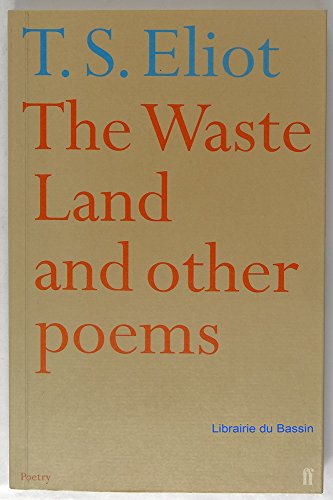
Waste Land (Poetry Classics) by T S Eliot
Published in 1922, The Waste Land was the most revolutionary poem of its time, offering a devastating vision of modern civilisation which has lost none of its power as we approach the end of the century.
Thomas Stearns Eliot was born in St Louis, Missouri in 1888. He was educated at Harvard, at the Sorbonne in Paris, and at Merton College, Oxford. His early poetry was profoundly influenced by the French symbolists, especially Baudelaire and Laforgue. In his academic studies he specialised in philosophy and logic. His doctoral thesis was on F. H. Bradley. He settled in England in 1915, the year in which he married Vivienne Haigh-Wood and also met his contemporary Ezra Pound for the first time. After teaching for a year or so he joined Lloyds Bank in the City of London in 1917, the year in which he published his first volume, Prufrock and Other Observations. In 1919 Poems was hand-printed by Leonard and Virginia Woolf. His first collection of essays, The Sacred Wood, appeared in 1920. His most famous work, The Waste Land, was published in 1922, the same year as James Joyce's Ulysses. The poem was included in the first issue of his jou
| SKU | Nicht verfügbar |
| ISBN 13 | 9780571202706 |
| ISBN 10 | 0571202705 |
| Titel | Waste Land (Poetry Classics) |
| Autor | T S Eliot |
| Buchzustand | Nicht verfügbar |
| Bindungsart | Paperback |
| Verlag | Faber & Faber |
| Erscheinungsjahr | 1999-10-04 |
| Seitenanzahl | 96 |
| Hinweis auf dem Einband | Die Abbildung des Buches dient nur Illustrationszwecken, die tatsächliche Bindung, das Cover und die Auflage können sich davon unterscheiden. |
| Hinweis | Nicht verfügbar |