
Privacy-preserving Computing


Privacy-preserving Computing
Regular price
Checking stock...
Regular price
Checking stock...
Summary
Privacy-preserving computing aims to protect the personal information of users while capitalizing on the possibilities offered by big data. This practical introduction for students, researchers, and industry practitioners presents a systematic tour of recent advances in privacy-preserving methods for real-world problems in analytics and AI.
The feel-good place to buy books
- Free delivery in Australia
- Supporting authors with AuthorSHARE
- 100% recyclable packaging
- Proud to be a B Corp – A Business for good
- Buy-back with Ziffit
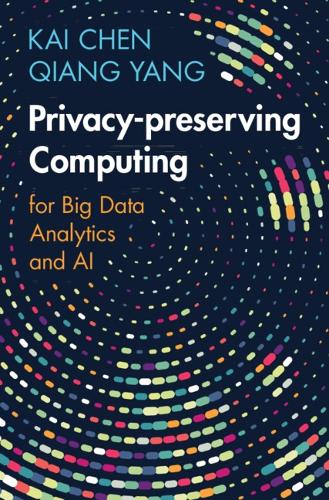
Privacy-preserving Computing by Kai Chen
Privacy-preserving computing aims to protect the personal information of users while capitalizing on the possibilities unlocked by big data. This practical introduction for students, researchers, and industry practitioners is the first cohesive and systematic presentation of the field's advances over four decades. The book shows how to use privacy-preserving computing in real-world problems in data analytics and AI, and includes applications in statistics, database queries, and machine learning. The book begins by introducing cryptographic techniques such as secret sharing, homomorphic encryption, and oblivious transfer, and then broadens its focus to more widely applicable techniques such as differential privacy, trusted execution environment, and federated learning. The book ends with privacy-preserving computing in practice in areas like finance, online advertising, and healthcare, and finally offers a vision for the future of the field.
'While we are witnessing revolutionary changes in AI technology empowered by deep learning and large-scale computing, data privacy for trusted machine learning plays an essential role in safe and reliable AI deploymentThis book introduces fundamental concepts and advanced techniques for privacy-preserving computation for data mining and machine learning, which serve as a foundation for safe and secure AI development and deployment.' Pin-Yu Chen, IBM Research
Kai Chen is Professor at the Department of Computer Science and Engineering of the Hong Kong University of Science and Technology, where he leads the Intelligent Networking and Systems (iSING) Lab and the WeChat-HKUST Joint Lab on Artificial Intelligence Technology. His research interests include data center networking, high-performance networking, machine learning systems, and hardware acceleration. Qiang Yang is Chief Ai Officer at Webank and Professor Emeritus at the Department of Computer Science and Engineering of the Hong Kong University of Science and Technology. He is an AAAI, ACM, and IEEE Fellow and Fellow of the Canadian Royal Society. He has authored books such as 'Intelligent Planning,' 'Crafting Your Research Future,' 'Transfer Learning,' and 'Federated Learning.' His research interests include artificial intelligence, machine learning and data mining, automated planning, transfer learning, and federated learning.
| SKU | Unavailable |
| ISBN 13 | 9781009299510 |
| ISBN 10 | 1009299514 |
| Title | Privacy-preserving Computing |
| Author | Kai Chen |
| Condition | Unavailable |
| Binding Type | Hardback |
| Publisher | Cambridge University Press |
| Year published | 2023-11-16 |
| Number of pages | 271 |
| Cover note | Book picture is for illustrative purposes only, actual binding, cover or edition may vary. |
| Note | Unavailable |