
Reasoning beyond Reason


Reasoning beyond Reason
Regular price
Checking stock...
Regular price
Checking stock...
Proud to be B-Corp
Our business meets the highest standards of verified social and environmental performance, public transparency and legal accountability to balance profit and purpose. In short, we care about people and the planet.
The feel-good place to buy books
- Free delivery in Australia
- Supporting authors with AuthorSHARE
- 100% recyclable packaging
- Proud to be a B Corp – A Business for good
- Buy-back with Ziffit
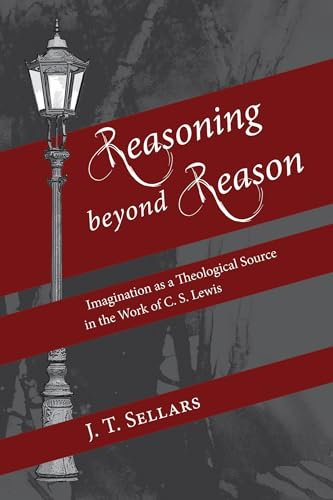
Reasoning beyond Reason by Jeff Sellars
There is a seeming dichotomy in C. S. Lewis's writing. On the one hand we see the writer of argumentative works, and on the other hand we have the imaginative poet. Lewis also found this dichotomy within himself. When he was a rationalist and atheist he found that these two sides of him were pulling in different directions: he believed that his rationalist side could not be reconciled with his imaginative side. Once he became a Christian, he eventually found a means of marrying the two--principally, through story and myth. Within C. S. Lewis studies, there is also a common conception of Lewis as a modern rationalist philosopher, i.e., a rationalist who thinks arguments (and his arguments in particular) are the last answer on the questions he undertakes. Reasoning beyond Reason attempts to take this view to task by placing Lewis back into his pre-modern context and showing that his sources and influences are classical ones. In this process Lewis is viewed through the idea that imagination and reason are connected in an intimate way: they are different expressions of a single divine source of truth, and there is an imagination already present upon which reason works. Lewis's transpositional view of imagination implicitly pushes towards a somewhat radical position: the imagination is to be seen as theological in its reliance upon something more than the merely material; it necessarily relies on a transcendent funding for its use and meaning. In other words, the imagination is a well-source for what we might normally label rational. To the modern mind, reason belongs to the cold, objective stare of science. Imagination and story are mere 'culture, ' of value only as escapism or entertainment. J. T. Sellars's remarkable book shows how one of Christianity's most learned but enduringly popular defenders, C. S. Lewis, belonged to a richer, classical world where reason is imaginative and the imagination is rational. I warmly welcome its publication. --Simon Oliver Department of Theology and Religious Studies University of Nottingham J. T. Sellars, PhD, is an instructor of philosophy and humanities in Northern California and Southern Oregon.| SKU | Unavailable |
| ISBN 13 | 9781608995035 |
| ISBN 10 | 1608995038 |
| Title | Reasoning beyond Reason |
| Author | Jeff Sellars |
| Condition | Unavailable |
| Binding Type | Paperback |
| Publisher | Wipf & Stock Publishers |
| Year published | 2011-01-01 |
| Number of pages | 266 |
| Cover note | Book picture is for illustrative purposes only, actual binding, cover or edition may vary. |
| Note | Unavailable |