


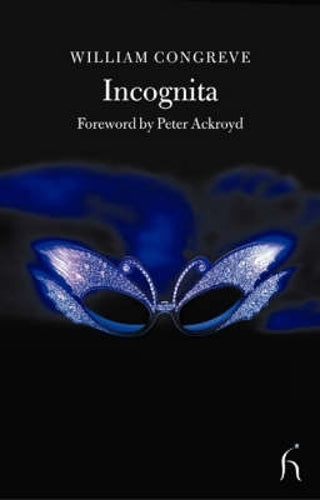
Incognita by William Congreve
William Congreve (1670-1729) was an English writer during the Restoration era, and one of the most polished exponents of the comedy of manners. Before he turned 30, Congreve had written five plays. The Old Bachelor, his debut play, was a huge hit at Drury Lane in 1693, starring Thomas Betterton and Mrs Bracegirdle. Congreve claims that he wrote the piece to pass the time during his recuperation. The Double Dealer (1694) was a flop, but in 1695 he released another smash, Love for Love (again with Betterton and Mrs Bracegirdle), to celebrate the opening of the new Lincoln's Inns Fields Theatre.
Its success cemented his name and provided him with a stake in the theater. Unfortunately, his pledge to compose at least one play a year for the theater, of which he was now a part owner, was not kept. The Mourning Bride (1697), Congreve's lone tragedy, was his most popular piece during his lifetime but is today rarely seen. Mrs Bracegirdle played Almeria, a role that became highly sought after by dramatic actresses.
The Way of the World, a very intricate and complicated treatise today regarded as his masterpiece, was received with skepticism in 1700. This failure, combined with his persistent dissatisfaction with his treatment in Jeremy Collier's popular treatise A Brief Account of the Profaneness and Immorality of the English Theatre (1698), convinced him to leave the stage. (In Corrections of Mr Collier's False and Imperfect Citations, Congreve replied to Collier with little effect.) Voltaire later visited him and scolded him of wasting his genius. Congreve stated that he preferred to be treated as a gentleman rather than an author when he was visited.
Voltaire responded that if Mr Congreve had just been a gentleman, he would not have bothered to summon him. Congreve was a warm man who won the love and respect of his numerous friends, according to all sources. John Dryden compared him to Shakespeare, Alexander Pope dedicated his Iliad translation to him in 1715, and John Gay referred to him as an unreproachable man. Henrietta, the second Duchess of Marlborough, who arranged for his burial in Westminster Abbey, received practically all of his £10,000 estate when he died.
| SKU | Unavailable |
| ISBN 13 | 9781843910695 |
| ISBN 10 | 1843910691 |
| Title | Incognita |
| Author | William Congreve |
| Series | Hesperus Classics |
| Condition | Unavailable |
| Binding Type | Paperback |
| Publisher | Hesperus Press Ltd |
| Year published | 2003-09-26 |
| Number of pages | 112 |
| Cover note | Book picture is for illustrative purposes only, actual binding, cover or edition may vary. |
| Note | Unavailable |