
Advanced Environmental Exercise Physiology


Advanced Environmental Exercise Physiology
Regular price
Checking stock...
Regular price
Checking stock...
Summary
Advanced Environmental Exercise Physiology, Second Edition, explores how various environments affect the body’s ability to exercise and how the body responds to short-term and repeated exposures. It also offers countermeasures that people can take to minimize the impact of environmental stressors.
The feel-good place to buy books
- Free delivery in Ireland
- Supporting authors with AuthorSHARE
- 100% recyclable packaging
- Proud to be a B Corp – A Business for good
- Buy-back with Ziffit
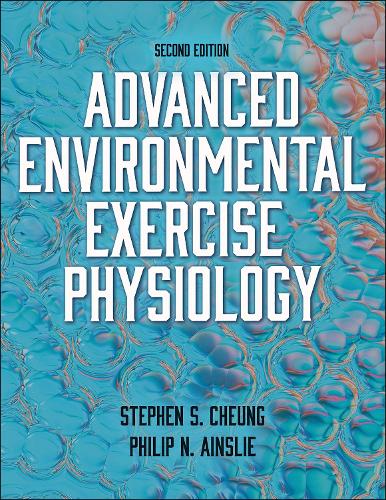
Advanced Environmental Exercise Physiology by Stephen S Cheung
Advanced Environmental Exercise Physiology, Second Edition, offers physiology students and exercise science professionals a complete look at the major topics and debates in the field of environmental physiology. In this second edition, Dr. Stephen Cheung is joined by the coauthor Dr. Phil Ainslie, who has extensive professional expertise in mountaineering and high-altitude physiology and has led numerous high-altitude research expeditions. Among the issues explored in this text are the effects of heat, hydration, and cold in the thermal environment; diving, altitude training, and other pressure effects on the human system; and the influences that pollution and air quality have on exercise. The text also explores the microgravity (space) environment and chronobiological rhythms. The second edition includes new chapters on heat adaptation and therapy, breath-hold diving, physiological adjustments to acute hypoxia, sex differences in environmental response, and cross-adaptation. Through Advanced Environmental Exercise Physiology, Second Edition, readers will learn the following: The initial physiological responses upon exposure to an environment that a person is not adapted to How the body adapts to repeated exposure to an environment How various environments affect the ability to exercise and work Individual variability in response to stressful environments Countermeasures that people can take to minimize the impact of environmental stressors Advanced Environmental Exercise Physiology, Second Edition, contains twice the number of figures and illustrations from the previous edition to offer better visualization and explanation of the content. New learning aids include chapter objectives, chapter summaries, and review questions to enhance reader comprehension. Sidebars throughout the text highlight lively areas of current research and debate to stimulate further investigation. Supported by evidence-based information and numerous references, Advanced Environmental Exercise Physiology, Second Edition, addresses the primary environmental factors affecting people when they are working, exercising, and competing in sport. By linking research with recommendations for real-world situations, this text serves as an invaluable resource for students and professionals alike.
“Advanced Environmental Exercise Physiology, Second Edition, bridges the gap between laboratory research and real-world application, providing a definitive and accessible overview of current knowledge in environmental exercise physiology—including rapidly developing areas such as breath-hold diving and heat adaptation”
—Alex Hutchinson, Science Journalist and Author of Endure: Mind, Body, and the Curiously Elastic Limits of Human Performance
“The authors have successfully collated the most important aspects of various environmental exercise physiology and positioned it into one book. This was done through appropriate choice of information to cover, while also using exceptionally good figures/images throughout the book to help readers gain an understanding of the complex interplay at work during environmental exercise physiology.”
—© Doody’s Review Service, 2023, Cody Dulaney, Kent State University (4-star review)
—Alex Hutchinson, Science Journalist and Author of Endure: Mind, Body, and the Curiously Elastic Limits of Human Performance
“The authors have successfully collated the most important aspects of various environmental exercise physiology and positioned it into one book. This was done through appropriate choice of information to cover, while also using exceptionally good figures/images throughout the book to help readers gain an understanding of the complex interplay at work during environmental exercise physiology.”
—© Doody’s Review Service, 2023, Cody Dulaney, Kent State University (4-star review)
Stephen Cheung, PhD, is a professor of kinesiology and senior research fellow at Brock University, where his research focuses on the effects of environmental stress on human physiology and performance. He held a Canada Research Chair in Environmental Ergonomics from 2007 to 2017.
Cheung has authored more than 120 articles that explore muscular, cardiovascular, respiratory, neural, metabolic, cognitive, and performance responses to multiple environments, including heat, cold, hydration, and altitude. He has worked extensively with industry and sport organizations to improve health and safety in the workplace, athletic performance, and equipment design. Cheung is also a leader in driving scientific advances in cycling physiology and performance and has published two books on the science of cycling: Cutting-Edge Cycling and Cycling Science.
Philip Ainslie, PhD, is a professor of health and exercise sciences and is the Canada Research Chair and codirector of the Centre for Heart, Lung and Vascular Health at the University of British Columbia in Okanagan.
Ainslie has published more than 300 peer-reviewed scientific articles and has recently coauthored the sixth edition of the textbook High-Altitude Medicine and Physiology. In addition to mechanistic laboratory-based experiments, he leads regular field expeditions to study elite free divers as well as expeditions to high altitude to study acclimatization and adaptation, with a focus on indigenous populations located in the mountainous regions of Tibet, South America, and Ethiopia. Ainslie has won numerous national and international awards for his research and sits on various international scientific leadership and advisory groups; he also currently co-organizes a number of international conferences related to environmental physiology.
Cheung has authored more than 120 articles that explore muscular, cardiovascular, respiratory, neural, metabolic, cognitive, and performance responses to multiple environments, including heat, cold, hydration, and altitude. He has worked extensively with industry and sport organizations to improve health and safety in the workplace, athletic performance, and equipment design. Cheung is also a leader in driving scientific advances in cycling physiology and performance and has published two books on the science of cycling: Cutting-Edge Cycling and Cycling Science.
Philip Ainslie, PhD, is a professor of health and exercise sciences and is the Canada Research Chair and codirector of the Centre for Heart, Lung and Vascular Health at the University of British Columbia in Okanagan.
Ainslie has published more than 300 peer-reviewed scientific articles and has recently coauthored the sixth edition of the textbook High-Altitude Medicine and Physiology. In addition to mechanistic laboratory-based experiments, he leads regular field expeditions to study elite free divers as well as expeditions to high altitude to study acclimatization and adaptation, with a focus on indigenous populations located in the mountainous regions of Tibet, South America, and Ethiopia. Ainslie has won numerous national and international awards for his research and sits on various international scientific leadership and advisory groups; he also currently co-organizes a number of international conferences related to environmental physiology.
| SKU | Unavailable |
| ISBN 13 | 9781492593980 |
| ISBN 10 | 1492593982 |
| Title | Advanced Environmental Exercise Physiology |
| Author | Stephen S Cheung |
| Condition | Unavailable |
| Binding Type | Paperback |
| Publisher | Human Kinetics Publishers |
| Year published | 2021-03-31 |
| Number of pages | 296 |
| Cover note | Book picture is for illustrative purposes only, actual binding, cover or edition may vary. |
| Note | Unavailable |