
Art and Architecture of Mesopotamia


Art and Architecture of Mesopotamia
Regular price
Checking stock...
Regular price
Checking stock...
Proud to be B-Corp
Our business meets the highest standards of verified social and environmental performance, public transparency and legal accountability to balance profit and purpose. In short, we care about people and the planet.
The feel-good place to buy books
- Free delivery in Ireland
- Supporting authors with AuthorSHARE
- 100% recyclable packaging
- Proud to be a B Corp – A Business for good
- Buy-back with Ziffit
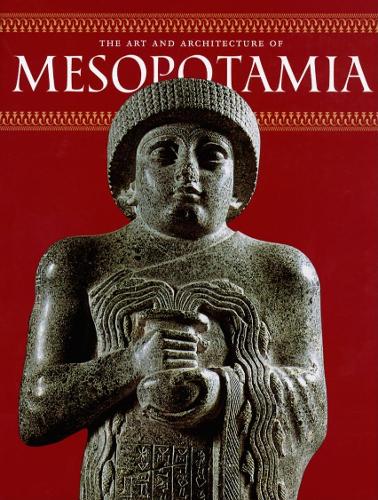
Art and Architecture of Mesopotamia by Giovanni Curatola
The artistic traditions of ancient Iraq, or Mesopotamia, are among the oldest in the world, for it was in this flat, fertile land between the Tigris and Euphrates rivers that the world's first advanced civilization, that of the Sumerians, arose around 3000 BC. But the long history of Mesopotamian art was marked by change as much as continuity; the region was then as now a center of political conflict, and the Sumerians gave way to a succession of powers both indigenous and foreign, each of which left a cultural imprint. This volume's contributing authors, all art historians and archaeologists specializing in the ancient Near East, provide accessible and lively overviews of the successive phases of this eventful artistic saga. The first two chapters cover the "classic" age of the great Mesopotamian city-states, from the pre-Sumerian Ubaid culture to Alexander's conquest of Babylon; the remains of this era range from the fabulous treasures of the royal cemeteries at Ur to the mighty ziggurats of Uruk and Babylon. The third chapter concerns the Greco-Mesopotamian art of the Hellenistic dynasty founded by Alexander's general Seleucus; the ruins of Seleucia, his capital on the Tigris, cover some 1500 acres. The fourth chapter investigates the artistic contributions of the two Persian dynasties, the Parthian and the Sassanid, that dominated the region from the first century BC to the seventh century AD and established the soaring iwan, or vaulted portico, as one of its typical architectural forms. The final chapter is devoted to the area's early Islamic period, during which the Abbasid caliphs (eighth to thirteenth century AD) made Iraq the center of the Islamic world, constructing splendid mosques in their capitals of Baghdad and Samarra and elaborating the fantastic arabesques that have never disappeared from Islamic decorative art. The ancient masterpieces discussed in these chapters are depicted in 217 stunning illustrations, most of them full-color photographs, and appended to the main text is a unique visual guide to Iraq's principal archaeological sites, which provides a further 247 black-and-white photographs. With its authoritative, up-to-date texts and this wealth of illustrations, The Art and Architecture of Mesopotamia is an essential publication for anyone with an interest in the cultural heritage of mankind.
"The text, though scholarly, is accessible to the general reader, giving excellent instruction in a rich civilizational epoch" -- The Wall Street Journal
Giovanni Curatola, a professor of archaeology and the history of Muslim art at the University of Udine, has curated such exhibitions as Islamic Art in Italy and Shamans and Dervishes of the Steppes. He is presently involved in the effort to preserve Iraq's archaeological heritage. Donny George is the former Director General of Antiquities of Iraq.
| SKU | Unavailable |
| ISBN 13 | 9780789209214 |
| ISBN 10 | 0789209217 |
| Title | Art and Architecture of Mesopotamia |
| Author | Giovanni Curatola |
| Condition | Unavailable |
| Binding Type | Hardback |
| Publisher | Abbeville Press Inc.,U.S. |
| Year published | 2007-04-19 |
| Number of pages | 280 |
| Cover note | Book picture is for illustrative purposes only, actual binding, cover or edition may vary. |
| Note | Unavailable |