
Ecology of the Brain


Ecology of the Brain
Regular price
Checking stock...
Regular price
Checking stock...
Summary
Present day neuroscience places the brain at the centre of study. But what if researchers viewed the brain not as the foundation of life, rather as a mediating organ? Ecology of the Brain addresses this very question. It considers the human body as a collective, a living being which uses the brain to mediate interactions.
The feel-good place to buy books
- Free delivery in Ireland
- Supporting authors with AuthorSHARE
- 100% recyclable packaging
- Proud to be a B Corp – A Business for good
- Buy-back with Ziffit
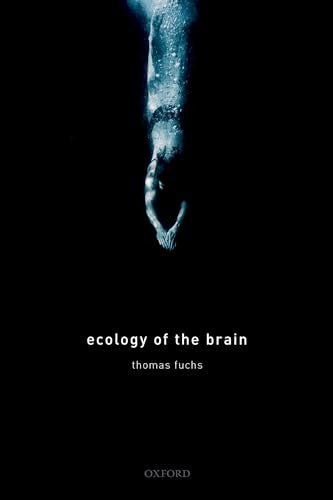
Ecology of the Brain by Thomas Fuchs
Present day neuroscience places the brain at the centre of study. But what if researchers viewed the brain not as the foundation of life, rather as a mediating organ? Ecology of the Brain addresses this very question. It considers the human body as a collective, a living being which uses the brain to mediate interactions. Those interactions may be both within the human body and between the human body and its environment. Within this framework, the mind is seen not as a product of the brain but as an activity of the living being; an activity which integrates the brain within the everyday functions of the human body. Going further, Fuchs reformulates the traditional mind-brain problem, presenting it as a dual aspect of the living being: the lived body and the subjective body - the living body and the objective body. The processes of living and experiencing life, Fuchs argues, are in fact inextricably linked; it is not the brain, but the human being who feels, thinks and acts. For students and academics, Ecology of the Brain will be of interest to those studying or researching theory of mind, social and cultural interaction, psychiatry, and psychotherapy.
Thomas Fuchs' Ecology of the Brain has taken up the challenge by pulling together under one cover a circular causality framework, an increasingly detailed description of what an embodied subjectivity implies, and in doing so, the possibility to apply these perspectives to different disciplinary fields and to inspire further research and conceptual scrutiny* Ximena A. González-Grandón, Philosophia *
Ecology of the Brain is a far-reaching book that touches on multiple topics and can be taken from many different directions ... a valuable contribution to the field of psychological medicine. * Susana Ramírez-Vizcaya, The Journal of Mind and Behavior *
Thomas Fuchs ... presents a brilliant review of literature integrating phenomenological philosophy, biology, and complex systems theory to argue for an ecological view of the mind and brain as being embedded in the relation of the living organism and its environment. ... Dr. Fuchs' work is astute, incisive, integrative, and provocative. * Susan Gordon, The Humanistic Psychologist *
Thomas Fuchs's work Ecology of the Brain is a unique, critically sharp contribution. It is marked with fascinating and paradigmatic interdisciplinary integration of philosophical reflexion and impressive range of neuroscientific knowledge, exceeding the often narrow, reductive and mono-perspective - "exact" - scientific thinking, to represent a phenomenological approach for the future interdisciplinary studies on brain and mind. * Luka Janes, Synthesis Philosophica *
This volume will not only be relevant to researchers interested in the philosophy of mind and the role to be played by the human sciences in this domain, but it will also be a valuable addition to any psychiatric training program. * Anya Daly, Phenomenology and the Cognitive Sciences *
[we] owe a debt of gratitude to Fuchs, and to Merleau-Ponty, for so compellingly restoring a solid foundation for continued phenomenological research, and compassionate care, in the face of increasing efforts to reconceptualize both the self and subjectivity as empty illusions. * Larry Davidson, Journal of Phenomenological Psychology *
Ecology of the brain supports a clear shift from a naturalistic to a personalistic concept of the human being in neuroscience especially. This requires a "cultural biology", as Fuchs puts it, and opens up new opportunities for the study of how we enact life in a shared social world. * Alfonsina Scarinzi, Journal of the British Society for Phenomenology *
Ecology of the brain is a recommended reading not only for everyone interested in psychology, neurosciences, psychopathology and so forth, but also for anyone interested in theoretical philosophy today. * Diego DAngelo, Universität Koblenz-Landau, Phenomenlogical Reviews *
Ecology of the Brain is a far-reaching book that touches on multiple topics and can be taken from many different directions ... a valuable contribution to the field of psychological medicine. * Susana Ramírez-Vizcaya, The Journal of Mind and Behavior *
Thomas Fuchs ... presents a brilliant review of literature integrating phenomenological philosophy, biology, and complex systems theory to argue for an ecological view of the mind and brain as being embedded in the relation of the living organism and its environment. ... Dr. Fuchs' work is astute, incisive, integrative, and provocative. * Susan Gordon, The Humanistic Psychologist *
Thomas Fuchs's work Ecology of the Brain is a unique, critically sharp contribution. It is marked with fascinating and paradigmatic interdisciplinary integration of philosophical reflexion and impressive range of neuroscientific knowledge, exceeding the often narrow, reductive and mono-perspective - "exact" - scientific thinking, to represent a phenomenological approach for the future interdisciplinary studies on brain and mind. * Luka Janes, Synthesis Philosophica *
This volume will not only be relevant to researchers interested in the philosophy of mind and the role to be played by the human sciences in this domain, but it will also be a valuable addition to any psychiatric training program. * Anya Daly, Phenomenology and the Cognitive Sciences *
[we] owe a debt of gratitude to Fuchs, and to Merleau-Ponty, for so compellingly restoring a solid foundation for continued phenomenological research, and compassionate care, in the face of increasing efforts to reconceptualize both the self and subjectivity as empty illusions. * Larry Davidson, Journal of Phenomenological Psychology *
Ecology of the brain supports a clear shift from a naturalistic to a personalistic concept of the human being in neuroscience especially. This requires a "cultural biology", as Fuchs puts it, and opens up new opportunities for the study of how we enact life in a shared social world. * Alfonsina Scarinzi, Journal of the British Society for Phenomenology *
Ecology of the brain is a recommended reading not only for everyone interested in psychology, neurosciences, psychopathology and so forth, but also for anyone interested in theoretical philosophy today. * Diego DAngelo, Universität Koblenz-Landau, Phenomenlogical Reviews *
Thomas Fuchs, MD, PhD, is Karl Jaspers Professor of Philosophy and Psychiatry at Heidelberg University, Germany. His main areas of expertise include phenomenological philosophy and psychopathology as well as embodied and enactive cognitive science, with a particular emphasis on non-representational, interactive concepts of social cognition. He was Coordinator and Principal Investigator of several large national and international grants, among them the European Research Training Network Towards an Embodied Science of Intersubjectivity (TESIS, 2011-2016). He has authored over 300 journal articles, book chapters and several books. He is also co-editor of Psychopathology and editorial board member of 4 scientific journals.
| SKU | Unavailable |
| ISBN 13 | 9780199646883 |
| ISBN 10 | 0199646880 |
| Title | Ecology of the Brain |
| Author | Thomas Fuchs |
| Series | International Perspectives In Philosophy And Psychiatry |
| Condition | Unavailable |
| Binding Type | Paperback |
| Publisher | Oxford University Press |
| Year published | 2017-12-14 |
| Number of pages | 368 |
| Cover note | Book picture is for illustrative purposes only, actual binding, cover or edition may vary. |
| Note | Unavailable |