
Fort Benning


Fort Benning
Proud to be B-Corp
Our business meets the highest standards of verified social and environmental performance, public transparency and legal accountability to balance profit and purpose. In short, we care about people and the planet.
The feel-good place to buy books
- Free delivery in Ireland
- Supporting authors with AuthorSHARE
- 100% recyclable packaging
- Proud to be a B Corp – A Business for good
- Buy-back with Ziffit
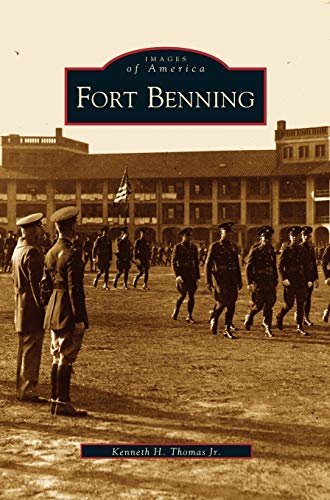
Fort Benning by Kenneth H Thomas Jr
Established outside Columbus, Georgia in October 1918 by the United States Army as Camp Benning, the base was moved to its permanent location, nine miles south, in June 1919. In 1922, the post was made permanent and was named Fort Benning. Created as the new location of The Infantry School of Arms, Fort Benning became the training post for many of the country's future leaders, as well as a major part of the military experience for hundreds of thousands of American soldiers.The post's current size, more than 180,000 acres, has long made it recognized as one of the largest infantry bases in the world. Named for Gen. Henry L. Benning of Columbus, the installation has had a major impact on the economic and social life of nearby Columbus. Images of America: Fort Benning features vintage photographs and postcards, mostly from 1918 to 1978, showcasing the first 60 years of the base's 85-year history. Included are scenes of the temporary encampment on Macon Road and the early wooden encampment on the Main Post. The permanent buildup from the late 1920s to the early 1940s is shown in photographs of The Infantry School, the Officers' Club, Main Post Chapel, Doughboy Stadium, Gowdy Field, the Jump Towers, Lawson Field, the Cuartel Barracks, and the officers' quarters, as well as Riverside, the Commandant's Home, formerly the Bussey Plantation. Activities and events include military reviews, visits of presidents, and the National Infantry Museum's dedication. Generals who served there and are featured include Bradley, Eisenhower, Marshall, and Patton.
Established outside Columbus, Georgia in October 1918 by the United States Army as Camp Benning, the base was moved to its permanent location, nine miles south, in June 1919. In 1922, the post was made permanent and was named Fort Benning. Created as the new location of The Infantry School of Arms, Fort Benning became the training post for many of the country's future leaders, as well as a major part of the military experience for hundreds of thousands of American soldiers.
The post's current size, more than 180,000 acres, has long made it recognized as one of the largest infantry bases in the world. Named for Gen. Henry L. Benning of Columbus, the installation has had a major impact on the economic and social life of nearby Columbus. Images of America: Fort Benning features vintage photographs and postcards, mostly from 1918 to 1978, showcasing the first 60 years of the base's 85-year history. Included are scenes of the temporary encampment on Macon Road and the early wooden encampment on the Main Post. The permanent buildup from the late 1920s to the early 1940s is shown in photographs of The Infantry School, the Officers' Club, Main Post Chapel, Doughboy Stadium, Gowdy Field, the Jump Towers, Lawson Field, the Cuartel Barracks, and the officers' quarters, as well as Riverside, the Commandant's Home, formerly the Bussey Plantation. Activities and events include military reviews, visits of presidents, and the National Infantry Museum's dedication. Generals who served there and are featured include Bradley, Eisenhower, Marshall, and Patton.
| SKU | Unavailable |
| ISBN 13 | 9781531610623 |
| ISBN 10 | 1531610625 |
| Title | Fort Benning |
| Author | Kenneth H Thomas Jr |
| Condition | Unavailable |
| Binding Type | Hardback |
| Publisher | Arcadia Publishing Library Editions |
| Year published | 2003-09-10 |
| Number of pages | 130 |
| Cover note | Book picture is for illustrative purposes only, actual binding, cover or edition may vary. |
| Note | Unavailable |