
Myths of the Pagan North


Myths of the Pagan North
Regular price
Checking stock...
Regular price
Checking stock...
Summary
As the Vikings began to migrate overseas as raiders or settlers in the late eighth century, there is evidence that this new way of life, centred on warfare, commerce and exploration, brought with it a warrior ethos that gradually became codified in the Viking myths. This book leads the reader into the lost world of the Norse gods.
The feel-good place to buy books
- Free delivery in Ireland
- Supporting authors with AuthorSHARE
- 100% recyclable packaging
- Proud to be a B Corp – A Business for good
- Buy-back with Ziffit
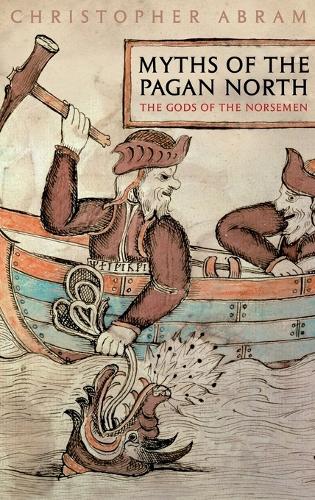
Myths of the Pagan North by Christopher Abram
This is an engaging account of the world of the Vikings and their gods. As the Vikings began to migrate overseas as raiders or settlers in the late eighth century, there is evidence that this new way of life, centred on warfare, commerce and exploration, brought with it a warrior ethos that gradually became codified in the Viking myths, notably in the cult of Odin, the god of war, magic and poetry, and chief god in the Norse pantheon. The twelfth and thirteenth centuries, when most of Scandinavia had long since been converted to Christianity, form perhaps the most important era in the history of Norse mythology: only at this point were the myths of Thor, Freyr and Odin first recorded in written form. Using archaeological sources to take us further back in time than any written document, the accounts of foreign writers like the Roman historian Tacitus, and the most important repository of stories of the gods, old Norse poetry and the Edda, Christopher Abram leads the reader into the lost world of the Norse gods.
‘Undoubtedly a learned, informative and enjoyable account of the Norse myths that presents a new model for future discussion' -- BBC History Magazine
‘The most innovative aspect of Abram's account is the emphasis he places on skaldic verse, particularly in his chapters dealing with the Viking Age and the conversion period. Though it would be easy to dismiss this poetry as no more ancient than the high medieval sources in which it is preserved, Abram takes the more challenging line that some of it is indeed originally from the pagan period and very successfully teases all kinds of new insights from it. He does this by paying much closer attention to the contexts and detail of this poetry than previous commentators... this is undoubtedly a learned, informative and enjoyable account of the Norse myths that presents a new model for future discussion.' -- www.historyextra.com
[a] valuable introduction to the subject. -- Contemporary Review, Volume 293, No. 1702
Almost all of the scholars from whom we have learnt about Norse mythology were synthesisers, carefully combining fragmentary evidence from different regions, periods, and genres to build up as coherent a composite picture as possible... Dr Abram takes the opposite approach, isolating each individual instance of a myth’s occurrence, discussing it as an entity in its own right, and relating it to whatever can be discovered of its social and historical context — and indeed, in the case of skaldic verse, to what is known of its author and the patron for whom he wrote... However much we already know and love Norse myths, Dr Abram’s book will add a vivid new awareness of the human processes that created and preserved them. -- Jacqueline Simpson , The Folklore Society, UK * Folklore *
‘The most innovative aspect of Abram's account is the emphasis he places on skaldic verse, particularly in his chapters dealing with the Viking Age and the conversion period. Though it would be easy to dismiss this poetry as no more ancient than the high medieval sources in which it is preserved, Abram takes the more challenging line that some of it is indeed originally from the pagan period and very successfully teases all kinds of new insights from it. He does this by paying much closer attention to the contexts and detail of this poetry than previous commentators... this is undoubtedly a learned, informative and enjoyable account of the Norse myths that presents a new model for future discussion.' -- www.historyextra.com
[a] valuable introduction to the subject. -- Contemporary Review, Volume 293, No. 1702
Almost all of the scholars from whom we have learnt about Norse mythology were synthesisers, carefully combining fragmentary evidence from different regions, periods, and genres to build up as coherent a composite picture as possible... Dr Abram takes the opposite approach, isolating each individual instance of a myth’s occurrence, discussing it as an entity in its own right, and relating it to whatever can be discovered of its social and historical context — and indeed, in the case of skaldic verse, to what is known of its author and the patron for whom he wrote... However much we already know and love Norse myths, Dr Abram’s book will add a vivid new awareness of the human processes that created and preserved them. -- Jacqueline Simpson , The Folklore Society, UK * Folklore *
Christopher Abram is Lecturer in Medieval Scandinavian Studies at University College, London where he teaches Old Norse mythology, literature and language. He has published scholarly articles on eddic poetry and is working on a volume about the transmission of the Icelandic eddas.
| SKU | Unavailable |
| ISBN 13 | 9781847252470 |
| ISBN 10 | 1847252478 |
| Title | Myths of the Pagan North |
| Author | Christopher Abram |
| Condition | Unavailable |
| Binding Type | Hardback |
| Publisher | Bloomsbury Publishing PLC |
| Year published | 2011-05-05 |
| Number of pages | 272 |
| Cover note | Book picture is for illustrative purposes only, actual binding, cover or edition may vary. |
| Note | Unavailable |