
The Science of Getting Rich (A Thrifty Book)


The Science of Getting Rich (A Thrifty Book)
Regular price
Checking stock...
Regular price
Checking stock...
Proud to be B-Corp
Our business meets the highest standards of verified social and environmental performance, public transparency and legal accountability to balance profit and purpose. In short, we care about people and the planet.
The feel-good place to buy books
- Free delivery in Ireland
- Supporting authors with AuthorSHARE
- 100% recyclable packaging
- Proud to be a B Corp – A Business for good
- Buy-back with Ziffit
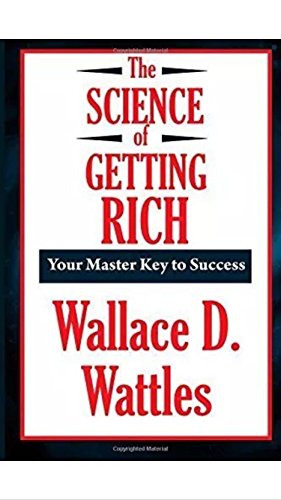
Wallace Delois Wattles was an American author. A New Thought writer, he remains personally somewhat obscure, but his writing has been widely quoted and remains in print in the New Thought and self-help movements. Wattles' best known work is a 1910 book called The Science of Getting Rich in which he explained how to become wealthy.
He studied the writings of Georg Wilhelm Friedrich Hegel and Ralph Waldo Emerson and recommended the study of their books to his readers who wished to understand what he characterized as -the monistic theory of the cosmos-.
Through his personal study and experimentation Wattles claimed to have discovered the truth of New Thought principles and put them into practice in his own life. He wrote books outlining these principles and practices, giving them titles that described their content, such as Health Through New Thought and Fasting and The Science of Being Great. His daughter Florence recalled that -he lived every page- of his books.
A practical author, Wattles encouraged his readers to test his theories on themselves rather than take his word as an authority, and he claimed to have tested his methods on himself and others before publishing them.
Wattles practiced the technique of creative visualization. In his daughter Florence's words, he -formed a mental picture- or visual image, and then -worked toward the realization of this vision-.
Rhonda Byrne told a Newsweek interviewer that her inspiration for creating the 2006 hit film The Secret and the subsequent book by the same name, was her exposure to Wattles's The Science of Getting Rich. Byrne's daughter, Hayley, had given her mother a copy of the Wattles book to help her recover from her breakdown.
He studied the writings of Georg Wilhelm Friedrich Hegel and Ralph Waldo Emerson and recommended the study of their books to his readers who wished to understand what he characterized as -the monistic theory of the cosmos-.
Through his personal study and experimentation Wattles claimed to have discovered the truth of New Thought principles and put them into practice in his own life. He wrote books outlining these principles and practices, giving them titles that described their content, such as Health Through New Thought and Fasting and The Science of Being Great. His daughter Florence recalled that -he lived every page- of his books.
A practical author, Wattles encouraged his readers to test his theories on themselves rather than take his word as an authority, and he claimed to have tested his methods on himself and others before publishing them.
Wattles practiced the technique of creative visualization. In his daughter Florence's words, he -formed a mental picture- or visual image, and then -worked toward the realization of this vision-.
Rhonda Byrne told a Newsweek interviewer that her inspiration for creating the 2006 hit film The Secret and the subsequent book by the same name, was her exposure to Wattles's The Science of Getting Rich. Byrne's daughter, Hayley, had given her mother a copy of the Wattles book to help her recover from her breakdown.
| SKU | Unavailable |
| ISBN 13 | 9781604598872 |
| ISBN 10 | 1604598875 |
| Title | The Science of Getting Rich (A Thrifty Book) |
| Author | Wallace Wattles |
| Condition | Unavailable |
| Binding Type | Paperback |
| Publisher | Thrifty Books |
| Year published | 2009-10-20 |
| Number of pages | 64 |
| Cover note | Book picture is for illustrative purposes only, actual binding, cover or edition may vary. |
| Note | Unavailable |