
The Medieval Bestiary in English


The Medieval Bestiary in English
Résumé
Provides an accessible introduction to the literary history of the Physiologus and the politics of animal representation, asking the vital question: how can we understand humanity's relationships with non-human animals and the environment today without understanding their past?
The feel-good place to buy books
- Free delivery in the UK
- Supporting authors with AuthorSHARE
- 100% recyclable packaging
- B Corp - kinder to people and planet
- Buy-back with World of Books - Sell Your Books
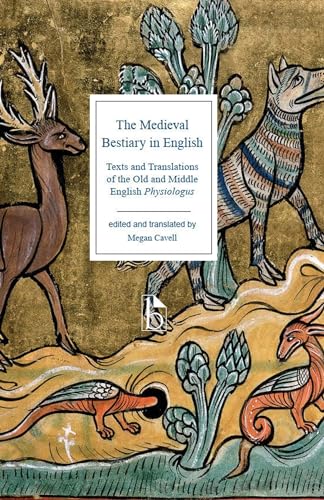
The Medieval Bestiary in English by Megan Cavell
First penned in Egypt between the 2nd and 4th centuries, the Physiologus brought together poetic descriptions of animals and their Christian allegories. Translated into a wide range of languages from across North Africa and much of Europe, each version of the Physiologus adapted the text in culturally specific ways that yield fascinating insights for those who delve into this truly global tradition of representing and interpreting animals. This edition provides the texts and translations of the only two surviving English versions: the Old English Physiologus from the late 10th-century Exeter Book and the Middle English Physiologus from the mid-13th-century MS Arundel 292, as well as translations of a range of Latin, French and Old English sources and analogues. Underpinned by a commitment to both the fields of medieval studies and animal studies, this book provides an accessible introduction to the literary history of the Physiologus and the politics of animal representation, asking the vital question: how can we understand humanity's relationships with non-human animals and the environment today without understanding their past?“This facing-page translation of the Old and Middle English Physiologus will be an excellent teaching textNot only does it make these poems readily accessible to students, but the edition also offers an excellent introduction to the poems’ literary history and influence as well as to their relevance to contemporary animal studies. The appendices make accessible valuable source material and other texts influenced by the Physiologus and provide students with the opportunity to compare the texts’ different discussions of animals. One appendix includes images of bestiary illuminations and provides links to their digitized sources, again enabling students to engage with the material following their introduction to it. Finally, the bibliography serves as an excellent starting point for those wishing to pursue further their studies of medieval animals.” — Ernst Gerhardt, Laurentian University
“The Medieval Bestiary in English edits and translates the only English versions of Physiologus, a fascinating group of late-classical and medieval texts that pair earthly and imaginary animals with Christian allegorical interpretations. Megan Cavell makes these two English versions newly accessible in her elegant facing-page translations. She offers as well a fine array of supports: introductions to the languages and manuscripts, excerpts from related medieval works, an overview of the entire bestiary tradition, and a substantial discussion of how contemporary environmental and animal studies might help us assess these unfamiliar accounts of the living world. A valuable resource for scholars and students alike.” — Susan Crane, author, Animal Encounters: Contexts and Concepts in Medieval Britain
| SKU | Non disponible |
| ISBN 13 | 9781554815180 |
| ISBN 10 | 1554815185 |
| Titre | The Medieval Bestiary in English |
| Auteur | Megan Cavell |
| État | Non disponible |
| Type de reliure | Paperback |
| Éditeur | Broadview Press Ltd |
| Année de publication | 2022-07-26 |
| Nombre de pages | 186 |
| Note de couverture | La photo du livre est présentée à titre d'illustration uniquement. La reliure, la couverture ou l'édition réelle peuvent varier. |
| Note | Non disponible |