
Occupation


Occupation
Regular price
Checking stock...
Regular price
Checking stock...
Résumé
Defeat in 1940 left the French so chastened and demoralized that they readily supported the Vichy regime, committed not just to pragmatic collaboration but to finding scapegoats for the nation's disgrace - from Jews to school teachers and freemasons. This is a history of this time.
The feel-good place to buy books
- Free delivery in the UK
- Supporting authors with AuthorSHARE
- 100% recyclable packaging
- B Corp - kinder to people and planet
- Buy-back with World of Books - Sell Your Books
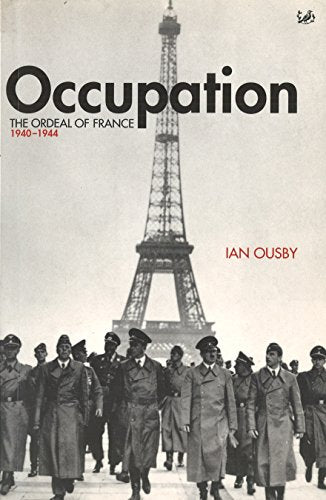
Occupation by Ousby Ian
The real story of the Occupation uncovers a reality more complex, more human and ultimately more moving than the myths which have grown after the event. Defeat in 1940 left the French so demoralized that they readily supported the Vichy regime, committed not just to pragmatic collaborations but to finding scapegoats for the nations disgrace. Jews and Communitsts because the chief victims of a witch-hunt which left plenty of scope for private grudges as well. Resistance came late: the Occupation was fourteen months old before the first German solider was killed. The public mood changed only as the Reich's original correctness gave way to brutality, and as events outside France prefigured possible German defeat. But even as Liberation approached, resistance was far from being the mass army of later myth. Different visions of who should inherit France complicated the pursuit of collaborators and foreshadowed the chaos of post-war politics. During the Occupation selfishness, bigotry and cowardice played parts as great as courage and idealism. They left a 'poisoned memory' which persists even today. But others should not feel superior. In such an ordeal, who can claim they would have done better?
The real story of the Occupation uncovers a reality more complex, more human and ultimately more moving than the myths which have grown after the eventDefeat in 1940 left the French so demoralized that they readily supported the Vichy regime, committed not just to pragmatic collaborations but to finding scapegoats for the nations disgrace. Jews and Communitsts because the chief victims of a witch-hunt which left plenty of scope for private grudges as well. Resistance came late: the Occupation was fourteen months old before the first German solider was killed. The public mood changed only as the Reich's original correctness gave way to brutality, and as events outside France prefigured possible German defeat. But even as Liberation approached, resistance was far from being the mass army of later myth. Different visions of who should inherit France complicated the pursuit of collaborators and foreshadowed the chaos of post-war politics. During the Occupation selfishness, bigotry and cowardice played parts as great as courage and idealism. They left a 'poisoned memory' which persists even today. But others should not feel superior. In such an ordeal, who can claim they would have done better?
Ian Ousby wrote widely on subjects both English and French. His recent books include The Cambridge Guide to Literature in English and Occupation: The Ordeal of France 1940-1944, which won the 1997 Edith McLeod Literary Prize, given annually to the British book which 'has contributed most to Franco-British understanding', and the 1997 Stern Silver PEN Award for Non-fiction. He died in August 2001.
| SKU | Non disponible |
| ISBN 13 | 9780712665131 |
| ISBN 10 | 0712665137 |
| Titre | Occupation |
| Auteur | Ousby Ian |
| État | Non disponible |
| Type de reliure | Paperback |
| Éditeur | Vintage Publishing |
| Année de publication | 1999-02-04 |
| Nombre de pages | 384 |
| Prix | Winner of Silver Pen Award 1998 |
| Note de couverture | La photo du livre est présentée à titre d'illustration uniquement. La reliure, la couverture ou l'édition réelle peuvent varier. |
| Note | Non disponible |