
Nanobiotherapeutic Based Blood Substitutes


Summary
The feel-good place to buy books
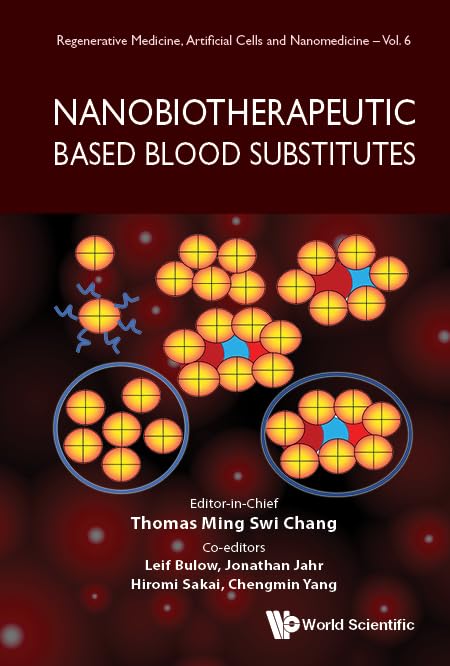
Nanobiotherapeutic Based Blood Substitutes by Thomas Chang
This definitive volume will provide the reader with up to date information and the most recent science of the fast-evolving area of nanobiotherapeutic-based blood substitutes. Long studied, there are recent updates that make their use in patients more promising, and with one product approved for human use, many more in the pipeline. These include 2nd generations and even third generation ones, the later with enhancement of red blood cell functions. In addition, there are carefully written and referenced updates on the recent history and products in the field, complete with pathophysiologic and pharmacologic studies to validate and verify the efficacy and safety of many of these new products.
Thomas Ming Swi Chang, OC, MD, CM, PhD, FRCPC, FRS[C], Director, Artificial Cells & Organs Research Centre, Professor Emeritus of Physiology, Medicine and Biomedical Engineering, Faculty of Medicine, McGill University, Montreal, Quebec, Canada; Director, " Chang Artificial Cell Translation Research Institute" Faculty of Medicine, Shenzhen University, China; Director, "Academician TMS Chang Research station" Shantou University Medical School, China; Honorary Professors at Peking Union Medical College; Blood Transfusion Institute of the Chinese Academy Medical Sciences and Nankai University; Honorary President, International Society of Artificial Cells, Blood Substitutes & Biotechnology. Editor in Chief, Artificial Cells, Nanomedicine & Biotechnology, an international Journal, Editor in Chief, Regenerative Medicine, Artificial Cells & Nanomedicine, Book Series. He invented the first artificial red blood cell during his BSc at McGill in 1957. There was no initial interest. He persisted while studying for his MD then PhD (Chang Science 1964, Nature 1971). By breaking "out of the box" of reproducing biological cells, he prepares artificial cells with (1) DIMENSIONS: from macro, micro, nano to soluble nanobiotechnological complexes. (2) CONTENTS; biological cell contents, cells, stem cells, vaccines, magnetic material, adsorbents, (3) MEMBRANES: biological and polymeric with variations in permeability, biodegradability, biocompatibility, targeting abilities etc. His 2019 review https://www.tandfonline.com/doi/full/10.1080/21691401.2019.1577885 shows that ARTIFICIAL CELL has evolved into nanomedicine, biotherapeutics, blood substitutes, drug delivery, enzyme/gene therapy, cancer therapy, cell/stem cell therapy, nanoparticles, liposomes, bioencapsulation, synthetic cells, cell encapsulation/scaffold, biosorbent/immunosorbent hemoperfusion/plasmapheresis, regenerative medicine, encapsulated microbe, nanobiotechnology, nanotechnology. Jonathan S Jahr, MD, DABA, FASA, is Professor Emeritus of Anesthesiology and Perioperative Medicine at UCLA. He has distinguished himself by authoring or co-authoring over 200 publications, co-editing a textbook, and serving on multiple editorial boards of major journals and as a reviewer for the NIH and FDA. His leadership in oxygen therapeutics, from managing and publishing major clinical trials, to understanding the impact of hemoglobin based oxygen carriers on coagulation, have created value for the entire scientific community, and helped foster future products to be developed and tested. As lead investigator in the Hemopure trial in elective orthopedic patients, he presented the largest non-trauma database of subjects receiving an HBOC, and combined with the studies of Hemopure, PolyHeme, and Hemosol, allowed for post-marketing study of Hemopure in South Africa. His animal studies with Oxyglobin in hemodynamics, oxygen delivery, intravital microscopy, laboratory interference, coagulation added to the knowledge base for this FDA and EU approved veterinary product for canine anemia. Additionally, his contributions to major acute pain and other anesthetic medications have bettered patient's care and lives. Hiromi Sakai received PhD (DEng) in polymer chemistry in 1994 from Waseda Univ., Tokyo, with a thesis entitled "Hemoglobin-vesicles (HbV) as a molecular assembly" (Supervisor, late Prof. E Tsuchida), and since then he has continuously studied the production, safety and efficacy evaluations of HbV. In 1996-1998 he studied at Dept. Bioengineering, UC San Diego (Supervisor, Prof. M Intaglietta) and evaluated the microvascular responses to HbV injection. After coming back to Tokyo, he studied improvement of the stabilization and biocompatibility of HbV and evaluated its safety and efficacy by animal experiments. In 2006 he received PhD (DMedSci) from Keio Univ. School of Medicine (Supervisor, Prof. K Kobayashi). Dr Sakai was a Lecturer and an Associate Professor at Research Institute for Sci.&Eng. Waseda Univ. in 1998-2009, and PI at Waseda Bioscience Research Institute in Singapore in 2009-2013. From 2013 he has been the Professor of Chemistry, Nara Medical University, Kashihara, Japan. He is the chief investigator of the artificial red cells project, aiming at clinical applications, which has been supported by Ministry of Health Labour and Welfare, Japan (MHLW) and the Japan Agency for Medical Research and Development (AMED). From 2019 he is the fourth president of the Society of blood Substitutes, Japan (SBSJ).
| SKU | Unavailable |
| ISBN 13 | 9789811228681 |
| ISBN 10 | 981122868X |
| Title | Nanobiotherapeutic Based Blood Substitutes |
| Author | Thomas Chang |
| Series | Regenerative Medicine Artificial Cells And Nanomedicine |
| Condition | Unavailable |
| Binding Type | Hardback |
| Publisher | World Scientific Publishing Co Pte Ltd |
| Year published | 2022-01-13 |
| Number of pages | 1044 |
| Cover note | Book picture is for illustrative purposes only, actual binding, cover or edition may vary. |
| Note | Unavailable |