


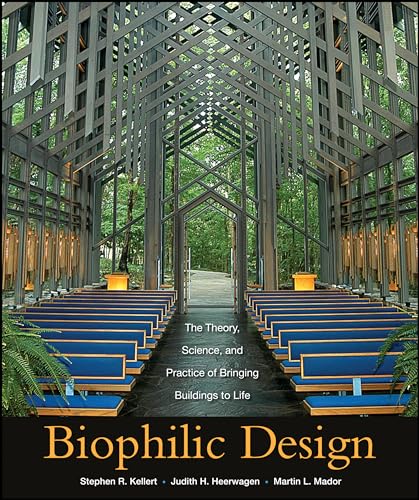
Biophilic Design by Stephen R Kellert
"When nature inspires our architecture-not just how it looks but how buildings and communities actually function-we will have made great strides as a society. Biophilic Design provides us with tremendous insight into the 'why,' then builds us a road map for what is sure to be the next great design journey of our times."…Kellert asserts that people "learn better, work more comfortably, and recuperate more successfully in buildings that echo the environment in which the human species evolved." He says there are a number of ways to improve worker productivity and retention and reduce absenteeism. The most basic step is to improve the availability of natural light. Kellert is analyzing the effect of biophilic design on office work productivity, absenteeism, number of sick days. Kellert believes there is a definite connection between biophilic spaces and improved productivity, and some studies point to a positive relationship." (dirt.asla.org, September 2009)
"By applying biophilia to design, the editors and contributors hope to go beyond the standard green architecture goal of simply lowering the environmental impact of buildings. They hope to enhance the human relationship with nature through buildings believing, that one's affinity for light or water should be incorporated into the placement of windows. The book is divided into three parts. The first provides a theory of biophilic design and offers general guidelines. The second offers a more focused look at health issues and the role of nature. The third examines applied instances of biophilic design. Summing Up: Recommended" (Choice, September 2009)
"These authors urge architects to do what they can to incorporate nature in the design of buildings." (GreenSource, April 2009)
"Biophilic Design collects descriptions of current destructive practices, analyzes their roots in human nature, and offers low-cost, low-impact strategies for change." (Architecture Boston; Nov/Dec 2008)
"Stephen Kellert's Biophilic Design…brings together biologists, ecologists, psychologists, architects, designers and city planners to probe the confluence of people, nature and design." (Miller-McCune.com, 7/14/08)
"Make no mistake: Biophilic Design, all 400 pages of it, is one of the best design books of this decade." (New Urban News, April-May 2008)
Stephen R. Kellert is the Tweedy/Ordway Professor of Social Ecology and Co-Director of the Hixon Center for Urban Ecology at Yale University, and a Partner in the private equity firm Environmental Capital Partners. The recipient of numerous awards for teaching and writing, he is the author of more than 150 publications, including seven books.
Judith H. Heerwagen is President of J.H. Heerwagen & Associates. She is a psychologist whose research focuses on sustainability, biophilia, and the evolutionary basis of environmental aesthetics. She has authored and delivered numerous articles and lectures on the topics of workplace, biophilia, and the psychological value of space.
Martin L. Mador, a researcher on biophilic design at Yale University, has worked on green building and healthy schools issues, including the passage of LEED legislation in Connecticut. He is a board member of the Connecticut Sierra Club, as well as several other environmental organizations.
| SKU | Unavailable |
| ISBN 13 | 9780470163344 |
| ISBN 10 | 0470163348 |
| Title | Biophilic Design |
| Author | Stephen R Kellert |
| Condition | Unavailable |
| Binding Type | Hardback |
| Publisher | John Wiley & Sons Inc |
| Year published | 2008-02-19 |
| Number of pages | 400 |
| Cover note | Book picture is for illustrative purposes only, actual binding, cover or edition may vary. |
| Note | Unavailable |