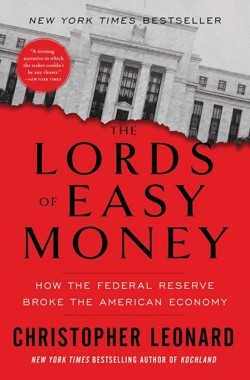
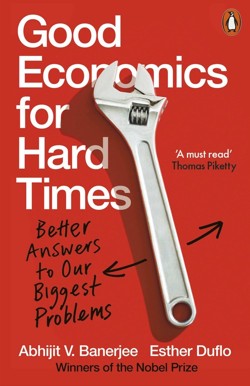
The Civic Minimum by Stuart White
Many governments today are engaged in far-reaching programs of 'welfare reform'. But what would a just program of welfare reform consist in? Is the current emphasis on linking welfare 'rights' to 'responsibilities' justifiable? In this book, Stuart White reconsiders the principles of economic citizenship appropriate to a democratic society, and explores the radical implications of these principles for public policy. According to White, justice demands that economic cooperation satisfy a standard of 'fair reciprocity'. Against a background of institutions that are sufficiently just in other respects, those citizens who share in the social product have an obligation to make a productive contribution back to the community in return: every citizen should 'do her bit'. While prominent in the work of many past egalitarian thinkers, this duty to contribute has not received much attention in recent political theory. White seeks to redress this neglect, and to show why and how the claims of reciprocity should be integrated with other important concerns that have featured more prominently in recent literature. These include the concerns to prevent brute luck disadvantage and economic vulnerability.From the standpoint of fair reciprocity, it is not necessarily unjust to link welfare rights with the performance of work-related responsibilities. But the justice of such a linkage depends on how far economic institutions meet other requirements of justice. In policy terms, fair reciprocity thus calls for a generous 'civic minimum' in which work-related welfare benefits are complemented by other policies designed to prevent poverty and vulnerability, secure opportunity for meaningful work, and eliminate class-based inequalities in educational opportunity and inherited wealth. In concluding, White contests the fashionable view that egalitarian reform is unfeasible in contemporary circumstances. The philosophy of fair reciprocity provides the basis for a new public conversation about economic citizenship, in which all citizens - not just those currently amongst the welfare poor - are encouraged to confront their responsibility to others.-
 Multicultural Citizenship
-
 Republicanism
-
 The Ethics of Immigration
-
 Inclusion and Democracy
-
 On Nationality
-
 Territorial Sovereignty
-
 Against Marriage
-
 Deliberative Democracy and Beyond
-
 No Justice, No Peace
-
 Disadvantage
-
 Linguistic Justice for Europe and for the World
-
 Reflective Democracy
-
 National Responsibility and Global Justice
-
 Immigration and Democracy
-
 Civic Virtues
-
 Creating Citizens
-
 The Liberal Archipelago
-
 Justificatory Liberalism
-
 Civics Beyond Critics
-
 Levelling the Playing Field
-
 Justice, Legitimacy, and Self-Determination
-
 Justice as Impartiality
-
 Democratic Autonomy
-
 The Politics of Presence
-
 Real Freedom for All
-
 Critical Republicanism


.. compelling, interesting to read, and closely connected to the current policy debate. * Citizen's Income Newsletter *
Stuart White is a rising star in political theory. * Citizen's Income Newsletter *
Stuart White is a rising star in political theory. * Citizen's Income Newsletter *
Stuart White is Fellow and Tutor in Politics at Jesus College, Oxford.
| SKU | Unavailable |
| ISBN 13 | 9780198295051 |
| ISBN 10 | 0198295057 |
| Title | The Civic Minimum |
| Author | Stuart White |
| Series | Oxford Political Theory |
| Condition | Unavailable |
| Binding Type | Hardback |
| Publisher | Oxford University Press |
| Year published | 2003-02-20 |
| Number of pages | 300 |
| Cover note | Book picture is for illustrative purposes only, actual binding, cover or edition may vary. |
| Note | Unavailable |
Customers who bought this item also bought
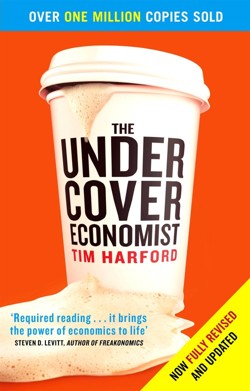
The Undercover Economist
Loading...
Can We Be Rich Again?
Loading...
Doughnut Economics
Loading...
Follow the Money
Loading...

Economics: The User's Guide
Loading...

The Shortest History of Economics
Loading...
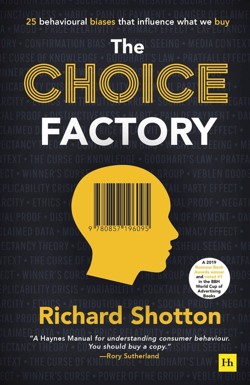
The Choice Factory
Loading...

All You Need To Know About The City
Loading...

Can You Run the Economy?
Loading...
The Little Book of Economics
Loading...
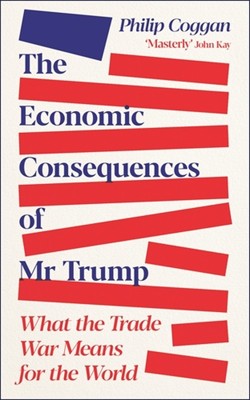
The Economic Consequences of Mr Trump
Loading...
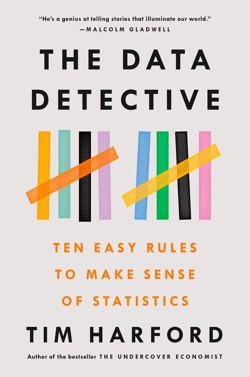
The Data Detective
Loading...
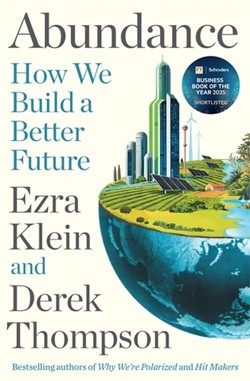
Abundance
Loading...
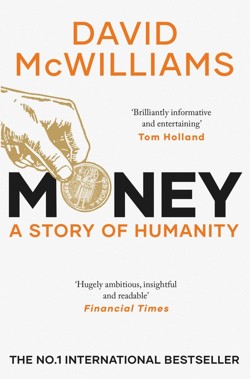
Money
Loading...
Economics: An A-Z Guide
Loading...
The Activator Advantage
Loading...
Economics
Loading...
Debt
Loading...