


Epicurus’ Human Beings by Solmeng-Jonas Hirschi
This is an open access title available under the terms of a CC BY-NC-ND 4.0 International licence. It is free to read at Oxford Scholarship Online and offered as a free PDF download from OUP and selected open access locations.Epicurus' philosophical project is predicated on its eudaimonistic efficacy. His letters and maxims not only describe a way of life but also instantiate his practice of care and reform. To memorise and understand them is meant to actually advance one's capacity to reach and maintain a state of ataraxia, i.e. the absence of troubles. They are written and designed to have an impact. Thus, to read Epicurus solely as a theoretical philosopher is to turn a blind eye to his agenda. In this book, Solmeng-Jonas Hirschi advocates a stronger reading that takes Epicurus' intentions at face value. It brings the doctrine closer to its application, through an examination of the readers and intended practitioners of Epicurus' philosophy: human beings. The main corpus of this study consists of the three letters and the doctrines written by Epicurus as transmitted by Diogenes Laertius in book 10 of the Lives of Eminent Philosophers. Each chapter is dedicated to one of these texts and subdivided into two main sections. In the first section, close readings and textual interpretations with a philosophical focus build a heuristic analysis of Epicurus' conception of what human beings are and do. In the second section, lexical analysis and a review of person deixis offer a text-centred counterpart. Together, they delineate the human beings as they are portrayed (theoretically) and addressed (linguistically) in Epicurus' written philosophy. In the case of the chapters on the Letter to Pythocles and the Kuriai Doxai, additional attention is paid to the problem of their authenticity by focusing on the production, structure, and function of those texts, which prove essential in assessing their form and content. A final appendix applies the same methodology to the Letter to Mother, found in Diogenes of Oenoanda's monumental inscription. This study yields important insights into the pragmatics of Epicurus' writings, especially with respect to their use, their format, and their functioning in one's efforts to become and remain untroubled. Such results are invaluable for our understanding of why, and how, Epicurus thought that his teaching can be efficacious and therapeutic.You might also like
The Daily Stoic
Loading...
Meditations
Loading...

The Doors of Perception
Loading...
Meditations
Loading...
Beyond Good and Evil
Loading...
Discourses and Selected Writings
Loading...
Meditations
Loading...
Moral Ambition
Loading...



-
 Inventing the Barbarian
-
 The Roman Army at War 100 BC - AD 200
-
 Religion and Society in Ancient Thessaly
-
 Women in Ancient Persia, 559-331 BC
-
 Between Empires
-
 The Rhetoric of the Past in Demosthenes and Aeschines
-
 Consentius' De barbarismis et metaplasmis
-
 Revenge in Seneca's Tragedies
-
 Exemplarity and Allusion in Macrobius' Saturnalia
-
 Roman Priests from Republic to Empire
-
 Singing for the Gods
-
 Agathokles of Syracuse
-
 Pseudo-Arcadius' Epitome of Herodian's De Prosodia Catholica
-
 Divine Talk
-
 Exemplary Epic
-
 Historiography at the End of the Republic
-
 Pindar and the Cult of Heroes
-
 The Homeric Hymn to Aphrodite
-
 Child Emperor Rule in the Late Roman West, AD 367-455
-
 Plutarch Against Colotes
-
 Agrarian Change in Late Antiquity
-
 Episcopal Elections 250-600
-
 The Stoics on Lekta
-
 The Chorus of Drama in the Fourth Century BCE
-
 Greek Praise Poetry and the Rhetoric of Divinity
-
 Roman Republican Augury
-
 Pindar and the Poetics of Permanence
-
 Reading Quintilian
-
 Powers of Expression, Expressions of Power
-
 Sievers' Law and the History of Semivowel Syllabicity in Indo-European and Ancient Greek
-
 Alcibiades and Athens
-
 Guilt by Descent
-
 Lucan: Spectacle and Engagement
-
 Cicero, Rhetoric, and Empire
-
 Canons of Style in the Antonine Age
-
 Animal Sacrifice in Ancient Greek Religion, Judaism, and Christianity, 100 BC to AD 200
-
 Plato's Symposium
-
 Callimachus' Book of Iambi
-
 Stasis and Stability
-
 Experiencing Pain in Imperial Greek Culture
-
 Cicero's Role Models
-
 Jerome, Vita Malchi
-
 Kings and Usurpers in the Seleukid Empire
-
 Thucydides: Narrative and Explanation


Solmeng-Jonas Hirschi is a postdoctoral researcher from Switzerland (BA Berne 2015, MSt Oxford 2016, DPhil Oxford 2021), currently employed as a post-doctoral Research Associate at the University of Vienna. He is preparing an edition and translation of (Ps.-)Aristotle's Magna Moralia together with Professor George Karamanolis. He previously held postdoctoral positions and spent research residencies at the Freie Universität Berlin as a Chronoi Fellow in 2023-2024; the Istituto Svizzero in Rome in 2022-2023; the Université Laval in Québec in 2022, and the Université de Fribourg (CH) in 2021-2023.
| SKU | Unavailable |
| ISBN 13 | 9780192874962 |
| ISBN 10 | 0192874969 |
| Title | Epicurus’ Human Beings |
| Author | Solmeng-Jonas Hirschi |
| Series | Oxford Classical Monographs |
| Condition | Unavailable |
| Binding Type | Hardback |
| Publisher | OUP Oxford |
| Year published | 2026-03-05 |
| Cover note | Book picture is for illustrative purposes only, actual binding, cover or edition may vary. |
| Note | Unavailable |
Customers who bought this item also bought
The Daily Stoic
Loading...
Meditations
Loading...
The Doors of Perception
Loading...
Meditations
Loading...
Beyond Good and Evil
Loading...
Discourses and Selected Writings
Loading...
Meditations
Loading...
Moral Ambition
Loading...

The Conference of the Birds
Loading...

Beginning to Live
Loading...
Great Thinkers
Loading...

God, the Science, the Evidence
Loading...
The Little Book of Philosophy
Loading...


On the Shortness of Life
Loading...

I am That
Loading...
Consolations
Loading...
The Secret History of the Universe
Loading...
Existentialism and Humanism
Loading...
Tao Te Ching
Loading...
Against the Machine
Loading...

Japonisme
Loading...
Critique of Pure Reason
Loading...
The Consolations of Philosophy
Loading...
A Guide to the Good Life
Loading...
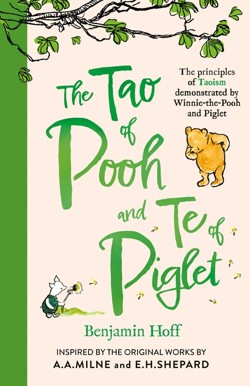
The Tao of Pooh & The Te of Piglet
Loading...
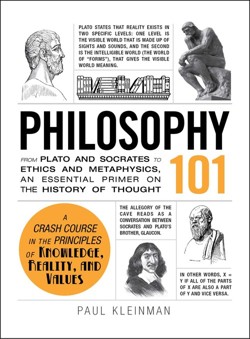
Philosophy 101
Loading...
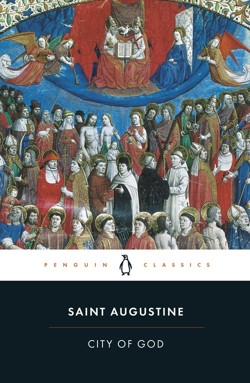
City of God
Loading...
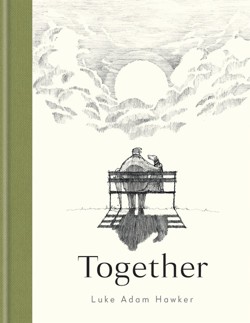
Together
Loading...

Leviathan
Loading...


The Happiness of Dogs
Loading...