


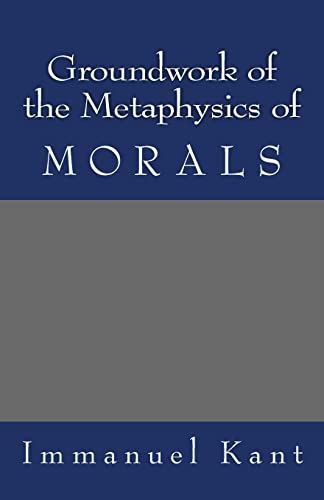
Groundwork of the Metaphysics of Morals by Immanuel Kant
Immanuel Kant's Groundwork of the Metaphysics of Morals ranks alongside Plato's Republic and Aristotle's Nicomachean Ethics as one of the most profound and influential works in moral philosophy ever written. In Kant's own words its aim is to search for and establish the supreme principle of morality, the categorical imperative. The centerpiece of the Groundwork is Kant's most famous proposition, the Categorical Imperative. While this is often equated with the Golden Rule (do unto others as you would have them do unto you), the Categorical Imperative argues for a more universal set of moral action - for example, if one does not mind being lied to, then lying does not become a problem, according to the Golden Rule, but for Kant, this would be unacceptable as it is a violation of the rational principles of what morals are. Kant proceeds to look at issues of law, duty, free will and the good will, and autonomy of action. Kant argues strongly for the need for philosophy to guard against whim, taste and personal desire from becoming normative agents in the way we construct the moral universe. He argue for objective principles to govern the will, and categorizes these as either hypothetical or categorical. Kant also discusses the formulation of universal law and the way in which rational agents should formulate and view this kind of law.You might also like
-
 Critique of Pure Reason
-
 Critique of Judgement
-
 Prolegomena to Any Future Metaphysics
-
 Immanuel Kant: Prolegomena to Any Future Metaphysics
-
 Critique of the Power of Judgment
-
 Grounding for the Metaphysics of Morals
-
 Kant: Groundwork of the Metaphysics of Morals
-
 Kant: The Metaphysics of Morals
-
 Critique of Pure Reason
-
 Critique of Pure Reason
-
 Fundamental Principles of the Metaphysic of Morals
-
 Perpetual Peace
-
 Kant: Religion within the Boundaries of Mere Reason
-
 Critique of Pure Reason (Everyman's Classics S.)
-
 Critique of Pure Reason, Second Edition
-
 Critique of Practical Reason
-
 Wisdom of the Netherlands
-
 The Courage To Be Disliked
-
 Meditations
-
 Humankind
Kant, Immanuel: - Immanuel Kant ( 22 April 1724 - 12 February 1804) was an influential German philosopher[23] in the Age of Enlightenment. In his doctrine of transcendental idealism, he argued that space, time, and causation are mere sensibilities; things-in-themselves exist, but their nature is unknowable.[24][25] In his view, the mind shapes and structures experience, with all human experience sharing certain structural features. In one of his major works, the Critique of Pure Reason (1781; second edition 1787), [26] he drew a parallel to the Copernican revolution in his proposition that worldly objects can be intuited a priori ('beforehand'), and that intuition is therefore independent from objective reality.[b] Kant believed that reason is also the source of morality, and that aesthetics arise from a faculty of disinterested judgment. Kant's views continue to have a major influence on contemporary philosophy, especially the fields of epistemology, ethics, political theory, and post-modern aesthetics. He attempted to explain the relationship between reason and human experience and to move beyond the failures of traditional philosophy and metaphysics. He wanted to put an end to what he saw as an era of futile and speculative theories of human experience, while resisting the skepticism of thinkers such as David Hume. He regarded himself as showing the way past the impasse between rationalists and empiricists, [28] and is widely held to have synthesized both traditions in his thought.[29] Kant was an exponent of the idea that perpetual peace could be secured through universal democracy and international cooperation. He believed that this would be the eventual outcome of universal history, although it is not rationally planned.[30] The nature of Kant's religious ideas continues to be the subject of philosophical dispute, with viewpoints ranging from the impression that he was an initial advocate of atheism who at some point developed an ontological argument for God, to more critical treatments epitomized by Schopenhauer, who criticized the imperative form of Kantian ethics as theological morals and the Mosaic Decalogue in disguise, [31] and Nietzsche, who claimed that Kant had theologian blood[32] and was merely a sophisticated apologist for traditional Christian faith
| SKU | Unavailable |
| ISBN 13 | 9781492204152 |
| ISBN 10 | 1492204153 |
| Title | Groundwork of the Metaphysics of Morals |
| Author | Immanuel Kant |
| Condition | Unavailable |
| Binding Type | Paperback |
| Publisher | Createspace Independent Publishing Platform |
| Year published | 2013-08-20 |
| Number of pages | 94 |
| Cover note | Book picture is for illustrative purposes only, actual binding, cover or edition may vary. |
| Note | Unavailable |
Customers who bought this item also bought
-
The Courage To Be Disliked
-
Meditations
-
Humankind
-
 Think
Think
-
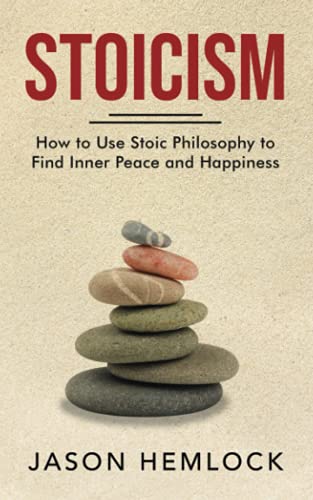 Stoicism
-
 Zen and the Art of Motorcycle Maintenance
-
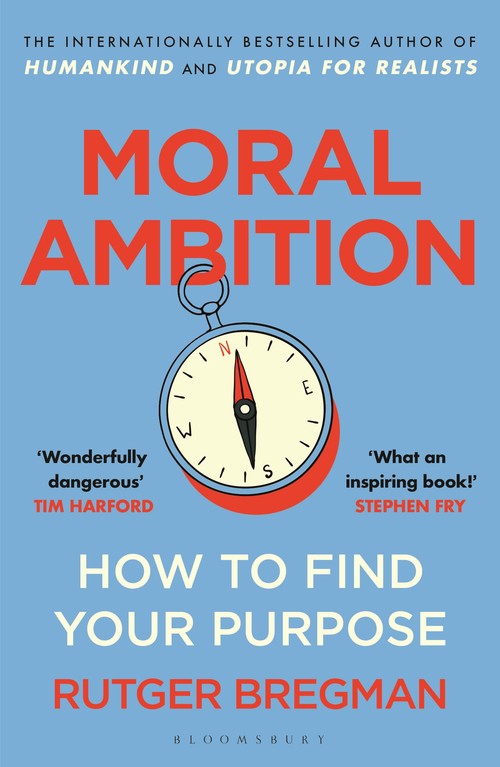 Moral Ambition
-
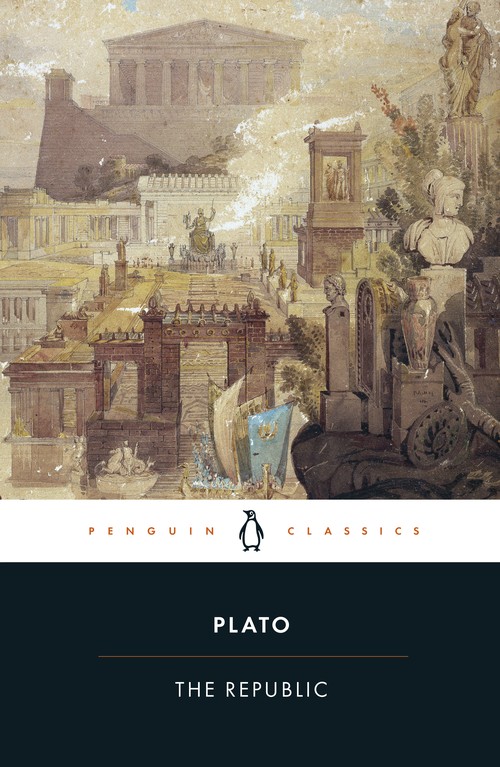 The Republic
-
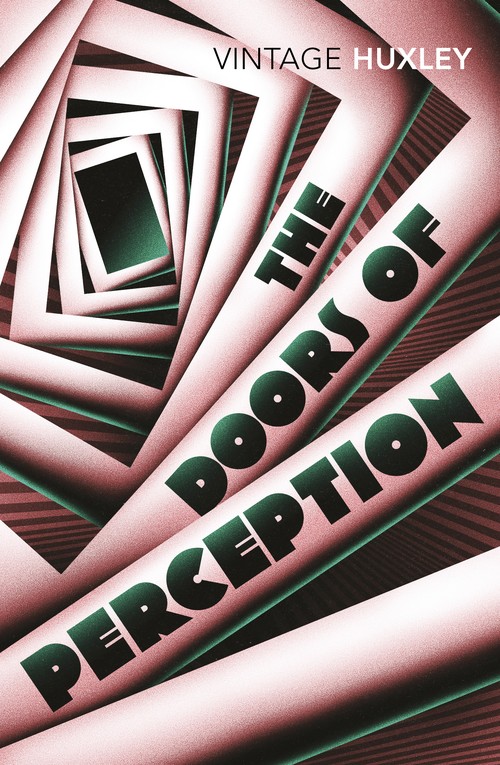 The Doors of Perception
-
 Beyond Good and Evil
-
 Thus Spoke Zarathustra
-
 The Little Book of Philosophy
-
 A Little History of Philosophy
-
 Meditations
-
 Confessions Of A Philosopher
-
 The West
-
 The Cat and The Moon - 33 Zen Stories
-
 Be Water, My Friend
-
 The Boy, the Mole, the Fox and the Horse: The Animated Story
-
 The Conference of the Birds
-
 Against the Machine
-
 Wisdom Of Insecurity
-
 Great Thinkers
-
 The Tipping Point
-
 Faith, Hope and Carnage
-
 How to Think Like a Roman Emperor
-
 Do Not Go Gentle
-
 Against the Gods
-
 Either/Or
-
 On the Shortness of Life
-
 Algorithms to Live By
-
 Simulacra and Simulation
-
 I am That
-
 God, the Science, the Evidence
-
 How to Stay Sane
-
 The Power of Caring
-
 Existentialism and Humanism
-
 Conscience
-
Critique of Pure Reason
-
 The Consolations of Philosophy
-
 The Sovereignty of Good
-
 The Story of Philosophy
-
 Letters from a Stoic
-
 The Tao of Pooh & The Te of Piglet
-
 Together
-
 Philosophy 101
-
 The Philosophy Book
-
 The Happiness of Dogs
-
 Tao Te Ching
-
 A Philosophy of Walking