
Inside Iceland, History, Culture and Tourism


Inside Iceland, History, Culture and Tourism
The feel-good place to buy books
- Free UK delivery over £5
- 10% off preloved books when you join +Plus
- Buying preloved emits 46% less CO2 than new
- Give your books a new home - sell them back to us!
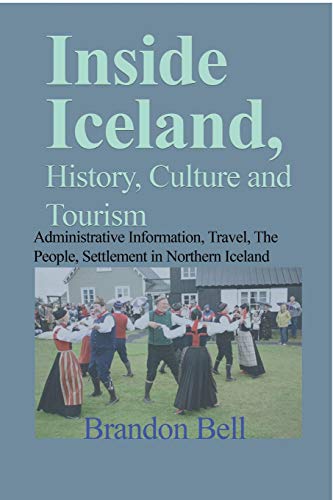
Inside Iceland, History, Culture and Tourism by Brandon Bell
Inside Iceland, History, Culture and Tourism. Administrative Information, Travel, The People, Settlement in Northern Iceland. Government. Iceland has a multiparty parliamentary system, and there is a written constitution. Presidents are elected for four-year terms by direct popular vote but serve a parliamentary function and do not head a separate executive branch. The parliament is called Althingi after the medieval general assembly. It has sixty three members elected by popular vote for four-year terms. Each party puts forward a list of candidates, and people vote for parties, not candidates. The seats in the parliament are then distributed to parties according to the placement of people in their lists. Thus, elections have more to do with policies and positions on issues than with personalities. Leadership and Political Officials. After elections, the president asks one party, usually the one with the largest number of votes, to form a government of cabinet officers. There has never been a majority in the parliament, and so the governments are coalitions. The real political competition starts after elections, when those elected to the parliament jockey for positions in the new government. If the first party cannot form a coalition, the president will ask another one until a coalition government is formed. Cabinet ministers can sit in the parliament but may not vote unless they have been elected as members. This cabinet stays in power until another government is formed or until there are new elections
Inside Iceland, History, Culture and Tourism. Administrative Information, Travel, The People, Settlement in Northern Iceland. Government. Iceland has a multiparty parliamentary system, and there is a written constitution. Presidents are elected for four-year terms by direct popular vote but serve a parliamentary function and do not head a separate executive branch. The parliament is called Althingi after the medieval general assembly. It has sixty three members elected by popular vote for four-year terms. Each party puts forward a list of candidates, and people vote for parties, not candidates. The seats in the parliament are then distributed to parties according to the placement of people in their lists. Thus, elections have more to do with policies and positions on issues than with personalities. Leadership and Political Officials. After elections, the president asks one party, usually the one with the largest number of votes, to form a government of cabinet officers. There has never been a majority in the parliament, and so the governments are coalitions. The real political competition starts after elections, when those elected to the parliament jockey for positions in the new government. If the first party cannot form a coalition, the president will ask another one until a coalition government is formed. Cabinet ministers can sit in the parliament but may not vote unless they have been elected as members. This cabinet stays in power until another government is formed or until there are new elections
| SKU | Unavailable |
| ISBN 13 | 9781714643059 |
| ISBN 10 | 1714643050 |
| Title | Inside Iceland, History, Culture and Tourism |
| Author | Brandon Bell |
| Condition | Unavailable |
| Binding Type | Paperback |
| Publisher | Blurb Inc |
| Year published | 2024-08-28 |
| Number of pages | 218 |
| Cover note | Book picture is for illustrative purposes only, actual binding, cover or edition may vary. |
| Note | Unavailable |