
The feel-good place to buy books
Introduction to Quantum Information Theory by Armin Tavakoli
The science of quantum information asks how the laws of nature can be used to manipulate information on a microscopic scale, in ways that have no counterpart in classical physics. Born from a synergy of classical information theory and the foundations of quantum physics, quantum information theory sheds light on fundamental aspects of physics. It continues to provide the theoretical tools needed for the development of quantum technology in the 21st century.Recent decades have seen the rise of quantum information science through what is often called the second quantum revolution. In the current era, the remarkable laws of quantum physics can be used to create new paradigms for information technologies such as computers, communication systems, and sensors. Unlike the first revolution, which relied on quantum effects indirectly, in the second revolution we can engineer quantum mechanics itself to perform tasks. The field is growing at a rapid pace, driving a global race among nations and corporations to develop quantum technologies. In response, universities around the world are increasingly launching courses and programmes dedicated to quantum science and technology. Introduction to Quantum Information Theory is a broad, self-contained, and accessible introduction to the field of quantum information. It serves as an entry point to the topic for students and readers with an academic background in physics or another related field. The focus is on the essential concepts and results, which are supplemented by exercises and detailed solutions.You might also like
Astrophysics for People in a Hurry
Loading...
A Level Physics for OCR A Revision Guide
Loading...
Quantum
Loading...
Quantum Physics for Beginners
Loading...
A-Level Physics: Essential Maths Skills
Loading...
How to Teach Quantum Physics to Your Dog
Loading...
Pearson REVISE Edexcel AS/A Level Physics Revision Workbook - for 2027, 2028 exams
Loading...
More editions available
Higher Physics, Second Edition
Loading...
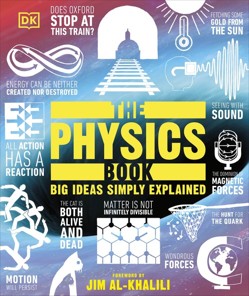
The Physics Book
Loading...
A-Level Physics AQA Revision Question Cards
Loading...
Physics
Loading...
-
 When Things Grow Many
-
 An Introduction to Statistical Mechanics and Thermodynamics
-
 Statistical Field Theory
-
 Classical Electrodynamics
-
 Gravitational-Wave Astronomy
-
 Quasi-Adiabatic Effects
-
 Introduction to Coupled Theories in Solid Mechanics
-
 Streamflow Generation
-
 Path Integrals in Quantum Mechanics
-
 Analytical Mechanics for Relativity and Quantum Mechanics
-
 Discrete Symmetries and CP Violation
-
 Excitations in Simple Liquids, Liquid Metals and Superfluids
-
 Semiconducting and Metallic Polymers
-
 Phase Transitions and Renormalization Group
-
 Practical Quantum Mechanics
-
 Simple Models of Magnetism
-
 Quantum Optics
-
 Analytical Mechanics
-
 Excitons and Cooper Pairs
-
 Chemical Dynamics in Condensed Phases
-
 Molecular Electromagnetism: A Computational Chemistry Approach
-
 Quantum Liquids
-
 Elements of Phase Transitions and Critical Phenomena
-
 Time-Dependent Density-Functional Theory
-
 Introduction to Quantum Information Science
-
 Molecular Dynamics: Probability and Uncertainty
-
 Introduction to Nanophotonics
-
 Physics and Technology of Sustainable Energy
-
 Tribology on the Small Scale
-
 Bell Nonlocality
-
 From Random Walks to Random Matrices
-
 Kinetic Theory of Granular Gases
-
 Quantum Electronics for Atomic Physics and Telecommunication


Written with great competence, distilling most of the elementary notions that one should learn about quantum information
Armin Tavakoli is an Associate Senior Lecturer at Lund University, Sweden, and an academic editor for Physical Review Letters. He received his PhD from the University of Geneva, Switzerland, in 2020. He leads a research group focused on quantum information theory and the foundations of quantum mechanics.
Gabriele Cobucci is a PhD student at Lund University, Sweden, specialising in quantum information theory.
| SKU | Unavailable |
| ISBN 13 | 9780197912195 |
| ISBN 10 | 0197912192 |
| Title | Introduction to Quantum Information Theory |
| Author | Armin Tavakoli |
| Series | Oxford Graduate Texts |
| Condition | Unavailable |
| Binding Type | Hardback |
| Publisher | Oxford University Press |
| Number of pages | 224 |
| Cover note | Book picture is for illustrative purposes only, actual binding, cover or edition may vary. |
| Note | Unavailable |
Customers who bought this item also bought
Astrophysics for People in a Hurry
Loading...
A Level Physics for OCR A Revision Guide
Loading...
Quantum
Loading...
Quantum Physics for Beginners
Loading...
A-Level Physics: Essential Maths Skills
Loading...
How to Teach Quantum Physics to Your Dog
Loading...
Pearson REVISE Edexcel AS/A Level Physics Revision Workbook - for 2027, 2028 exams
Loading...
More editions available
Higher Physics, Second Edition
Loading...
The Physics Book
Loading...
A-Level Physics AQA Revision Question Cards
Loading...
Physics
Loading...
Seven Brief Lessons on Physics
Loading...
Quantum Theory
Loading...

Materials
Loading...
The Essential Einstein
Loading...

General Relativity: The Essentials
Loading...
A New Science of Heaven
Loading...
Why Nobody Understands Quantum Physics
Loading...

Higher Physics for CfE with Answers
Loading...
Physics I For Dummies
Loading...
The World According to Physics
Loading...


Superheavy
Loading...
Gravity
Loading...
The Laws of Thermodynamics
Loading...
A Level Physics for OCR A: Year 2
Loading...
Introducing Quantum Theory
Loading...

The Man Who Changed Everything
Loading...
Quantam Mechanics and Path Integrals
Loading...
Everybody Hertz
Loading...