


On Human Nature by Arthur Schopenhauer
ARTHUR SCHOPENHAUERON HUMAN NATURE: ESAYS>A collection of essays from one of the great philosophers of the modern era, Arthur Schopenhauer. The German thinker contemplates subjects such as free-will, morality, ethics, government, character, and the nature of being human. Arthur Schopenhauer is an entertaining author to read, easy to understand, with a sly, dry wit. No need for footnotes or explanations of tricky terms, Schopenhauer's prose style is refreshingly clear. Arthur Schopenhauer was born in 1788 (on February 22nd) in Gdansk and died in 1860 in Frankfurt (on September 20th). Schopenhauer is known for his major work The World As Will and Idea, his philosophy of transcendental idealism, his studies of pessimism, his collections of essays and aphorisms, his incorporation of Eastern religion and metaphysics in his philosophy, and his impressive posthumous influence on philosophers such as Friedrich Nietzsche, Ludwig Wittgenstein, Henri Bergson and Oswald Spengler, psychologists such as Otto Rank, Carl Jung and Sigmund Freud, and a host of writers and artists such as Samuel Beckett, Marcel Proust, Rainer Rilke, Andr Gide, Hugo von Hoffmansthal, St phane Mallarm , W.B. Yeats, Italo Svevo, Ivan Turgenev, Robert Musil, Jorge Borges, George B. Shaw, Karl Kraus, J.-K. Huysmans, Edgar Allan Poe, August Strindberg, Guy de Maupassant, Frank Wedekind, Antonin Dvorak, Arnold Sch nberg, Gustav Mahler, Charles Baudelaire, Jacob Burckhardt, George Gissing, Emile Zola, Richard Wagner, Sergei Prokoviev, Leo Tolstoy, Hermans Melville and Hesse, and Thomases Mann and Hardy. European Writers Series. Illustrated. Includes a 16-page biographical sketch of Schopenhauer, and an additional introduction to his work. 144pp. www.crmoon.com>You might also like


How Lucky Am I
Loading...
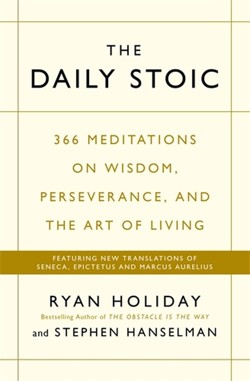
The Daily Stoic
Loading...


Meditations
Loading...


The Doors of Perception
Loading...


Meditations
Loading...

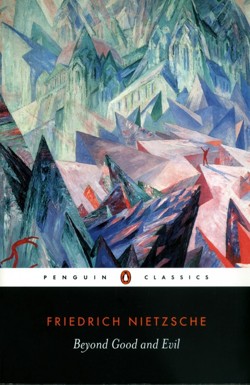
Beyond Good and Evil
Loading...

Discourses and Selected Writings
Loading...


Meditations
Loading...
The Little Book of Philosophy
Loading...

Moral Ambition
Loading...


-
 Hymns to the Night and Spiritual Songs
-
 You Burn Me
-
 Life, Life
-
 Novalis
-
 The Book of Masks
-
 Flower Pollen
-
 Fifteen Sonnets of Petrarch
-
 In the Dim Void
-
 Selections From the Vita Nuova
-
 Henry of Ofterdingen
-
 Beauties, Beasts and Enchantment
-
 Paul Verlaine
-
 A Season in Hell
-
 Morning of Ecstasy
-
 Charles Baudelaire
-
 Poems in Prose
-
 Autumn Song
-
 Figures of Several Centuries
-
 Dramatis Personae
-
 The Poems and the Prose Poems
-
 Petrarch, Dante and the Troubadours
-
 Andre Gide
-
 Samuel Beckett Goes Into the Silence
- Languorous Ecstasy
-
 Auguste Rodin
-
 Decadence and Other Essays On the Culture of Ideas
-
 Stepping Forward
-
 The Art of Literature
-
 Flowers of Evil
-
 The Disciples at Sais
-
 German Romantic Poetry
-
 Studies in Pessimism


ARTHUR SCHOPENHAUER, the famous nineteenth-century Ger-man pessimist who expanded on the ideas of Plato and Immanuel Kant, wrote accessibly, leading his ideas to resonate with both philosophers and artists alike. The son of Heinrich Floris Schopenhauer and Johanna Hen-riette Troisiener, Arthur was born in Danzig on February 22, 1788, just one month after English Romantic poet George Gor-don, Lord Byron. A middle-class Dutch family involved in inter-national trade, the Schopenhauers chose Arthur as their son's name because the appellation is spelled the same in English, French, and German. Once Prussia annexed Danzig in 1793, the Schopenhauer family moved first to Hamburg, then Arthur spent much of his youth living throughout Europe, learning many lan-guages. Although his father prepared him to inherit the family mercantile business, Arthur Schopenhauer found that the schol-arly life suited him perfectly. After Heinrich's 1805 death, Johanna moved her family from Hamburg to Weimar, where Johanna, an author herself, befriended the writer Johann Wolf-gang von Goethe. Arthur Schopenhauer enrolled in the University of Gottin-gen and received his doctorate from the University of Jena in 1813. His dissertation, The Fourfold Root of the Principle of Suf-ficient Reason, explored the philosophical assumption that equates reality with rationality. According to Schopenhauer, in order for one to contemplate an explanation for a particular thing, one must assume that there is a subject (oneself) that thinks about the object (thing to be explained). Schopenhauer built his thesis on the work of Kant, who noted that humans can-not transcend themselves and therefore cannot satisfactorily answer metaphysical questions, and G. W. Leibniz, who first defined the principle of sufficient reason, which states that absolutely nothing exists that lacks an adequate reason for its existence. Schopenhauer's most famous work, the two-volume The World as Will and Representation, sprung from ideas put forth in The Fourfold Root. Schopenhauer's philosophical inquiries led him to embrace a pessimistic worldview--life is a mean-ingless struggle against the irrational impulses of the will. One could find some solace, however, through aesthetic perception, morality, and asceticism. With regard to the first, Schopenhauer considered artistic endeavors to be the communication of Pla-tonic Ideas, with music as the highest of all art forms because of its instant objectification of the will. Schopenhauer's ideas influ-enced many literary figures--including Samuel Beckett, Joseph Conrad, Leo Tolstoy, W. B. Yeats, and Emile Zola--as well as musicians such as Johannes Brahms and Richard Wagner. In the early 1920s, Schopenhauer began lecturing at the University of Berlin, purposely scheduling his classes concur-rent with those of G. W. F. Hegel. Schopenhauer strongly dis-liked Hegel and his philosophy; the former felt that the latter tried to make up for a lack of content in his works by ensnaring the reader in meaningless jargon. Schopenhauer left Berlin in 1831 to escape the threat of a cholera epidemic, eventually settling in Frankfurt, where he spent the rest of his life. By the mid-1850s, Schopenhauer gained the recognition that he had longed for when a review of his philosophical work appeared in the Westminster Review, which connected some of Schopenhauer's thought with that of Johann Gottlieb Fichte. Schopenhauer's health gradually dete-riorated in 1860 until he died of natural causes on September 21 in Frankfurt. New editions of most of Schopenhauer's works began to appear in 1873. Other works by Schopenhauer include On Vision and Col-ors (1816), On the Will in Nature (1836), The Two Fundamen-tal Problems of Ethics (1839-40), Parerga und Paralipomena (1851), and The Wisdom of Life and Counsels and Maxims (1886).
| SKU | Unavailable |
| ISBN 13 | 9781861718983 |
| ISBN 10 | 1861718985 |
| Title | On Human Nature |
| Author | Arthur Schopenhauer |
| Series | European Writers |
| Condition | Unavailable |
| Binding Type | Paperback |
| Publisher | Crescent Moon Publishing |
| Year published | 2023-04-10 |
| Number of pages | 144 |
| Cover note | Book picture is for illustrative purposes only, actual binding, cover or edition may vary. |
| Note | Unavailable |
Customers who bought this item also bought
The Daily Stoic
Loading...
Meditations
Loading...
The Doors of Perception
Loading...
Meditations
Loading...

Beyond Good and Evil
Loading...
Discourses and Selected Writings
Loading...
Meditations
Loading...
Moral Ambition
Loading...




The Conference of the Birds
Loading...

Beginning to Live
Loading...

Great Thinkers
Loading...

God, the Science, the Evidence
Loading...

The Little Book of Philosophy
Loading...


On the Shortness of Life
Loading...

I am That
Loading...

Consolations
Loading...

The Secret History of the Universe
Loading...
Existentialism and Humanism
Loading...


Tao Te Ching
Loading...

Against the Machine
Loading...

Japonisme
Loading...

Critique of Pure Reason
Loading...
The Consolations of Philosophy
Loading...
A Guide to the Good Life
Loading...

The Tao of Pooh & The Te of Piglet
Loading...
Philosophy 101
Loading...

City of God
Loading...

Together
Loading...

Leviathan
Loading...
