


PID Control in the Third Millennium by Ramon Vilanova
The early 21st century has seen a renewed interest in research in the widely-adopted proportional-integral-differential (PID) form of control. PID Control in the Third Millennium provides an overview of the advances made as a result. Featuring: new approaches for controller tuning; control structures and configurations for more efficient control; practical issues in PID implementation; and non-standard approaches to PID including fractional-order, event-based, nonlinear, data-driven and predictive control; the nearly twenty chapters provide a state-of-the-art resume of PID controller theory, design and realization. Each chapter has specialist authorship and ideas clearly characterized from both academic and industrial viewpoints. PID Control in the Third Millennium is of interest to academics requiring a reference for the current state of PID-related research and a stimulus for further inquiry. Industrial practitioners and manufacturers of control systems with application problems relating to PID will find this to be a practical source of appropriate and advanced solutions.You might also like



Motorhoming Made Simple
Loading...



Beautiful News
Loading...

Basics of Qualitative Research
Loading...
Financial Enterprise Risk Management
Loading...
Business Research Methods
Loading...

Use Your Questionnaire Data
Loading...

Unofficial Guide to Ancestry.com
Loading...
Creative Research Methods
Loading...

Doing Your Research Project with Documents
Loading...
Doing Work Based Research
Loading...
-
 Robust Autonomous Guidance
-
 Robust Model Predictive Control for Autonomous Underwater Vehicles
-
 Model-Based Control of Mass–Stiffness–Damping Systems
-
 Pneumatic Servo Systems Analysis
-
 Control of Large Wind Energy Systems
-
 Predictive Functional Control
-
 Advanced Control and Supervision of Mineral Processing Plants
-
 Networked and Distributed Predictive Control
-
 Fault Detection and Fault-Tolerant Control Using Sliding Modes
-
 Reset Control Systems
-
 Industrial Process Identification and Control Design
-
 Cooperative Control of Multi-agent Systems
-
 Sliding-Mode Control of PEM Fuel Cells
-
 Control of Integral Processes with Dead Time
-
 Internet-based Control Systems
-
 Drives and Control for Industrial Automation
-
 Model Predictive Control of Wastewater Systems
-
 Structured Controllers for Uncertain Systems
-
 Fractional-order Systems and Controls
-
 Quad Rotorcraft Control
-
 Active Control of Flexible Structures
-
 Detection and Diagnosis of Stiction in Control Loops
-
 Motion Coordination for VTOL Unmanned Aerial Vehicles
-
 Vehicle-Manipulator Systems
-
 Optimal Control of Hybrid Vehicles
-
 Optimal Control and Optimization of Stochastic Supply Chain Systems
-
 Dynamics and Control of Switched Electronic Systems
-
 Hybrid Predictive Control for Dynamic Transport Problems
-
 Multivariate Statistical Process Control
-
 Model-Based Fault Diagnosis Techniques
-
 Adaptive Control of Solar Energy Collector Systems
-
 Practical Grey-box Process Identification
-
 Relay Tuning of PID Controllers
-
 Control of Solar Energy Systems
-
 Deadlock Resolution in Automated Manufacturing Systems
-
 Induction Motor Control Design
-
 Data-driven Methods for Fault Detection and Diagnosis in Chemical Processes
-
 Dynamics and Control of Industrial Cranes


From the reviews:
“This edited book is contributed by experts in the field and should serve as a valuable research tool for graduate students and researchers interesting in knowing the state-of-the art issues relating to PID controlIt is a welcome addition to the list of many book on this perennially interesting field of PID control - entering the third millennium!” (D. Subbaram Naidu, Amazon.com, January, 2014)
V�ctor M. Alfaro received his B.Sc. in Electrical Engineering from University of Costa Rica, San Jos�, Costa Rica in 1972, carried out postgraduate studies in Automatic Control at Universidad de Chile, Santiago, Chile, received his M.Sc. in Electrical Engineering (Digital Systems) from Universidad de Costa Rica in 2006, and his Ph.D. in Telecommunication and Systems Engineering from Universitat Aut�noma de Barcelona, Spain in 2012. He is Professor at the Department of Automation, School of Electrical Engineering of Universidad de Costa Rica.
He gained industrial experience by working in the fertilizer industry, and crude oil and refined products pipeline industry, and as consulting engineer in industrial processes control.
He has acted as a referee for several international journals and IEEE and IFAC conferences. He is coauthor of several book chapters and over 70 refereed journal and conference papers. His main research interests are robust two-degree-of-freedon PI(D) controllers, controller fragility, process control, and heterogeneous dynamic systems modelling and control with Modelica . He is a registered electrical engineer in Costa Rica and a Senior member of ISA.
Ramon Vilanova received the degree in Computer Science from the Universitat Autonoma de Barcelona, Spain in 1991. The M.Sc. and Ph.D. degrees followed also at the Universitat Autonoma de Barcelona in 1993 and 1996 respectively. His Ph.D. dissertation was on Two-Degree-of-Freedom control system analysis for robust tracking properties. From 1992 to 1996 he has been assistant lecturer and from 2006 onwards he is Professor for technical studies of Automatic Control and Systems Engineering at the Department of Telecommunications and Systems Engineering, Universitat Aut�noma de Barcelona, Spain.
He has participated in several European projects as well as research projects funded by the Spanish national government. His teaching activity is centred on Systems Engineering, Industrial Process Control and Automation Systems. His main research interests are on controller design for systems with uncertainty, industrial process control with a strong emphasis on PID control, and control theory applications. Recently he focused his research interest on the application of process control techniques to wastewater treatment systems. Acting as a referee for several international journals and conferences, he is co-author of several contributed book chapters and about 100 refereed International Journal/ Conference papers. He is a member of CEA, IEEE and IFAC.
He gained industrial experience by working in the fertilizer industry, and crude oil and refined products pipeline industry, and as consulting engineer in industrial processes control.
He has acted as a referee for several international journals and IEEE and IFAC conferences. He is coauthor of several book chapters and over 70 refereed journal and conference papers. His main research interests are robust two-degree-of-freedon PI(D) controllers, controller fragility, process control, and heterogeneous dynamic systems modelling and control with Modelica . He is a registered electrical engineer in Costa Rica and a Senior member of ISA.
Ramon Vilanova received the degree in Computer Science from the Universitat Autonoma de Barcelona, Spain in 1991. The M.Sc. and Ph.D. degrees followed also at the Universitat Autonoma de Barcelona in 1993 and 1996 respectively. His Ph.D. dissertation was on Two-Degree-of-Freedom control system analysis for robust tracking properties. From 1992 to 1996 he has been assistant lecturer and from 2006 onwards he is Professor for technical studies of Automatic Control and Systems Engineering at the Department of Telecommunications and Systems Engineering, Universitat Aut�noma de Barcelona, Spain.
He has participated in several European projects as well as research projects funded by the Spanish national government. His teaching activity is centred on Systems Engineering, Industrial Process Control and Automation Systems. His main research interests are on controller design for systems with uncertainty, industrial process control with a strong emphasis on PID control, and control theory applications. Recently he focused his research interest on the application of process control techniques to wastewater treatment systems. Acting as a referee for several international journals and conferences, he is co-author of several contributed book chapters and about 100 refereed International Journal/ Conference papers. He is a member of CEA, IEEE and IFAC.
| SKU | Unavailable |
| ISBN 13 | 9781447161936 |
| ISBN 10 | 1447161939 |
| Title | PID Control in the Third Millennium |
| Author | Ramon Vilanova |
| Series | Advances In Industrial Control |
| Condition | Unavailable |
| Binding Type | Paperback |
| Publisher | Springer London Ltd |
| Year published | 2014-04-13 |
| Number of pages | 602 |
| Cover note | Book picture is for illustrative purposes only, actual binding, cover or edition may vary. |
| Note | Unavailable |
Customers who bought this item also bought
Motorhoming Made Simple
Loading...
Beautiful News
Loading...
Basics of Qualitative Research
Loading...
Financial Enterprise Risk Management
Loading...
Business Research Methods
Loading...
Use Your Questionnaire Data
Loading...
Unofficial Guide to Ancestry.com
Loading...
Creative Research Methods
Loading...
Doing Your Research Project with Documents
Loading...
Doing Work Based Research
Loading...
Data Analyst
Loading...
Survey Research and Sampling
Loading...

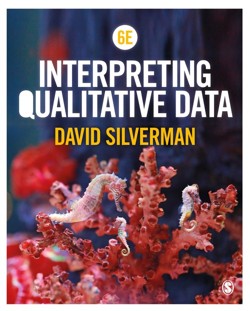
Interpreting Qualitative Data
Loading...
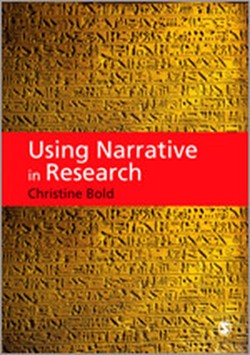
Using Narrative in Research
Loading...

Choice Theory
Loading...
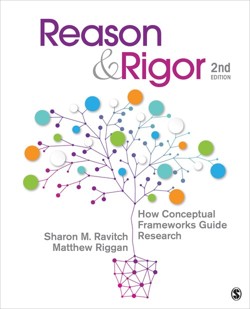
Reason & Rigor
Loading...
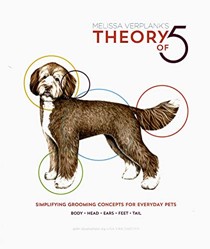
Theory Of 5
Loading...
Netnography
Loading...

Plan Your Dissertation
Loading...

How to Do Your Research Project
Loading...
Data-Driven HR
Loading...


How We Went Off-Grid
Loading...
Discovering Statistics Using SPSS
Loading...

Nexus
Loading...


Army Cadet One Star Training Handbook
Loading...


Linked
Loading...
Qualitative Research Practice
Loading...