A Poet Can Survive Everything But a Misprint by Oscar Wilde
90 classic titles celebrating 90 years of Penguin Books
'All art,' Oscar Wilde once announced, 'is quite useless.' Selected here are some of his finest prose works on the subject of art – useless, illuminating, artificial, uplifting, radical, gorgeous, boring, sublime – and his most brilliant aphorisms on the creative life. Whether lamenting the crass urge to hold art to realist or natural standards or arguing against morality as a guiding principle, Wilde defends the artist while delighting the audience.
You might also like

The Faber Book of Reportage
The Travels of Marco Polo

31 Inventions that Built Our World

The Age of Diagnosis

The Brain
Some Men In London: Queer Life, 1945-1959

Floating Home
The Rise and Fall of the Artificial State
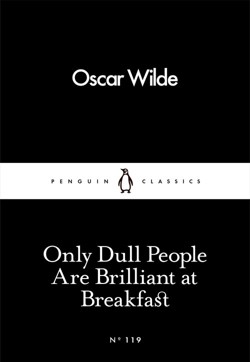
Only Dull People Are Brilliant at Breakfast
Hell's Angels
Myths from Mesopotamia
-
 The Fire Next Time
-
 The Driver's Seat
-
 Chess
-
 The House of Hunger
-
 The Dream of a Ridiculous Man
-
 The Burial of the Rats
-
 The History of England by a Partial, Prejudiced and Ignorant Historian
-
 Do Not Go Gentle Into That Good Night
-
 Where Everything is Music
-
 The Daemon Lover
-
 Can Socialists be Happy?
-
 The Blazing World
-
 A Dog's Heart
-
 Transformation
-
 A Short Guide to Towns Without a Past
-
 A Dill Pickle
-
 A Hunger-Artist
-
 Lamb to the Slaughter
-
 Why I am a Stoic
-
 The New Dress
-
 Secretary
-
 An Episode in the Life of a Landscape Painter
-
 Coal
-
 The Burned Sinner and the Harmonious Angels
-
 Thousand Cranes
-
 Night Flight
-
 Paris France
-
 After Midnight
-
 For Art and for Life
-
 Whatever is Rational is Tolerable
-
 Horsie
-
 To Read and Dream
-
 Family Happiness
-
 Lois the Witch
-
 The Rich Boy
-
 Unpacking My Library
-
 The Story of an Hour
-
 Lady L.
-
 The Umbrella
-
 Tristessa
-
 Some Japanese Ghosts
-
 Monkey King Makes Havoc in Heaven
-
 The Prose Edda
-
 Requiem
-
 The Country of the Pointed Firs
-
 The Seducer’s Diary
-
 Closely Watched Trains
-
 Strange News from Another Planet
-
 No Coward Soul Is Mine


Oscar Fingal O'Flahertie Wills Wilde was born in Dublin in 1854. He went to Trinity College, Dublin and then to Magdalen College, Oxford, where he began to propagandize the new Aesthetic (or 'Art for Art's Sake') Movement.
Despite winning a first and the Newdigate Prize for Poetry, Wilde failed to obtain an Oxford scholarship, and was forced to earn a living by lecturing and writing for periodicals. After his marriage to Constance Lloyd in 1884, he tried to establish himself as a writer, but with little initial success. However, his three volumes of short fiction, The Happy Prince (1888), Lord Arthur Savile's Crime (1891) and A House of Pomegranates (1891), together with his only novel, The Picture of Dorian Gray (1891), gradually won him a reputation as a modern writer with an original talent, a reputation confirmed and enhanced by the phenomenal success of his Society Comedies - Lady Windermere's Fan, A Woman of No Importance, An Ideal Husband and The Importance of Being Earnest, all performed on the West End stage between 1892 and 1895.
Success, however, was short-lived. In 1891 Wilde had met and fallen extravagantly in love with Lord Alfred Douglas. In 1895, when his success as a dramatist was at its height, Wilde brought an unsuccessful libel action against Douglas's father, the Marquess of Queensberry. Wilde lost the case and two trials later was sentenced to two years' imprisonment for acts of gross indecency. As a result of this experience he wrote The Ballad of Reading Gaol. He was released from prison in 1897 and went into an immediate self-imposed exile on the Continent. He died in Paris in ignominy in 1900.
| SKU | Unavailable |
| ISBN 13 | 9780241746738 |
| ISBN 10 | 0241746736 |
| Title | A Poet Can Survive Everything But a Misprint |
| Author | Oscar Wilde |
| Series | Penguin Archive |
| Condition | Unavailable |
| Binding Type | Paperback |
| Publisher | Penguin Books Ltd |
| Year published | 2025-04-17 |
| Number of pages | 160 |
| Cover note | Book picture is for illustrative purposes only, actual binding, cover or edition may vary. |
| Note | Unavailable |
Customers who bought this item also bought
The Faber Book of Reportage

The Travels of Marco Polo
31 Inventions that Built Our World
The Brain
Some Men In London: Queer Life, 1945-1959

Floating Home
Delight
Hell's Angels


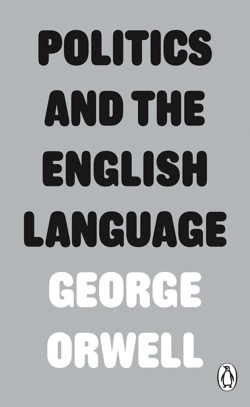
Politics and the English Language
L'etranger
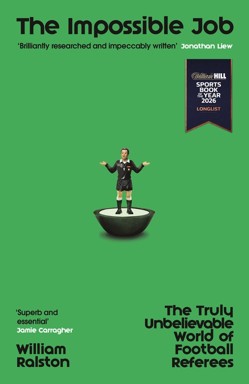
The Impossible Job
Cultural Amnesia
The Thirteen Books of the Elements, Vol. 1
Great Women's Speeches
From the Front line

Never Say War
El Generalisimo

The Right to Sex

Defence Speeches
Spring
The Message