


Protagoras by Plato
Right-Brained Place Value grows out of the work in Right-Brained Addition & Subtraction. Once the children know their facts to 10 on sight (very much like we want them to know their sight words) they are ready for multi-digit computation. The magic of this book and what sets it apart from other books is that all computation is based on the facts to 10. Students never have to add any facts larger than 1+9, 2+8, 3+7, 4+6, or 5+5, or subtract anything other than 10 minus numbers 1-9 Children love doing big problems using this method because they no longer have to tediously count on their fingers. Right-Brained Place Value takes basic addition and subtraction into multi-digit computation, and includes strategies for word problems. This detailed resource book is packed with 155 pages of handy reproducibles of worksheets, assessments and overheads, making lesson preparation a snap. Total page count: 223.You might also like
Phaedrus
Loading...
Socrates' Defence
Loading...
A Plato Reader
Loading...
Republic, Volume I
Loading...
Symposium
Loading...
Selected Dialogues of Plato
Loading...
Parmenides
Loading...
Republic, Volume II
Loading...
The Trials of Socrates
Loading...
-
 The Republic
-
 War and Peace
-
 Anna Karenin
-
 The Odyssey
-
 The Brothers Karamazov
-
 Crime and Punishment
-
 The Symposium
-
 Paradise Lost
-
 Beyond Good and Evil
-
 Revelations of Divine Love
-
 The Communist Manifesto
-
 The Fall of the House of Usher
-
 The Aeneid
-
 Germinal
-
 The Canterbury Tales
-
 The Ethics of Aristotle
-
 The Cloud of Unknowing
-
 Ecclesiastical History of the English People
-
 Diary of a Madman
-
 The Decameron
-
 "The Twilight of the Idols
-
 Dead Souls
-
 The Beast in Man
-
 Meditations
-
 Madame Bovary
-
 Selected Short Stories
-
 Candide
-
 The Histories of Gargantua and Pantagruel
-
 Selected Poems
-
 Pensees
-
 A Pair of Blue Eyes
-
 Frankenstein
-
 The Last Days of Socrates


Born to a politically connected and aristocratic family between 428 and 423 B.C., Plato received a good standard of education at an early age, and was able to immerse himself in the intellectual community of Ancient Athens. His most notable contemporary and mentor was Socrates, an eccentric but highly capable philosopher who was to feature as a principle character in most of Plato's scholarly writings. Owing to his high standard of education in art, mathematics, rhetoric and philosophy, Plato was able to assemble a comprehensive philosophy of his own via his favoured form of writing which was the dialogue. In total, over thirty of these Platonic dialogues have survived the passage of time - and together they form the backbone of Ancient Greek philosophy. After enjoying success as a writer and academic, Plato in 385 B.C. founded The Academy. This school was to unite the most capable thinkers of Greece, and would help to advance learning throughout Greek society's Golden Age. It was in the Academy that Plato would instruct and apprentice Aristotle, who was to go on to gain renown as a philosopher and scholar. Owing to his reputation Plato was hired by Dion, whose nephew Dionysus II was the rightful ruler of Sicily - Dion wished his nephew to receive a good education in the art of sound and wise governance. However Dionysus II became suspicious and accused both Plato and Dion of conspiracy - after some time spent under arrest, Plato returned to his homeland. In his late period, Plato continued to tutor and mentor the best young minds of Athens, and he would perish around 348 B.C. having lived beyond the age of eighty. Today Plato's legacy remains lauded: the philosopher ably used logic and reason to imbue insight on democratic governance, while developing a cohesive philosophy on topics such as art, metaphysics, justice and the 'Theory of Forms' - his iconic take on how ideas related to reality.
| SKU | Unavailable |
| ISBN 13 | 9780140440683 |
| ISBN 10 | 0140440682 |
| Title | Protagoras |
| Author | Plato |
| Series | Classics |
| Condition | Unavailable |
| Binding Type | Paperback |
| Publisher | Penguin Books Ltd |
| Year published | 1970-07-31 |
| Number of pages | 160 |
| Cover note | Book picture is for illustrative purposes only, actual binding, cover or edition may vary. |
| Note | Unavailable |
Customers who bought this item also bought

On the Genealogy of Morals
Loading...
Critique of Pure Reason
Loading...
Leviathan
Loading...
Discourses and Selected Writings
Loading...
The Daily Stoic
Loading...


The Doors of Perception
Loading...
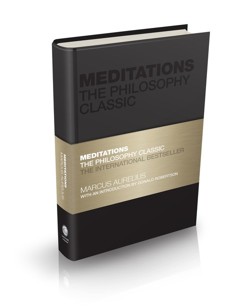
Meditations
Loading...
Letters from a Stoic
Loading...
The Zen Monkey and the Lotus Flower
Loading...
The Little Book of Philosophy
Loading...
The Cat and The Moon - 33 Zen Stories
Loading...


A Little History of Philosophy
Loading...


Beginning to Live
Loading...
Great Thinkers
Loading...

God, the Science, the Evidence
Loading...
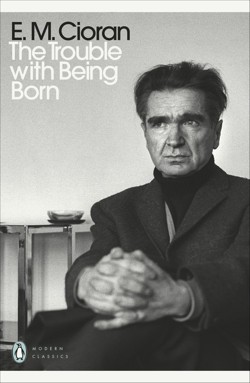
The Trouble With Being Born
Loading...
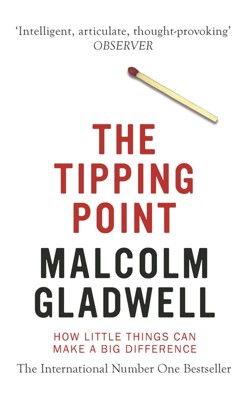
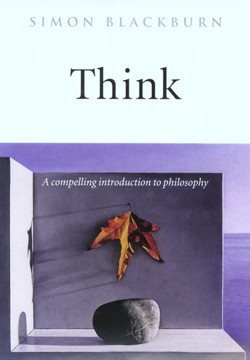
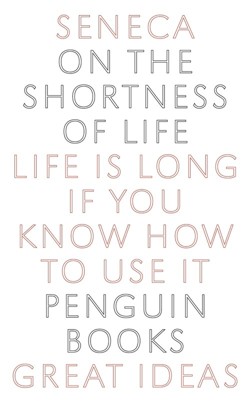
On the Shortness of Life
Loading...
An Enquiry concerning Human Understanding
Loading...
I am That
Loading...

Existentialism and Humanism
Loading...

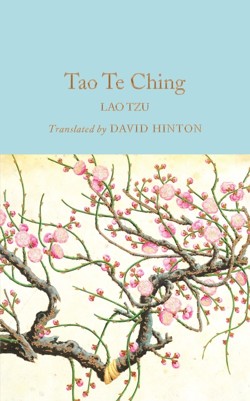
Tao Te Ching
Loading...

Against the Machine
Loading...

Japonisme
Loading...
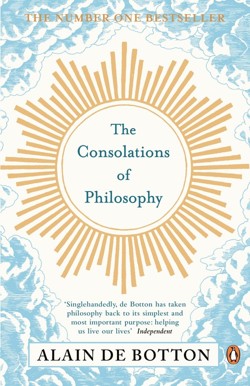
The Consolations of Philosophy
Loading...
The Tao of Pooh & The Te of Piglet
Loading...