Psychological Types by Carl Jung
Psychological Types is one of Jung's most important and famous works. First published in English by Routledge in the early 1920s it appeared after Jung's so-called fallow period, during which he published little, and it is perhaps the first significant book to appear after his own confrontation with the unconscious. It is the book that introduced the world to the terms 'extravert' and 'introvert'. Though very much associated with the unconscious, in Psychological Types Jung shows himself to be a supreme theorist of the conscious. In putting forward his system of psychological types Jung provides a means for understanding ourselves and the world around us: our different patterns of behaviour, our relationships, marriage, national and international conflict, organizational functioning.
This Routledge Classics edition includes a new foreword by John Beebe.
You might also like

The Interpretation of Fairy Tales

Dreams

Archetypal Patterns in Fairy Tales

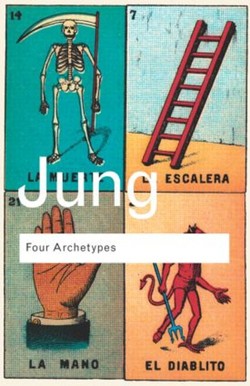
Four Archetypes
Four Archetypes





My Hidden Chimp
You Can Just Do Things
The Courage to be Ordinary

The Boy Who Was Raised as a Dog, 3rd Edition

I Hate You - Don't Leave Me: Third Edition

Owning Your Own Shadow

-
 Gender Trouble
-
 History of Western Philosophy
-
 Modern Man in Search of a Soul
-
 Being and Nothingness
-
 A Secure Base
-
 Madness and Civilization
-
 Why I am not a Christian
-
 The Road to Serfdom
-
 Playing and Reality
-
 The Undiscovered Self
-
 The Making and Breaking of Affectional Bonds
-
 The Sovereignty of Good
-
 Distinction
-
 The Order of Things
-
 Archaeology of Knowledge
-
 The Culture Industry
-
 Tractatus Logico-Philosophicus
-
 The Protestant Ethic and the Spirit of Capitalism
-
 One-Dimensional Man
-
 There Ain't No Black in the Union Jack
-
 Gravity and Grace
-
 The Fear of Freedom
-
 Writing and Difference
-
 The Conquest of Happiness
-
 In Praise of Idleness
-
 Purity and Danger
-
 Wholeness and the Implicate Order
-
 Four Archetypes
-
 Dreams
-
 Bodies That Matter
-
 The Birth of the Clinic
-
 Lines
Lines
-
 The Language and Thought of the Child
-
 Folk Devils and Moral Panics
-
 How the Irish Became White
-
 Understanding Media
-
 The Open Society and Its Enemies
-
 A Short History of Modern Philosophy
-
 The Moral Law
-
 The World of Perception
-
 The Sane Society
-
 A Short History of Ethics
-
 King Solomon's Ring


"[Jung] has shown with signal lucidity that each person has a right to live according to his own type, and his presentation of the guiding principles for the recognition of the type is one of the most humanitarian achievements that has become manifest" New York Times
"This volume is drastically serious, positive, didactic, classic and yet more than stimulating. It is energizing, liberating and recreative. The author shows an amazingly sympathetic and comprehensive knowledge of the introvert of the thinking type, and hardly less for his other types." New York Times
"…it has been an astounding phenomenon that a single person could develop such an important dynamic typology with such exhaustive inclusiveness between his 38th and 45th years of life. Jung not only saw the need and the problem but formulated and refined the theory to a point that stands the test of time." Wayne K. Detloff, Psychological Perspectives
"When I first found Bayne’s translation, in 1932, I felt that this was the most important book that I had ever read. Since then, I have found no reason to revise my opinion." Joseph B. Wheelwright, Journal of Analytical Psychology
Carl Gustav Jung (1875 - 1961) was a Swiss psychiatrist who founded the school of psychology known as analytical psychology. Jung established the concepts of the extraverted and the introverted personality, archetypes, and the collective unconscious.
| SKU | Unavailable |
| ISBN 13 | 9781138687424 |
| ISBN 10 | 1138687421 |
| Title | Psychological Types |
| Author | Carl Jung |
| Series | Routledge Classics |
| Condition | Unavailable |
| Binding Type | Paperback |
| Publisher | Taylor & Francis Ltd |
| Year published | 2016-09-26 |
| Number of pages | 568 |
| Cover note | Book picture is for illustrative purposes only, actual binding, cover or edition may vary. |
| Note | Unavailable |
Customers who bought this item also bought
My Hidden Chimp
You Can Just Do Things
The Courage to be Ordinary
The Boy Who Was Raised as a Dog, 3rd Edition
I Hate You - Don't Leave Me: Third Edition
Owning Your Own Shadow


The Examined Life


The Comfort Crisis

Why Love Matters

The Complete Illustrated Kama Sutra

Aspects of the Masculine

The Middle Passage
The Silva Mind Control Method
How to Read People Like a Book

National 5 & Higher Psychology
Brain Lock, Twentieth Anniversary Edition

T A Today

Unlock Your Power


Six-Minute X-Ray

"Pure O" OCD

Essential Art Therapy Exercises

Healing Add

Psychology: A Complete Introduction

The Teacher Toolkit Guide to Feedback


The Couple's Workbook
A-Level Psychology: Essential Maths Skills


Co-Regulation Handbook

The Attachment Theory Workbook