


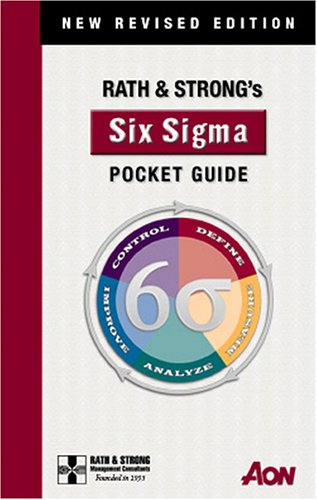
Rath & Strong's Six SIGMA Pocket Guide by Rath
In many countries, co-operatives started out as a means of ensuring advantages for poorly-equipped citizens who were unable to achieve these advantages by their own individual resources. In India, co-operatives - as instruments of economic development of the disadvantaged, particularly in the rural areas - received considerable emphasis through the country's successive Five Year Plans. India recognized that a village panchayat (council), a village co-operative, and a village school were the trinity of institutions on which a self-reliant and a just economic and social order was to be built. The non-exploitative character of co-operatives, the voluntary nature of their membership, the principle of 'one-man, one-vote, ' the decentralized decision-making, and the self-imposed curbs on profits eminently qualified them as instruments of development, combining the advantages of private ownership with public good. This book provides a comprehensive account of the historical evolution of co-operatives in India. It examines their problems, the policy measures that strengthened them, and their role in the changed scenario in the context of liberalization, privatization, and globalization| SKU | Unavailable |
| ISBN 13 | 9780974632872 |
| ISBN 10 | 0974632872 |
| Title | Rath & Strong's Six SIGMA Pocket Guide |
| Author | Rath |
| Condition | Unavailable |
| Binding Type | Paperback |
| Publisher | Rath And Strong |
| Year published | 2006-01-01 |
| Number of pages | 200 |
| Cover note | Book picture is for illustrative purposes only, actual binding, cover or edition may vary. |
| Note | Unavailable |