
The Story of Xinjiang Revealed through Old Maps (1759-1912)


The feel-good place to buy books
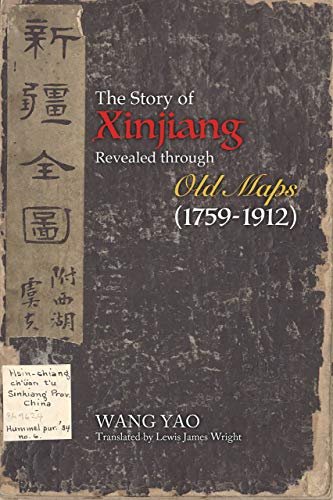
The Story of Xinjiang Revealed through Old Maps (1759-1912) by Yao Wang
Xinjiang, named in 1759 by Emperor Qianlong (乾隆 1711-1799) of the Manchu-led Qing dynasty of China, was ruled by the Qing from the final phase of the Dzungar-Qing Wars when the Dzungar Khanate was conquered, and lasted until the fall of the imperial dynasty in 1912. Based on rare ancient maps and historical archives, the book tells stories of Xinjiang during the Qing. It involves Emperor Qianlong, Fragrant concubine (xiangfei 香妃, Uyghur concubine married with Emperor Qianlong), Lady Catherine (the wife of the British consul-general in Kashgar at the end of the 19th century, and lived in Xinjiang for nearly two decades), Swedish missionaries (persisted in spreading Christianity for 38 years among Uyghurs who believed in Islam), Guan Gong temples (the belief in Lord Guan, a religious tradition of the Han and Manchus) and so on.
Wang Yao is currently an associate professor in the Institute of Ethnology and Anthropology at Chinese Academy of Social Sciences. His academic interests include ancient maps, ancient globes, historical geography of Xinjiang and history of Sino-Western exchange.
| SKU | Unavailable |
| ISBN 13 | 9781626430747 |
| ISBN 10 | 1626430748 |
| Title | The Story of Xinjiang Revealed through Old Maps (1759-1912) |
| Author | Yao Wang |
| Condition | Unavailable |
| Binding Type | Paperback |
| Publisher | Bridge21 Publications, LLC |
| Year published | 2021-09-01 |
| Number of pages | 160 |
| Cover note | Book picture is for illustrative purposes only, actual binding, cover or edition may vary. |
| Note | Unavailable |