
Albanian Nationalism after the Cold War


Summary
The feel-good place to buy books
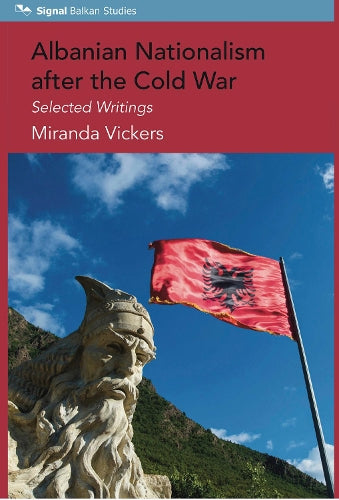
Albanian Nationalism after the Cold War by Mirada Vickers
For nearly fifty years after the end of the Second World War, Albania remained in almost total isolation from the rest of the world. The hard-line communist dictatorship sealed the tiny country's borders in an effort to preserve Albania and the ruling regime from the threat posed by Western Powers and from neighbouring countries and their territorial ambitions. When the communist regime finally collapsed in 1992, Albania emerged into a Balkans ravaged by civil war in neighbouring Yugoslavia, which spread into the regions bordering Albania inhabited by significant ethnic Albanian minorities. As the war ignited in Kosova, tens of thousands of Albanian refugees fled into Albania, which itself was suffering violent internal conflict. Albania had entered the post-communist world in an impoverished and broken state, immersed in civil strife between the new quasi-democratic government and the opposition socialists, which culminated into virtual civil war in 1997 that pitted northerners against southerners with more than 4,000 deaths. Amidst the chaos, the disintegration of Yugoslavia ignited a new Albanian national question that had lain dormant since 1945. There were calls for the creation of a 'Greater Albania' to incorporate Yugoslavia's Albanian minorities within the 'Mother' state, which was to also include an area of north-western Greece which had historically been inhabited by ethnic Albanians known as Chams. The Chams were forced to leave their homeland following three distinct phases: the first during the Balkans Wars 1912-14; the second resulting from the Greek-Turkish population exchanges in the 1920s; the third at the end of the Second World War. The calls for a 'Greater Albania' alarmed Albania's neighbours and the international community, who viewed it as a serious threat to the stability of the entire southern Balkans. This resurgence of pan-Albanian nationalism was, however, far more layered and complex than was understood at the time, even by the various ethnic Albanian groups and their vocal Diaspora. This collection of papers and essays has not previously been published outside select academic outlets. They appear here for the first time with the aim of offering new perspectives on the underlying nature of pan-Albanianism, its aspirations and the post-Cold War dynamics of the Albanian world. These remain serious, unresolved problems in the region at the present time.
Miranda Vickers is a London-based writer and analyst of Albanian affairs. She has worked in Albania and the wider Balkans for thirty years and is the author of several seminal works on the region, including The Albanians: A Modern History and The Albanian Question: Reshaping the Balkans (with James Pettifer).
| SKU | Unavailable |
| ISBN 13 | 9781909930926 |
| ISBN 10 | 190993092X |
| Title | Albanian Nationalism after the Cold War |
| Author | Mirada Vickers |
| Condition | Unavailable |
| Binding Type | Paperback |
| Publisher | Signal Books Ltd |
| Year published | 2021-06-24 |
| Number of pages | 210 |
| Cover note | Book picture is for illustrative purposes only, actual binding, cover or edition may vary. |
| Note | Unavailable |